As an Amazon Associate, we earn from qualifying purchases. Some links on this site are affiliate links at no extra cost to you. Our recommendations are based on thorough research and editorial judgment.

How Should I Clean My Dog’s Bed?

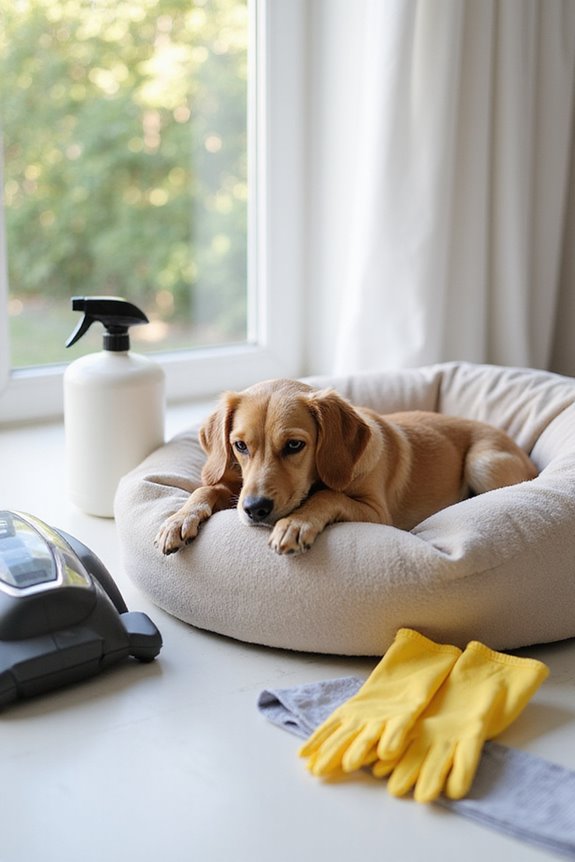
To clean your dog’s bed effectively, we should follow a regular schedule. For outdoor dogs, wash their bedding twice a week, while indoor dogs can often go a month between washes. Essential methods include removing pet hair with a vacuum, washing removable covers in cold water, and spot cleaning stains immediately. Inspect the bed for damage every 1-2 years, which helps maintain hygiene and comfort. If we continue, we can explore deeper cleaning techniques and recommendations.
Key Takeaways
- Remove pet hair and debris using a pet hair vacuum or lint roller before cleaning.
- Wash removable covers separately in cold or warm water on a gentle cycle with mild detergent.
- For non-removable covers, spot clean stains and soak the bed as needed for deep cleaning.
- Air dry dog beds to maintain their shape and prevent mold growth after washing.
- Regularly inspect the bed for damage, odors, or signs of pest infestation to ensure comfort and hygiene.
Understanding Cleaning Frequency Based on Lifestyle
When it comes to cleaning your dog’s bed, understanding how our lifestyle influences cleaning frequency is essential. Several frequency factors determine how often we should wash our dog’s bedding.
- Dogs that frequently play outdoors need their beds washed up to twice a week due to dirt and bacteria accumulation.
- Indoor dogs with low activity typically require laundering once a month.
- Active dogs outdoors should have their beds cleaned weekly to prevent parasite growth.
Additionally, coat type affects cleaning intervals; dogs with heavy shedding or oily coats require more frequent washes. For dogs with allergies, washing bedding twice a week can reduce allergic reactions. By recognizing these lifestyle impacts, we can better maintain our dog’s health and comfort. Furthermore, selecting a dog bed made from durable materials can enhance longevity and reduce the need for frequent replacements.
Essential Cleaning Methods for Dog Beds
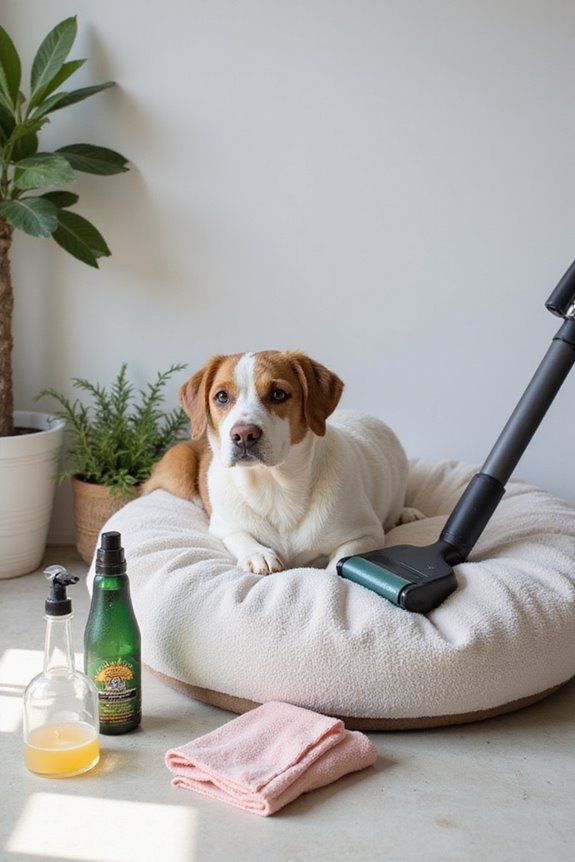
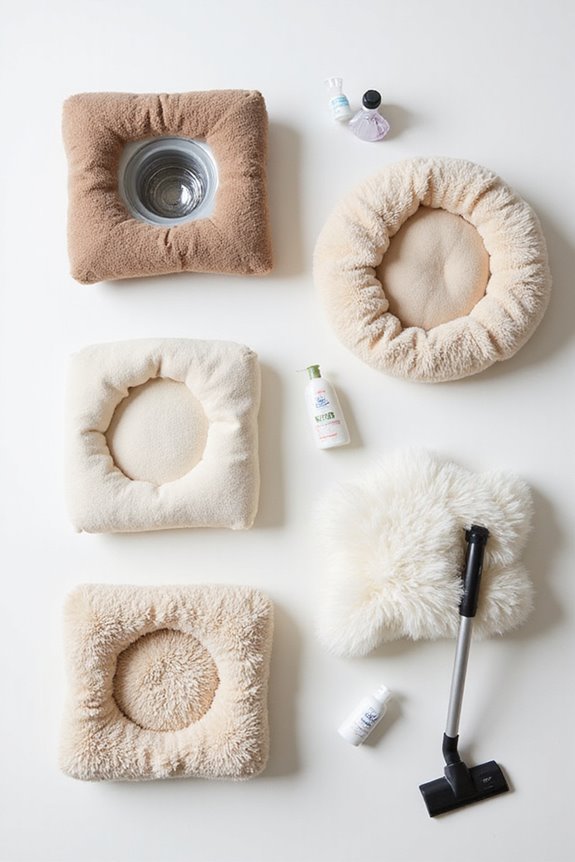
Cleaning a dog’s bed is essential for maintaining hygiene and guaranteeing your pet’s comfort. We should start by removing pet hair and debris, which we can do using a pet hair vacuum or lint roller. If unavailable, shaking the bed outside helps. Next, let’s consider fabric types; we must wash removable covers separately using a mild detergent.
For machine washing, we should use cold or warm water on a gentle cycle. Hand-washing larger beds involves soaking them in a warm water basin with pet-safe detergent. Once clean, air drying preserves the bed’s shape and prevents mold growth. Regular cleaning schedules and using grooming tips can keep our dog’s bed fresh and inviting, helping guarantee a comfortable space for our furry friends. Additionally, incorporating washable and waterproof covers can further ease the cleaning process and maintain the bed’s longevity.
Proper Techniques for Spot Cleaning Stains
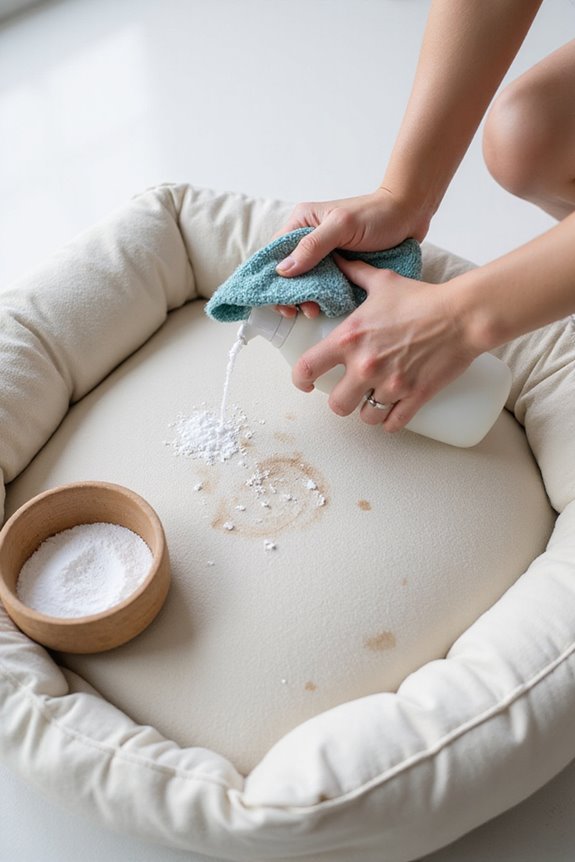
Maintaining a dog’s bed requires not only regular washing but also effective spot cleaning techniques to address stains as they occur. Here’s how we can guarantee successful stain removal:
- For urine stains: Blot the area immediately, sprinkle baking soda, and let it sit for 5–10 minutes. Use a spray of warm water, vinegar, and baking soda, allowing it to sit for 10 minutes, then blot with a microfiber cloth.
- For mud stains: Let the mud dry, then gently wipe with a damp cloth. Vacuum afterward to remove debris.
- For vomit stains: Blot the area, then scrub with a mixture of warm water, salt, mild dish soap, and vinegar, letting it sit briefly before wiping clean.
Regular cleaning is essential to prevent odors and bacterial buildup in your dog’s bed, ensuring a fresh sleeping environment. These techniques will help maintain the cleanliness and freshness of your dog’s bed.
Deep Cleaning Strategies for Different Bed Materials
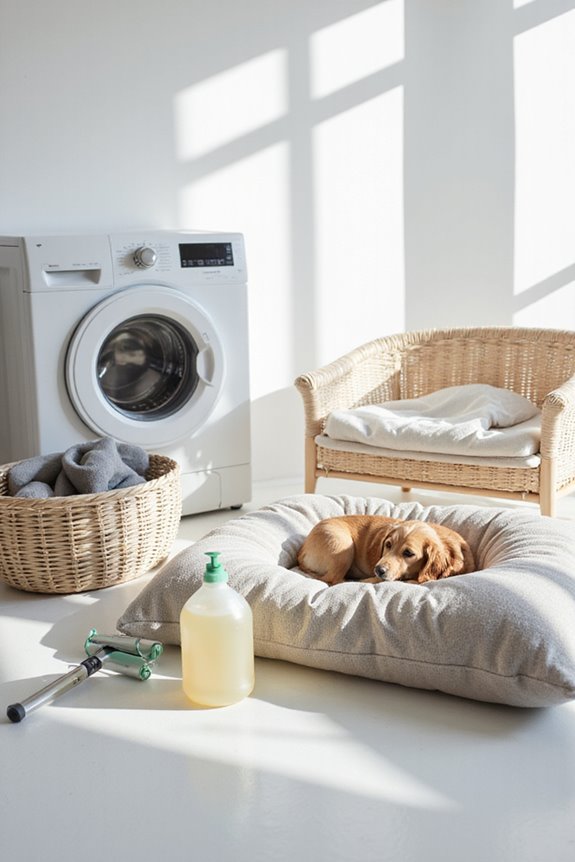
Deep cleaning a dog’s bed is essential to guarantee a hygienic and comfortable sleeping environment for our pets. Each fabric type requires specific strategies and proper cleaning tools.
- Fabric Dog Beds with Removable Covers: Vacuum thoroughly, then machine wash on a gentle cycle with pet-safe detergent.
- Dog Beds without Removable Covers: Spot-clean stains and soak in a bathtub for deeper clean, ensuring to rinse well.
- Foam or Memory Foam Beds: Spot clean with diluted detergent; avoid soaking to prevent mold.
- Synthetic Fiber Beds: Most can be machine washed. Soak before washing for better results.
- Outdoor or Waterproof Beds: Rinse dirt and clean with soapy water, ensuring thorough rinsing and air drying.
Using appropriate methods helps maintain both bed integrity and our pet’s health. Additionally, regular cleaning of dog beds with removable covers can prevent the buildup of allergens and odors, enhancing your pet’s comfort.
Health Benefits of Regular Bed Cleaning
Regular bed cleaning offers numerous health benefits that can greatly improve the well-being of our dogs, as well as our living environment. Consider these key advantages:
- Allergy Management: Regular washing removes allergens like dander and dust mites, enhancing air quality and reducing respiratory issues.
- Parasite Prevention: Cleaning helps eliminate fleas, ticks, and mites, breaking their life cycle and preventing infestations.
- Infection Control: Dirty beds can harbor harmful bacteria. Regular laundering lowers the risk of infections, promoting safer resting areas.
- Skin Health: Frequent cleaning prevents irritants that lead to itching and skin infections, allowing for a healthier coat.
- Odor Reduction: Washing eliminates odors, enhancing home hygiene and overall freshness, making our living spaces more pleasant. Additionally, regular maintenance of washable beds encourages longevity and supports your dog’s comfort.
Effective Stain and Odor Management Tips
Cleaning a dog’s bed can be an essential part of maintaining a healthy home environment. To effectively manage stains and odors, we can use proven stain removal techniques and odor neutralization methods. Here are some tips:
- For urine stains, sprinkle baking soda and use a mixture of 2 cups warm water, 2 cups vinegar, and 4 tablespoons baking soda. Let it sit for 5–10 minutes before blotting with a microfiber cloth.
- For mud, wait for it to dry, gently wipe with a damp cloth, then vacuum away the remnants.
- For vomit, use a solution of 2 cups warm water, 1 tablespoon salt, 1 tablespoon dish soap, and ½ cup vinegar, applying it gently.
In addition to regular cleaning, using waterproof mats for pets can help prevent future stains by protecting surfaces and making maintenance easier. These methods help guarantee our pet’s bed remains clean and fresh, promoting their well-being.
Choosing the Right Cleaning Products
Selecting the right cleaning products is essential for ensuring the safety and hygiene of our dogs’ beds. We should prioritize using pet-safe detergents to avoid harsh chemicals that may irritate our dogs’ skin. Consider options like ARM & HAMMER™ Plus OxiClean™ Odor Blasters, which are specifically formulated to eliminate stubborn odors and are fragrance-free to minimize allergic reactions.
Additionally, employing natural odor neutralizers, such as white vinegar and bicarbonate of soda, can greatly enhance our cleaning efforts. It’s important to avoid bleach and strong chemical disinfectants, as they can be toxic to our pets. Always check product labels for compatibility with our dog beds and test new products on a small area to prevent damage.
Storage and Maintenance Tips for Dog Beds
When we consider the proper storage and maintenance of our dogs’ beds, we set ourselves up for success in prolonging their lifespan and guaranteeing a clean, comfortable resting area for our furry companions.
Here are some valuable storage tips:
- Store beds in a dry, well-ventilated space to prevent mold.
- Use airtight bags for natural fiber beds to avoid pests.
- Verify beds are completely dry before storage.
For effective maintenance techniques:
- Vacuum weekly to remove dirt and hair.
- Spot clean stains with pet-safe cleaners promptly.
- Expose beds to sunlight for natural disinfection.
- Inspect for damage regularly, performing repairs to prolong life.
When to Replace Your Dog’s Bed
How can we tell when it’s time to replace our dog’s bed? Recognizing the signs of replacement is critical for our dog’s comfort and health. Here are key indicators to observe:
- Persistent Odor: If the bed emits a strong smell even after washing, it may indicate deep contamination.
- Physical Damage: Look for visible rips, tears, or flattened areas. A misshapen bed no longer offers proper support.
- Pest Infestation: Any signs of fleas or mites require immediate disposal of the bed.
- Comfort Assessment: If our dog avoids the bed, this might signify discomfort or support issues.
Regular checks every 1-2 years help us maintain hygiene and guarantee our furry friend enjoys a cozy resting spot.
The Importance of Inspecting Dog Beds Regularly
Regularly inspecting our dog’s bed is essential to guarantee their overall health and comfort. A thorough dog bed inspection helps us identify potential hazards and maintain the cleanliness and structural integrity of the bedding.
- Visible Damage: We should check for frayed seams, tears, or loose threads that could pose choking risks.
- Health Risks: Accumulated dirt and hair can lead to skin irritations, while mold may develop, posing health threats.
- Structural Evaluation: A worn-out bed may require replacement if it cannot maintain support or hygiene.
- Early Detection: Spotting stains early allows for prompt cleaning, preventing further contamination.
Ultimately, embracing the maintenance importance of frequent inspections enhances our dog’s comfort and well-being.
Frequently Asked Questions
Can I Use My Washing Machine to Clean All Dog Beds?
We can use our washing machine for many dog beds, especially those with removable covers, but we must check dog bed materials and our washing machine capacity first to guarantee safe and effective cleaning.
How Do I Remove Persistent Odors From My Dog’s Bed?
To remove persistent odors from our dog’s bed, we can use odor neutralizers like vinegar and sprinkle fabric fresheners for extra freshness. Regular cleaning routines and sun exposure also help keep odors at bay.
Are There Any DIY Cleaning Solutions for Dog Beds?
Absolutely, we can use a vinegar solution to neutralize odors and baking soda to absorb them. Mixing these ingredients together makes an effective DIY cleaner for keeping our dog’s bed fresh and clean.
What’s the Best Way to Dry My Dog’s Bed After Washing?
After washing our dog’s bed, we savor the sun-kissed air for drying techniques. We air dry softer fabrics to maintain shape, while using low heat for sturdier materials, ensuring every corner’s completely dry and odor-free.
How Can I Prevent My Dog From Getting Dirt on the Bed?
To prevent dirt on the bed, we can maintain dog hygiene by grooming regularly, using washable bed materials, and wiping our dog’s paws after outdoor play. A consistent routine helps keep the bed clean and fresh.