As an Amazon Associate, we earn from qualifying purchases. Some links on this site are affiliate links at no extra cost to you. Our recommendations are based on thorough research and editorial judgment.

Are Greyhounds Good Indoor Pets?

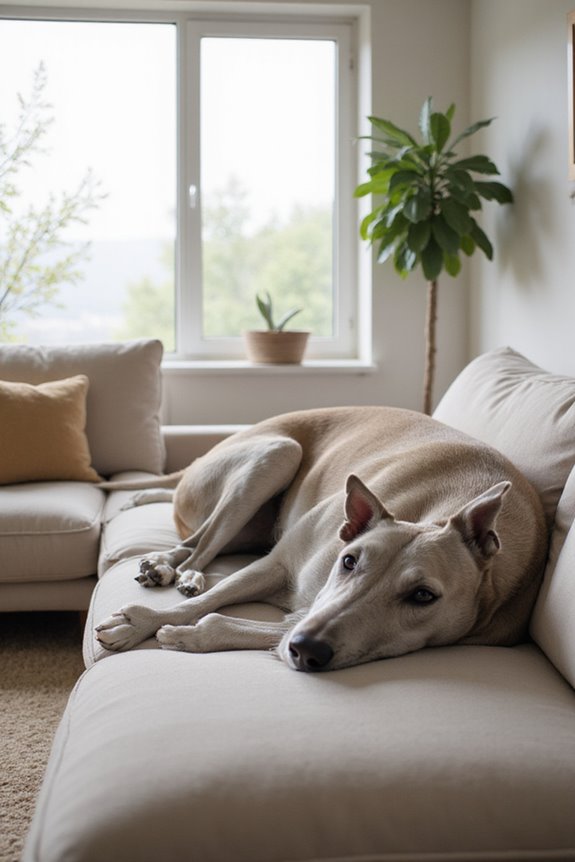
Greyhounds can indeed thrive as indoor pets, thanks to their affectionate and calm demeanor. They require minimal indoor space, needing just a cozy bed and essentials. Daily exercise, such as brisk walks totaling 40-60 minutes, helps meet their activity needs. Their sensitivity to temperature means they do best in an indoor range of 20-22°C (68-72°F). Additionally, they generally interact well with older children and other pets, particularly when socialized properly. Explore further to understand more about their unique requirements.
Key Takeaways
- Greyhounds are affectionate and bond well with families, making them good indoor pets.
- They require minimal indoor space, thriving in cozy areas with a soft bed.
- Greyhounds need daily walks and short bursts of exercise to stay healthy and engaged.
- They have a calm demeanor, making them suitable for families with older children.
- Regular grooming and supervision are essential to ensure their comfort and well-being indoors.
Temperament and Personality Traits of Greyhounds
When it comes to the temperament and personality traits of Greyhounds, we find a breed characterized by unique qualities that make them appealing as indoor pets. Their affectionate nature allows them to develop strong bonds with owners, thriving on human contact and seeking comfort in close physical proximity.
- Greyhounds are generally non-aggressive and exhibit a calm, quiet demeanor, making them well-suited for families, including those with children.
- Their sensitive disposition demands gentle handling and positive reinforcement during training, as they are highly attuned to emotions and stress within the household. Additionally, providing high-quality dog beds can enhance their comfort and well-being at home.
Exercise and Activity Requirements

Understanding the exercise and activity requirements of Greyhounds is essential for their wellbeing as indoor pets.
- Greyhounds typically need about 20-30 minutes of short running or vigorous play daily, alongside regular walks twice a day, totaling 40-60 minutes.
- While a minimum of a 15-minute walk every other day suffices, daily walks are ideal for their health.
- Owners without yards should plan for 2-3 short walks daily plus 1-2 longer walks weekly.
- Exercise routines should involve short, high-intensity bursts, with “zoomies” and interactive play being vital for mental stimulation.
- Brisk outdoor activities also provide opportunities for exploration and appropriate social interactions, aligning with their natural instincts while preventing boredom. Additionally, using a suitable retractable leash length can enhance their exercise experience.
Recommended Products

Elastic soft stop lead element

✔️CONTROLLED FREEDOM: With our specially designed leashes, your best friend can feel like they have complete freedom while also allowing you control should a situation arise.

TOP-NOTCH QUALITY: flexi leashes are the definition of superior German craftsmanship, ensuring the biggest possible safety when handling a retractable leash. flexi didn't just conceive the idea of the first fully functional and mass-produced retractable leash over 50 years ago but has continued to develop it with great innovations right up to the present day. In addition to numerous trophies and certificates, flexi was awarded the illustrious "Brand of the Century" award in 2010.
Indoor Living Conditions for Greyhounds

Creating an accommodating indoor environment for Greyhounds complements their exercise and activity needs, enhancing their quality of life as pets.
- Greyhounds thrive in minimal space; a soft bed, food, and water bowls are sufficient.
- They often favor indoor furniture, enjoying rest on couches or beds when permitted.
- Indoor grooming routines are essential; we should brush them weekly, clip nails monthly, and clean ears regularly to maintain coat and skin health.
- They typically require supervision during initial adjustment to prevent accidents, responding well to positive reinforcement training.
- Incorporating nutritional value into their diet can further support their overall health and well-being in an indoor setting.
Recommended Products

Durable Ripstop Ballistic Cover: The heavy-duty cover will withstand scratching, digging, and occasional mouthing. Great for dogs that like to get a little rough with their beds!

THERAPEUTIC DOG BED FOR EXTRA COMFORT - Give your pet the best care and provide sturdy body support with a premium orthopedic memory foam dog bed that supports bone structure and spinal posture.

[Experience the lap of luxury] - Indulge your furry friend with a luxurious, calming dog bed. It's not just a dog bed; it's a haven of ultimate comfort, giving your pet the sleep they deserve. - Our fluffy dog Bed is relaxing, featuring a plush cushion and supportive bolster for the perfect snooze.
Temperature Sensitivity and Climate Considerations

Temperature sensitivity is a crucial factor we must consider when caring for greyhounds, as their unique physical characteristics make them vulnerable to both heat and cold extremes.
- Greyhounds thrive in a temperature range of 16°C to 24°C (60°F to 75°F), which allows for better temperature management.
- Environments above 30-31°C (86-88°F) can lead to heat stress, particularly if temperatures exceed 36°C (97°F).
- In cold conditions, temperatures below 15°C (60°F) require protective clothing, like coats, to guarantee warmth and prevent hypothermia.
- Indoor environments should ideally be maintained around 20-22°C (68-72°F). Additionally, choosing the right coat material can significantly enhance their comfort during colder months.
Understanding these needs helps us facilitate climate adaptation, keeping our greyhounds comfortable and healthy year-round.
Size and Space Needs
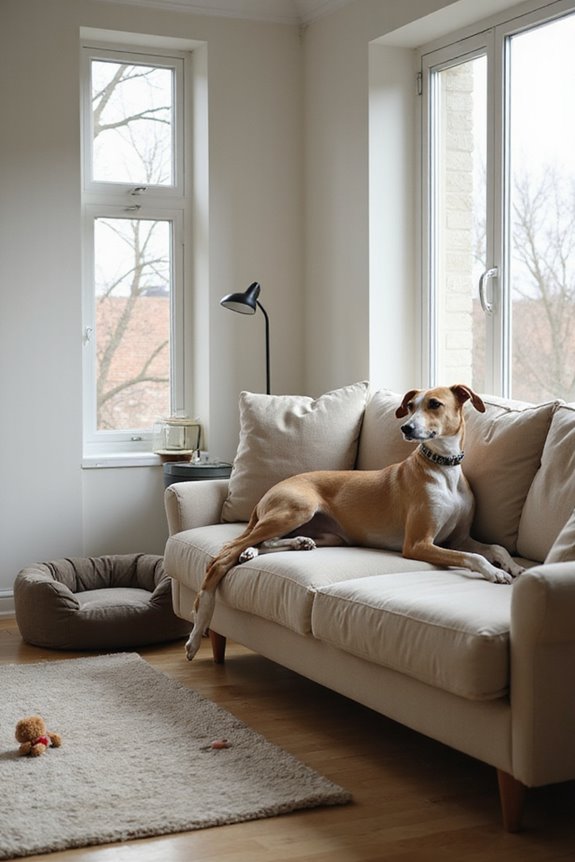
When considering greyhounds as indoor pets, it is essential to assess their size and space needs. Despite common size misconceptions, greyhounds are medium to large dogs, averaging 60 to 70 pounds and standing 25 to 30 inches at the shoulder. Their sleek bodies make them physically lean, requiring less active indoor space than similar-sized breeds.
To optimize space:
- A cozy bed and designated feeding area are sufficient.
- Greyhounds thrive with minimal indoor space due to their calm lounging behavior.
- They sleep deeply and need quiet areas for comfort.
- Ideally, their resting spaces should be away from noise and high traffic. Additionally, providing a comfortable bed with orthopedic features is crucial for their joint health and relaxation.
Recommended Products

Durable Ripstop Ballistic Cover: The heavy-duty cover will withstand scratching, digging, and occasional mouthing or chewing. Great for dogs that like to get a little rough with their beds! Please note that this is not a chew proof bed and it is not recommended for dogs that chew heavily or constantly on their bedding.

Clinically proven benefits: In a University of Pennsylvania School of Veterinary Medicine study, large dogs showed reduced joint pain and improved mobility after sleeping on a Big Barke

Interaction With Family and Other Pets
Successfully integrating a greyhound into a family that includes children and other pets requires careful planning and understanding of the dog’s unique needs.
- Greyhounds generally well with older, well-behaved children.
- Initial exposure should be gradual, helping with greyhound child bonding.
- Teach children gentle interaction rules to avoid stressing the dog.
- Supervised exposure, like petting and feeding, builds comfort levels.
- When introducing greyhounds safely to other pets, manage initial encounters as training sessions.
- Monitor body language, watching for signs of stress.
- Provide individual spaces for each pet to reduce potential conflicts.
- Maintaining consistent rules for all interactions is essential to foster positive relationships. Additionally, it is vital to choose collars that offer escape prevention capabilities for enhanced safety during interactions.
Frequently Asked Questions
How Do Greyhounds Adjust to New Environments or Homes?
Greyhounds adjust to new environments through gradual environmental acclimation and home adjustment. With patience and consistent routines, we can help them feel secure, enabling a smoother adaptation to our homes. It’s a rewarding journey together!
What Health Issues Are Commonly Seen in Greyhounds?
Did you know about 58% of Greyhounds face cancer-related health concerns? These elegant dogs often experience common ailments like dental disease and arthritis, which can greatly impact their quality of life and mobility over time.
Do Greyhounds Need Grooming or Special Care?
Yes, Greyhounds need grooming and special care. Regular brushing helps manage shedding, while nail trimming and dental hygiene are essential for their health. We should also monitor their ears and skin to keep them comfortable and happy.
Can Greyhounds Be Left Alone for Long Periods?
We’ve found that Greyhounds can’t handle long absences well. Think of it like teaching a child independence; we need gradual training to avoid separation anxiety. Short, positive alone times foster trust and comfort for our furry friends.
How Do Greyhounds Interact With Other Dog Breeds?
Greyhounds generally show positive social behavior with other breeds, proving to be compatible in calm environments. Their gentle nature and sociability often help them build strong bonds, making interactions pleasant when properly socialized.