As an Amazon Associate, we earn from qualifying purchases. Some links on this site are affiliate links at no extra cost to you. Our recommendations are based on thorough research and editorial judgment.

How Should I Prepare For Natural Disasters With Sighthounds?

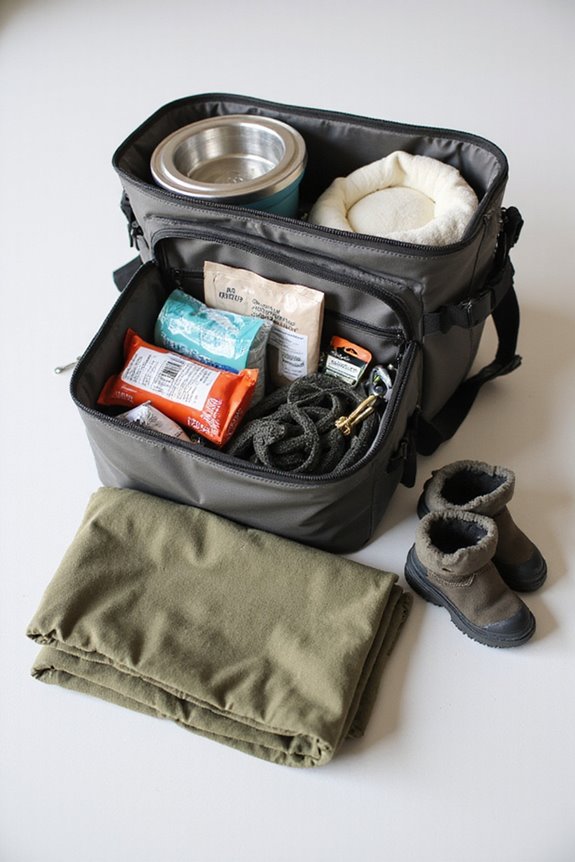
To prepare for natural disasters with our sighthounds, we must consider their unique needs. We should develop a pet evacuation plan that includes buddy arrangements and practice drills. Assembling an emergency supply kit is fundamental, including a two-week food supply, medications, and comfort items. Regular health checks and maintaining identification, such as microchips and visible ID tags, are vital. Understanding their specific requirements can enhance our preparedness efforts and guarantee their safety. Let’s explore further details to optimize our readiness.
Key Takeaways
- Assemble a comprehensive emergency supply kit, including a two-week supply of food, medications, and familiar bedding for comfort during evacuations.
- Create an evacuation plan with identified safe routes and buddy arrangements for support, ensuring sighthounds are familiar with carriers.
- Use high-quality, waterproof jackets to protect sighthounds from temperature extremes and keep them warm and dry during emergencies.
- Regularly conduct evacuation drills to help acclimate your sighthounds to transportation methods and reduce their stress during actual emergencies.
- Keep health records, microchip information, and emergency contacts accessible for quick reference during evacuations or disasters.
Understanding the Unique Needs of Sighthounds
When preparing for a natural disaster, understanding the unique needs of sighthounds is fundamental to guaranteeing their safety and well-being. Their sighthound characteristics, including lean bodies and minimal fat, make them particularly temperature sensitive. This vulnerability necessitates keeping them warm and dry during and after an event to prevent hypothermia.
Additionally, their distinct metabolisms mean they may not tolerate standard anesthesia, which is essential for emergency veterinary care planning. It’s critical to take into account their gentle frames when managing stress during chaotic situations. We should provide quiet environments, secure containment, and soft bedding to protect their bones. By recognizing these needs, we can help guarantee our sighthounds remain comfortable and safe when disaster strikes. Moreover, investing in a high-quality waterproof jacket can significantly enhance their protection against both the elements and potential stressors during a disaster.
Developing a Pet Evacuation Plan

Developing a pet evacuation plan is essential for ensuring the safety of our sighthounds in emergencies. Here are key components to include:
- Identify evacuation zones and safe routes specific to our area to facilitate quick travel.
- Create buddy arrangements with neighbors or friends for additional support. They should know our evacuation routes and have access to our pet supplies.
- Conduct evacuation drills with our sighthounds to familiarize them with carriers and transportation, minimizing stress during actual emergencies.
- Communicate regularly with all involved in the plan, ensuring everyone understands their responsibilities and the pet care instructions. Additionally, consider including durability and safety features when packing emergency supplies to ensure our sighthounds have safe toys during stressful situations.
Assembling an Emergency Supply Kit
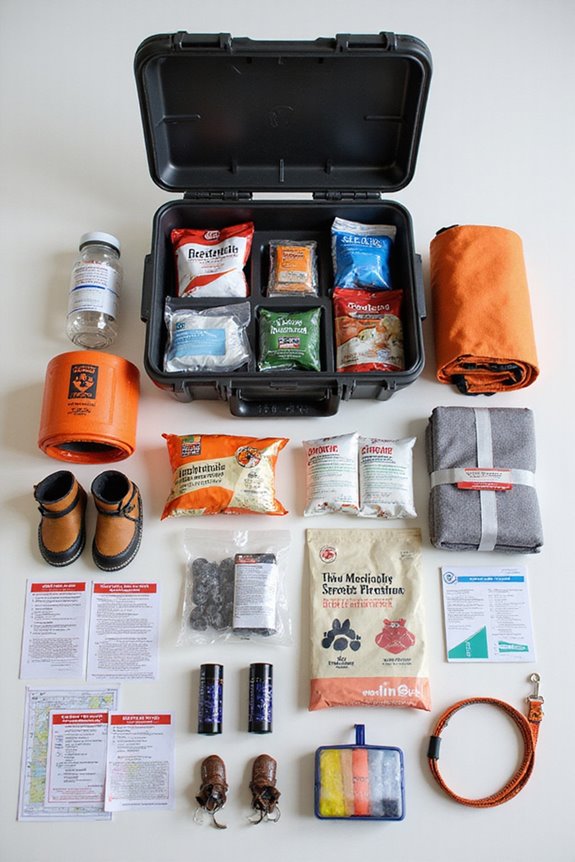
Preparing an emergency supply kit guarantees our sighthounds have what they need during a crisis, even if conditions become unpredictable. Here’s our emergency supplies checklist:
- Food and Water: Store a two-week supply of pet food in airtight containers, and pack portable, non-spill dishes. Include at least a few days’ worth of clean drinking water in durable containers.
- Medications: Maintain a two-week supply of necessary medications, plus a pet first aid kit with bandages and antiseptics.
- Pet Comfort Items: Bring one familiar bedding item, along with favorite toys, to help reduce stress during emergencies.
- Sanitation Supplies: Pack pet litter, paper towels, and cleaning materials to maintain hygiene. Additionally, consider including low-calorie treats to keep your sighthound calm and satisfied during stressful times.
Health and Identification Measures for Your Sighthound
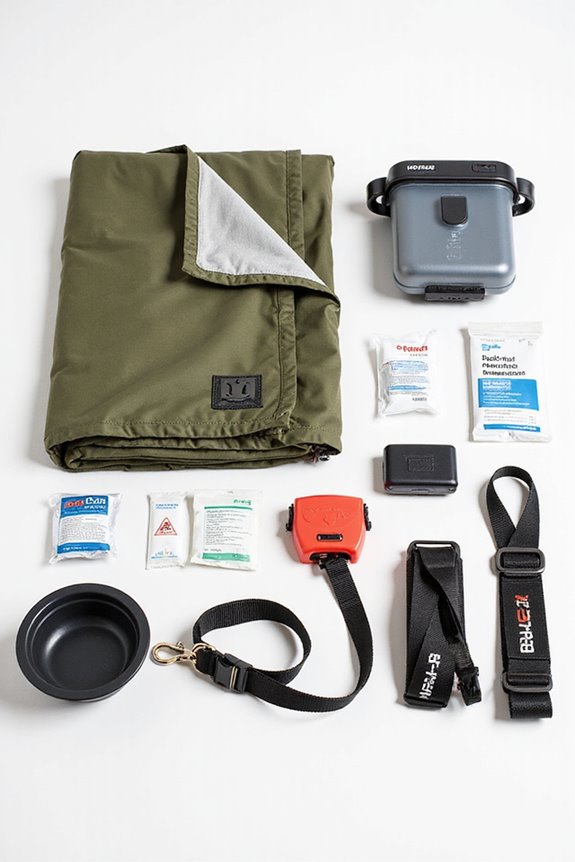
Guaranteeing our sighthounds are safe during natural disasters involves not only assembling an emergency supply kit but also focusing on their health and identification measures.
- We should guarantee our sighthounds are microchipped with current contact information tied to a reliable registry.
- A snug-fitting collar or harness with visible ID tags, including our contact details and medical needs, is essential.
- Regular health monitoring is vital; we must track their temperature sensitivity and have a plan for emergency veterinary treatments.
- Keeping up-to-date health records, and photos of distinctive identification features, can assist in recovery situations.
- Finally, considering GPS tracking devices will help us locate our sighthounds during chaotic circumstances, guaranteeing their safety and swift return. Additionally, opting for padded genuine leather collars can enhance comfort and visibility during emergency outings.
Training for Disaster Preparedness
While our sighthounds are known for their speed and agility, training them for disaster preparedness is essential for their safety and effectiveness in emergency situations. We should focus on several key areas:
- Early Conditioning: Expose sighthounds to unusual environments and loud noises to lessen anxiety.
- Basic Commands: Solidify obedience and recall commands to guarantee control in chaotic moments.
- Disaster Simulations: Conduct mock scenarios, steering through debris and crowds, improving their confidence and problem-solving abilities.
- Stamina and Endurance: Enhance their natural speed with focused stamina training, developing controlled bursts for emergencies.
- Team Integration: Participate in drills with emergency personnel, fostering communication and responsiveness.
Additionally, using high-quality materials such as those found in martingale leads will ensure your sighthound remains secure during these training sessions, promoting comfort and control.
These training sessions guarantee sighthounds remain calm and effective, critical attributes during disasters.
Care During and After a Natural Disaster
Natural disasters pose significant challenges not only for humans but also for our beloved sighthounds. During these events, we must assess our dogs frequently for any injuries, stress signs, or dehydration.
- Create a safe, quiet shelter, free from loud noises, and keep sighthounds leashed or confined to prevent escape.
- Ascertain hydration needs are met by providing small amounts of water and food as their tolerance allows.
- Monitor our sighthounds’ temperature to avoid exposure to extreme heat or cold, taking into account their sensitive skin and low body fat. Including high-calorie treats can help ensure they maintain their strength during stressful times.
After the disaster, we should check for any changes in behavior or health and consult a veterinarian if necessary, keeping medical supplies and records accessible.
Logistics for Evacuation
When planning for the evacuation of our sighthounds, it’s essential to approach logistics thoughtfully to guarantee their safety and comfort. Here are some key points to take into account:
- Transportation Options: Select appropriate vehicles like crates or harness-equipped cars that accommodate our sighthounds’ sizes. Regularly check vehicle readiness to avoid delays during emergencies.
- Route Mapping: Identify multiple evacuation routes. This includes primary routes to pet-friendly shelters and hotels, as well as alternate paths to avoid blocked roads. Choose routes that reduce travel time and stress, ensuring they’re familiar to our sighthounds.
- Practice Drills: Regular evacuation drills can help acclimate our sighthounds to the process, minimizing anxiety when a real evacuation becomes necessary.
Long-Term Planning for Disaster Preparedness
Long-term planning for disaster preparedness involves proactive measures that can greatly enhance the safety and well-being of our sighthounds during emergencies.
- We need to guarantee our sighthounds have durable identification, like microchips and engraved collars, to assist in reunification.
- Maintaining updated vaccination records and health certificates is crucial; keeping these in waterproof containers makes them easily accessible.
- Establishing a network with local emergency management allows us to integrate our pets’ needs into disaster communication strategies.
- Designating trusted caregivers can facilitate pet care when we are unavailable.
- We should stock a two-week supply of specialized food and medications, guaranteeing our sighthounds receive necessary nutrition and care during unexpected situations.
Community resource networking strengthens our preparedness efforts.
Resources for Sighthound Owners During Emergencies
As sighthound owners, it’s essential to equip ourselves with valuable resources during emergencies to secure our pets’ safety and well-being. Here are some critical resources we should have:
- Veterinary Contacts: Keep a list of veterinary information and emergency clinic numbers accessible for quick responses.
- Emergency Medical Supplies: Assemble a sighthound-specific first aid kit with items like a muzzle, gauze, and scissors.
- Identification: Verify up-to-date microchipping and vaccination certificates for shelter admission.
- Communication Tools: Use portable GPS trackers and keep copies of medical records handy.
- Planning: Research temporary shelters and have a clear evacuation plan to avoid last-minute chaos.
Frequently Asked Questions
How Do I Assess My Sighthound’s Stress Levels During a Disaster?
To assess our sighthound’s stress levels during a disaster, we should watch for stress signs like pacing, excessive vocalizations, behavior changes such as clinginess, or withdrawal. Noting these helps us manage their anxiety effectively.
What Should I Do if My Sighthound Goes Missing After a Disaster?
When a beloved sighthound vanishes, it’s like losing a comet in the night. For lost sighthound recovery, we must contact shelters quickly, amplify our search efforts, and utilize social media to share finding sighthound tips.
Can I Use Human Emergency Supplies for My Sighthound?
No, we can’t rely solely on human supplies in emergency kits for our sighthounds. They need specific food, water, and medical items designed for their needs to guarantee their health and safety during disasters.
How Can I Comfort My Sighthound During a Disaster?
To comfort our sighthound during a disaster, we should focus on disaster readiness by creating a safe space, using calming techniques like soothing voices, physical contact, and familiar items to help ease their anxiety.
Are There Specific Shelters That Cater to Sighthounds?
Oh, we’d love to find sighthound shelters during disasters, but they’re rare! Most disaster accommodations overlook breed specifics, leaving us to seek general options and communicate our sighthounds’ needs with shelter staff.