As an Amazon Associate, we earn from qualifying purchases. Some links on this site are affiliate links at no extra cost to you. Our recommendations are based on thorough research and editorial judgment.

How Should I Introduce Cats To Sighthounds?

Introducing cats to sighthounds requires careful planning and understanding of both animals’ behaviors. Start in a neutral, quiet space to minimize stress, using baby gates for initial separation. We can utilize scent-swapping techniques, like rubbing a sock on the sighthound, to help them become familiar with each other’s odors. Controlled interactions should be brief; keep monitoring body language. With patience, we can foster trust and comfort. For further insights on nurturing this bond, explore additional methods.
Key Takeaways
- Create a neutral, quiet space for initial encounters to minimize distractions and anxiety for both pets.
- Utilize physical barriers like baby gates to ensure safety while allowing sensory exposure between the cat and sighthound.
- Conduct scent swapping techniques to familiarize both pets with each other’s scent before direct interaction.
- Monitor body language during introductions, keeping sessions brief to prevent overstimulation and allowing the cat to escape if needed.
- Establish a consistent daily schedule for feeding and interactions to create a sense of security for the cat.
Understanding Sighthound Behavior
Understanding Sighthound behavior is vital for successfully introducing them to cats and other pets. These dogs possess unique sighthound instincts driven by their prey drive, primarily relying on keen vision. Their visual sensitivity allows them to detect swift movements, making them easily reactive to small animals.
- Sighthounds’ independent nature can lead to training challenges, requiring consistent positive reinforcement.
- They may exhibit reactivity issues, particularly when they feel threatened, showing anxious behaviors on leashes.
- Early socialization is important to mitigate intense prey drive. Additionally, incorporating joint supplements into their diet can support their overall health and improve their social interactions with other pets.
Preparing for the Introduction

When preparing for the introduction of a sighthound and a cat, it’s essential that we create an environment that minimizes stress for both animals.
- Establish a neutral, quiet room for initial encounters to reduce distractions.
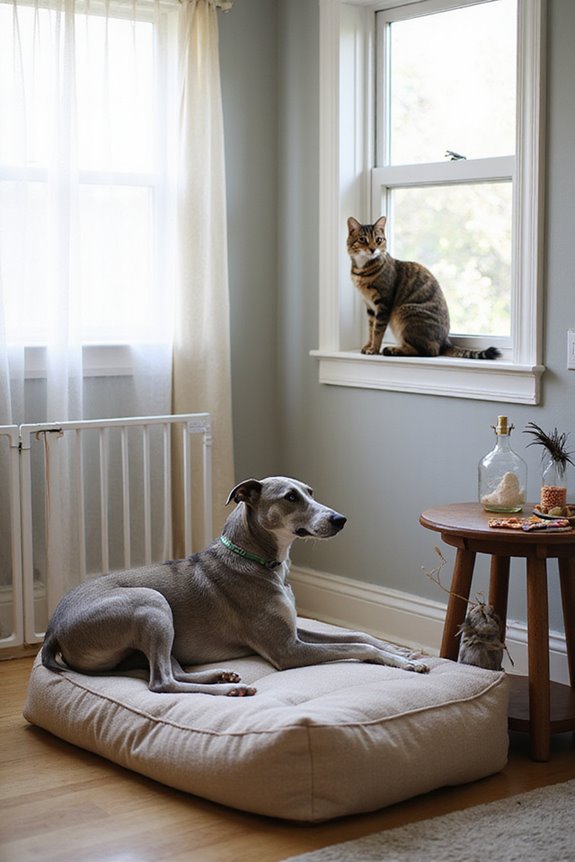
- Set up safe zones for the cat, such as high perches or separate rooms, allowing retreat if needed.
- Use baby gates or crates to maintain physical separation while facilitating sensory exposure.
- Scent swapping is vital; exchange bedding or toys to familiarize both pets with each other’s scent before direct interaction.
- Feed them on opposite sides of a closed door, creating positive associations.
Recommended Products

All-Purpose Sisal Twine Rope - When you are looking for a natural twine rope or sisal twine that offers maximum flexibility and superior strength, you need our natural fiber sisal. It's stronger and lasts longer than jute rope or jute twine. Its resistance to water makes it an ideal nautical rope. Perfect as twine for crafts, rope for DIY, outdoor twine for gardening, clothesline rope or any heavy duty indoor or outdoor application.

🐈【All-in-One Cat Castle】Sturdy & stable, fun & scratch-friendly, washable covers, decor-matching design.

Creative and Interesting Flower-Shaped Cat Wall: This cat wall furniture is both practical and decorative. While providing your cat with the opportunity to entertain himself, the shape of pink flowers and green leaves adds a pleasant feeling to your interior decoration
Sensory Familiarization Techniques
Sensory familiarization plays a vital role in the successful introduction of sighthounds and cats. To start, we can facilitate scent exchanges by using a clean sock rubbed on the sighthound’s face to collect pheromones. This sock can then be placed in the cat’s area, allowing the cat to explore the newcomer’s scent.
Using pheromone diffusers, like Feliway, can enhance this process, creating a calming atmosphere. We should also incorporate auditory exposure by letting them hear each other without visual contact, reducing surprise. Short, frequent sessions will help build comfort. Always reward calm behavior to reinforce positive interactions, emphasizing it’s essential to avoid rushing this process. With patience, we create an environment for peaceful introductions. Additionally, providing a warm and safe living environment for both pets is crucial in helping them feel secure during the adjustment period.
Recommended Products


FELIWAY Optimum is a patented* pheromone discovery developed by the #1 vet recommended brand to help reduce common signs of stress in cats such as: scratching, urine spraying, conflicts between cats, and excessive hiding.
Visual Introduction Strategies
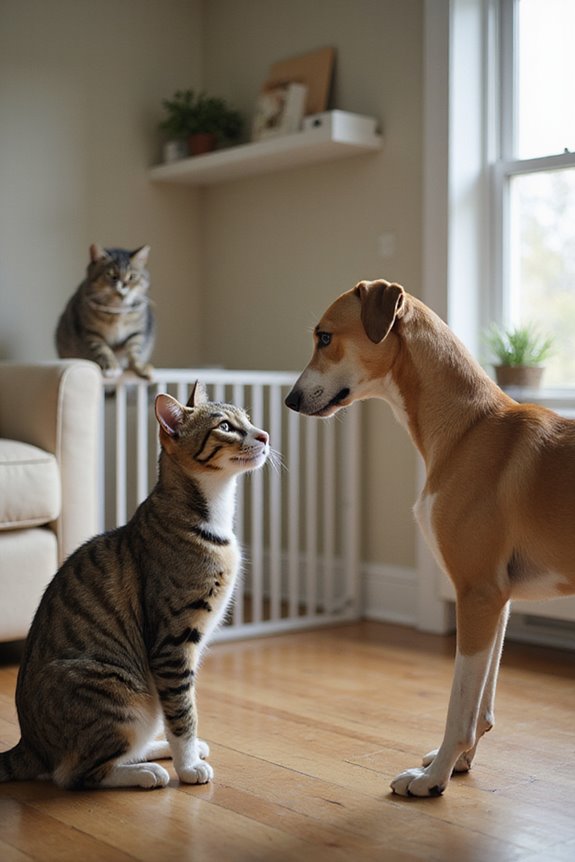
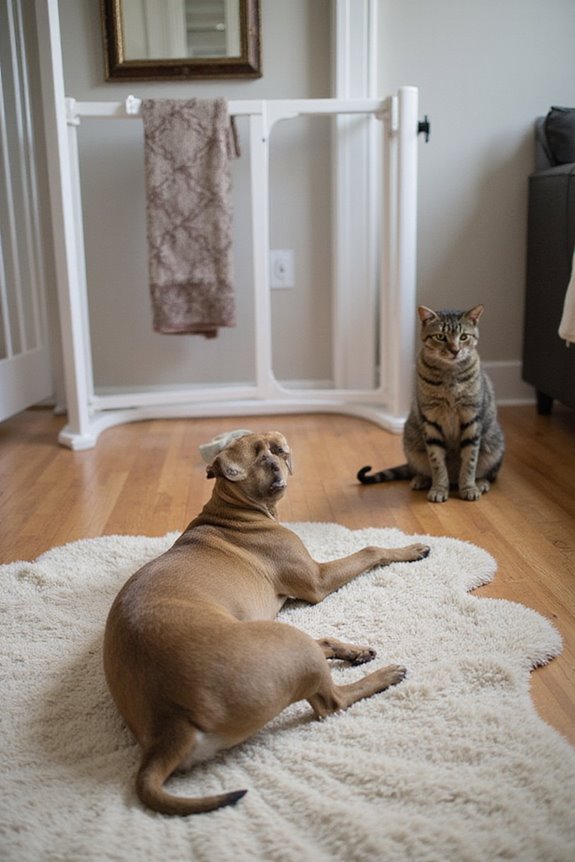
Visual introduction strategies are essential for safely integrating sighthounds and cats into the same household. We can start by employing visual barrier techniques, such as double-stacked baby gates or high pet gates, allowing sight without physical contact. To enhance safety, affix pillowcases or towels, preventing cats from escaping.
Next, we should use gradual exposure by gradually raising a covering, maximizing comfort. Initially, maintain a distance of 10 feet and reduce it as cats adapt.
Utilizing visual feeding sessions can reinforce positive associations, positioning bowls closer over time as eating becomes peaceful. Additionally, ensuring both pets receive high-quality protein during separate feeding times can promote a sense of security and stability in their environment.
Finally, we must monitor body language closely, adjusting barriers as needed to prevent negative behaviors, ensuring the introduction process remains calm and controlled.
Recommended Products

Tough and Trusted: Offering exceptional durability, security, and convenience, this roto-molded dog kennel is built to protect your pet during hunting trips, camping adventures, cross-country travel, or any journey you take together

【NEWEST TRANSPARENT DOG PLAYPEN】SOLOWINNER clear puppy playpen broke the traditional cage fence design and adopted high-quality PE material and PET board, it's like a bright yard, more beautiful and atmospheric, easy clean, which makes your furry friend no longer anxious and feel like live in prison, never worry about your pet stucking in the fence, besides, it's convenient for you to observe your beloved pets.

【Large Corner Dog Crate Furniture】YITAHOME furniture-style corner dog crate measures 88.6"L x 29.9"W x 33"H and features an L-shaped design to save space for you. It can be easily converted between a TV cabinet cage, a stackable cage, and an L-shaped corner cage. It can also be divided into two separate cages
Controlled Physical Interaction
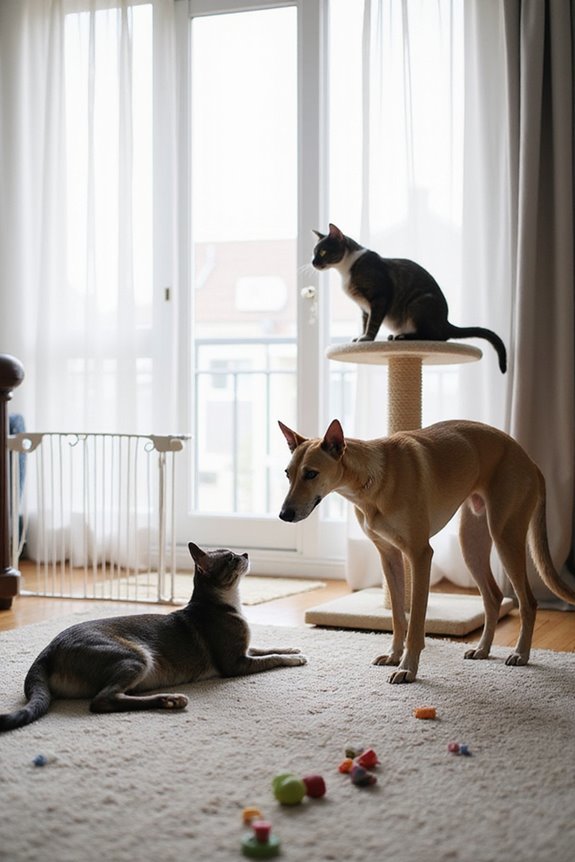
To guarantee a successful introduction between cats and sighthounds, we must create a controlled physical interaction environment. Here are essential steps to follow:
- Start introductions in a neutral, confined space, using barriers such as baby gates for safety.
- Ascertain both pets can escape if they feel trapped, promoting a sense of security.
- Keep initial interactions short, around 5-10 minutes, to minimize overstimulation.
- Monitor their body language; only allow brief sniffing or gentle touching if both appear relaxed.
- Immediately redirect any rough play or aggressive behavior using calm commands.
- Gradually increase the interaction duration as they show comfort and tolerance. Additionally, ensuring that the sighthound is wearing a appropriate lightweight coat may help to keep them calm and comfortable during the introduction process.
Recommended Products

HYBRID WARMTH THAT MOVES. 250 g recycled insulation on the upper and belly locks in heat; breathable 4-way-stretch side panels and StormSleeve flex with every stride, keeping active dogs warm without bulk.

TRAIL-TESTED WARMTH FOR ALL SIZES. Soft, recycled fleece traps heat on cold walks and frosty trail days. Lightweight and cozy. Keeps short‑haired pups, seniors, and small breeds comfortable, from quick breaks to longer walks.

Dog Life Vest was tested in oceans, swimming pools, and lakes. While human life jackets use an ISO standard, no such standard exists for dog life jackets. Therefore, we created a test that closely aligns with human standards to produce a uniquely floating vest.
Training Techniques for Calmness
Training techniques for calmness are essential when introducing cats to sighthounds, as these methods help create a harmonious interaction. Here are some effective strategies:
- Focus Training: We should establish a reliable “NO” or “leave it” command to redirect the dog’s attention away from the cat. Using high-value treats reinforces this behavior, enhancing motivation.
- Impulse Control: Teaching impulse control techniques begins in distraction-free spaces, gradually increasing difficulty as the dog learns to ignore the cat.
- Desensitization: Start introductions in a quiet room, keeping a safe distance. As the dog remains calm, we can slowly reduce that distance over time.
- Positive Reinforcement: Reward calm behavior swiftly with treats and praise, encouraging a peaceful association with the cat’s presence. Multiple short sessions cultivate lasting calmness. Additionally, understanding a dog’s unique body shape can help in selecting appropriate harnesses that support the sighthound’s calm demeanor.
Recommended Products

[ALL THE COLORS IN ONE VEST] Change between 8 super bright solid colors - Red, Yellow, Magenta, Blue, Purple, Pink, Green, and Cyan AND 6 eye catching multicolor flashing and slow fading color modes – Disco Dog, Rainbow, Cool Comet, Rescue, Independence Day, and Photon Burst. Our special illumination modes are based on visual science to give visibility to your pets and warning to motorists. Modes are easily selectable at the press of a button, easy to access during a walk, run, or backyard fun.

ENJOY STRESS-FREE WALKS: Enjoy walking your dog again! Our patented no-pull design gently discourages pulling for better control. No choking or gagging—just happy walks! Includes both harness and training leash for all you need.

ENJOY STRESS-FREE WALKS: Enjoy walking your dog again! Our patented no-pull design gently discourages pulling for better control. No choking or gagging—just happy walks! Includes both harness and training leash for all you need.
Environmental Considerations
Environmental considerations play an essential role in facilitating a safe and harmonious introduction between cats and sighthounds. Here are key factors to keep in mind:
- Space Requirements: Provide elevated areas like cat trees, allowing cats to escape from sighthounds. Designate cat-only zones secured by baby gates or doors for added refuge.
- Safety Measures: Guarantee secure latches on doors and windows to prevent escapes. Use barriers, like playpens, for initial meetings, and always keep sighthounds on a leash for control.
- Controlled Environment: Start introductions in neutral spaces to minimize territorial behavior. Limit interactions per day to avoid overwhelming either pet, guaranteeing a gradual adjustment process. Additionally, consider using orthopedic dog beds to give sighthounds a dedicated and comfortable space during the introduction phase.
Ongoing Monitoring and Adjustments
Ongoing monitoring and adjustments are essential for ensuring a safe and effective relationship between cats and sighthounds. We should engage in ongoing observation of both animals, looking for signs of stress or predatory behavior like fixed gazes or trembling. It’s crucial to monitor avoidance cues in cats and dogs, noting any behavioral adjustments needed.
- Supervise all interactions, increasing unsupervised time slowly as they demonstrate calmness.
- Use positive reinforcement for desirable behaviors in sighthounds.
- Implement a no-chase policy rigorously to protect the cat.
Building Trust Over Time
Building trust between cats and sighthounds is a gradual process that requires patience and a keen understanding of feline behavior. We need to observe trust indicators, such as a cat sitting within arm’s reach or rubbing against us. These actions signify their emerging curiosity and comfort.
Routine importance can’t be overstated; establishing consistent daily schedules decreases stress for our cats. Predictable feeding and interaction help them feel safe, encouraging relaxed behavior.
Allowing cats to take control during interactions fosters trust. We must avoid forcing encounters and instead create safe retreats for them, offering hiding spots. Positive associations, like treats, can further support their comfort and willingness to engage, reinforcing the bond slowly and naturally.
Frequently Asked Questions
What Signs Indicate a Sighthound May Chase a Cat?
When we watch sighthounds, subtle signs send strong chase signals. A stiff stance, fixed gaze, and frantic feet foreshadow trouble. Their body language—panting, pacing, or pinned ears—tells us they’re interested, not friendly.
How Can I Assess My Sighthound’s Prey Drive?
We can assess our sighthound’s prey drive by observing their reactions to small animals using training techniques like controlled introductions. Monitoring for intense focus, stalking, or vocalizations helps us understand their instincts and manage them appropriately.
Are Specific Cat Breeds Better Suited for Sighthounds?
While breed characteristics matter, we must recognize temperament compatibility often dictates success. Sighthounds show varied instincts—some may coexist well with certain cats, but individual personalities ultimately play an essential role in harmony.
How Long Does It Typically Take for Successful Introductions?
Successful introductions typically take several days to weeks. By using timing strategies and gradual exposure, we can guarantee both pets feel comfortable, making the shift smoother and more positive for everyone involved.
What Should I Do if the Initial Introduction Goes Poorly?
If the initial introduction goes poorly, let’s separate the cats immediately. We can try alternative introductions through gradual exposure, using scent swapping and supervised visual sessions, ensuring a calmer environment for both pets. Patience is key!