As an Amazon Associate, we earn from qualifying purchases. Some links on this site are affiliate links at no extra cost to you. Our recommendations are based on thorough research and editorial judgment.
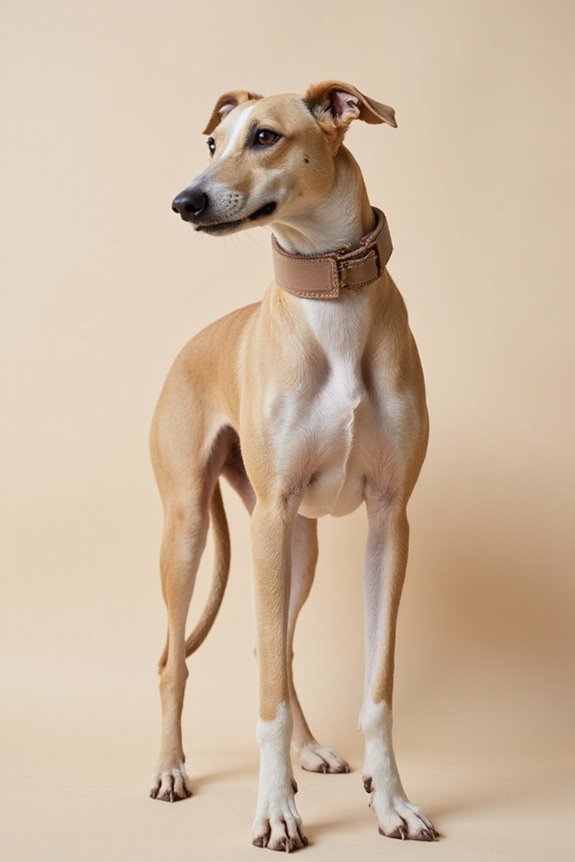
How Do I Choose The Right Collar For My Greyhound?

To choose the right collar for our Greyhound, we should start by measuring the neck circumference just behind the ears, allowing space for two fingers. Recommended sizes include: XS (19-28.5 cm), S (22-33 cm), M (29-39 cm), L (33-42 cm), and XL (38-50 cm). Opt for a martingale or padded collar for comfort and safety. Regularly check for wear and adjust as needed. We’ll explore more collar options and considerations to guarantee our dog’s well-being.
Key Takeaways
- Measure your Greyhound’s neck circumference carefully to determine the appropriate collar size, allowing for two fingers of space for comfort.
- Choose a martingale collar to prevent slipping and ensure a gentle fit, accommodating Greyhounds’ unique neck structure.
- Consider wider collars (1.5-2 inches) for better pressure distribution and avoid collars that could choke or harm.
- Use padded collars or body harnesses for sensitive necks, and regularly check for wear and tear to maintain safety.
- Select collars based on your dog’s activity level, with durable options for outdoor use and lightweight choices for indoor comfort.
Understanding Greyhound Neck Measurements
When selecting a collar for your Greyhound, understanding neck measurements is essential for achieving the right fit. To determine the correct neck circumference, we should measure just behind the ears and under the chin. This area is the narrowest part of the neck, ensuring a secure collar that won’t slip off during activity.
Here are effective measurement techniques:
- Use a soft, flexible tape measure to contour the neck.
- If unavailable, a string or old collar works too, measured with a ruler.
- Take multiple measurements for accuracy and allow space for two fingers under the tape for comfort. Additionally, it’s crucial to remember that regular checks are necessary as dogs may grow or gain weight, which can affect the collar fit.
Recommended Collar Size Ranges
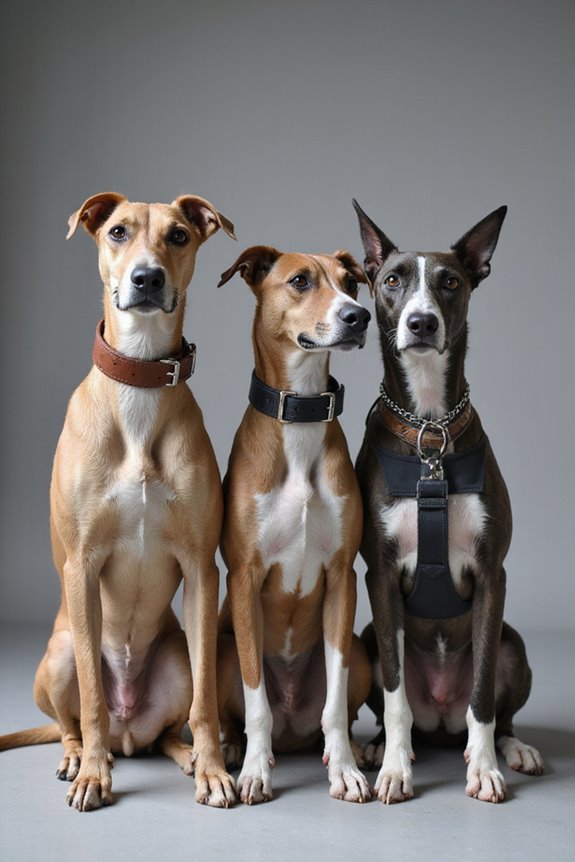
Selecting the right collar size for a Greyhound is vital for their comfort and safety. Here are the recommended size ranges based on neck circumference:
- Extra Small (XS): 19-28.5 cm; ideal for small sighthounds.
- Small (S): 22-33 cm; fits adult Whippets and similar.
- Medium (M): 29-39 cm; suitable for medium-sized Greyhounds.
- Large (L): 33-42 cm; designed for larger Greyhounds.
- Extra Large (XL): 38-50 cm; collars are wider for very large dogs.
We should guarantee proper fit by measuring snugly behind the ears and under the chin. For comfort, it’s advisable to add 2 cm to the measured neck circumference. Selecting the appropriate collar type is vital for their safety, as size variations can affect overall comfort. Additionally, choosing a collar made from high-quality materials can enhance durability and comfort for your dog.
Types of Collars Suitable for Greyhounds
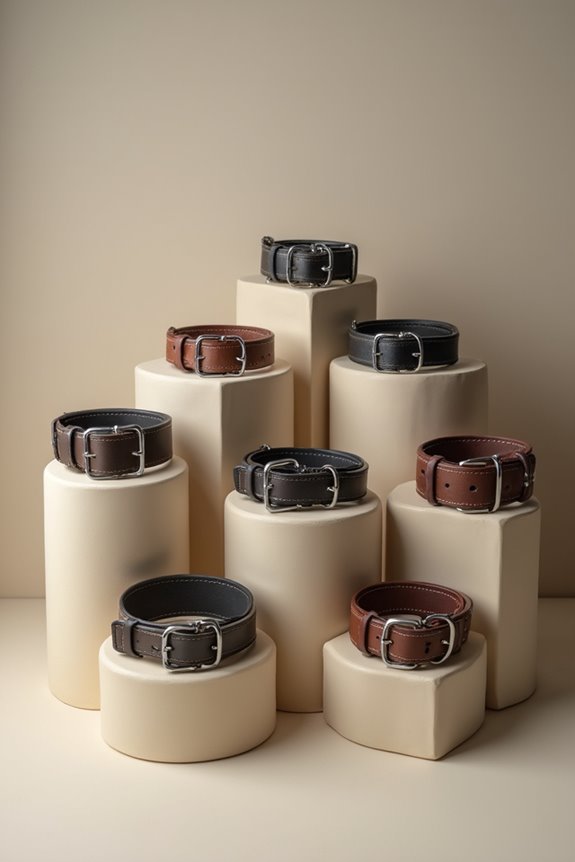
Finding the right type of collar for a Greyhound is vital for their comfort and safety. Here are some collar types we recommend:
- Martingale Collars: These feature a two-loop design that provides gentle tightening, perfect for Greyhounds. They’re made from types of collar materials like nylon or velvet, and wider versions (1.5-2 inches) help disperse pressure. Additionally, martingale collars are particularly beneficial because they prevent slipping during walks, which is a common issue with traditional collars.
- Flat Collars: Typically buckle-style, these are made from nylon but can be tight-fitting. While common, they’re not ideal for Greyhounds due to their neck shape, risking escape.
- Head Collars: Useful for training, they loop below the eyes and can help redirect a dog’s movement.
Choosing a collar that fits your Greyhound’s unique design preferences guarantees their comfort during everyday activities.
Material and Construction Considerations
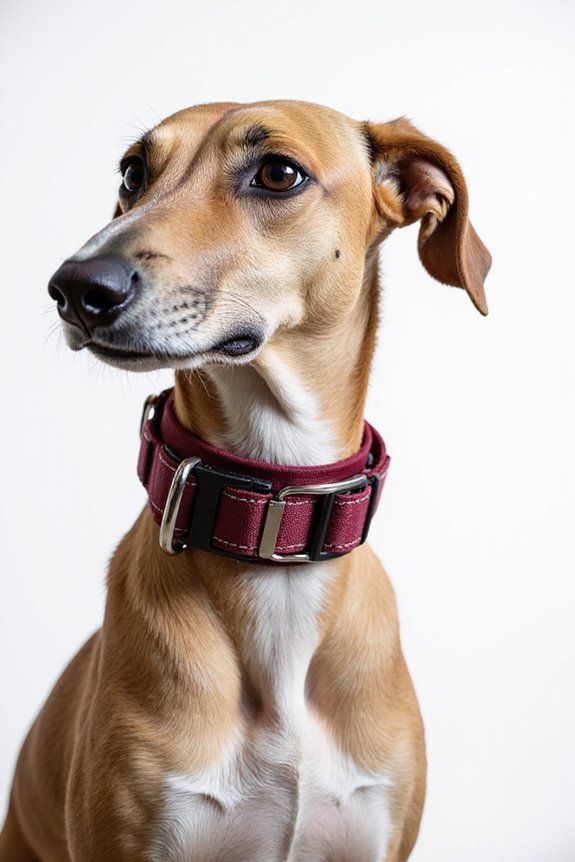
Choosing the right materials and construction for a Greyhound collar is essential, as it affects both comfort and longevity. Here are key considerations to keep in mind:
- Material Types:
- Nylon webbing: Lightweight, durable, and dries quickly.
- Leather: Offers comfort and can be customized.
- Cotton fabric overlays: Soft yet strong for sensitivity.
- Recycled materials: Eco-friendly options that maintain durability.
- Construction Features:
- Wider webbing (1” to 2”) improves pressure distribution.
- Heat-melted raw edges prevent fraying.
- Tight stitching enhances strength and resistance. Martingale collars, known for their gentle tightening mechanism, specially suit Greyhounds due to their unique neck structure.
Safety and Adjustment Features
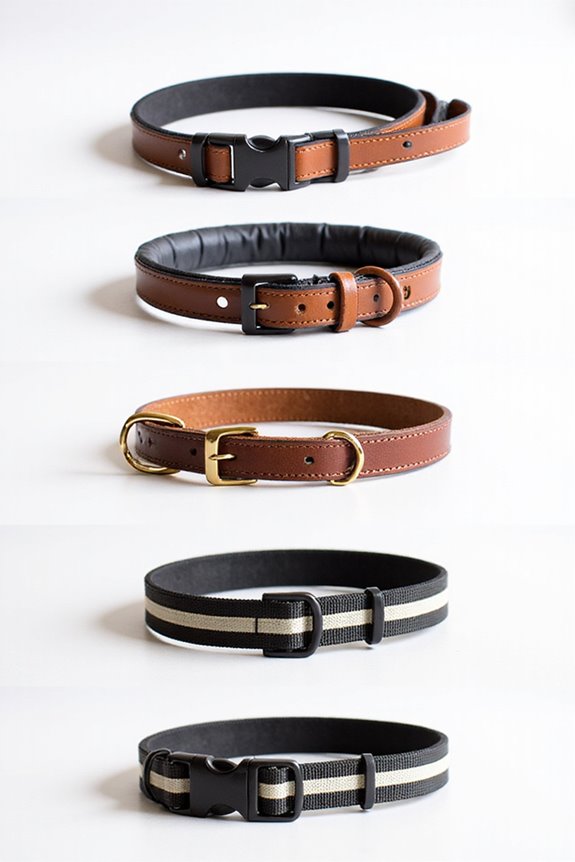
While selecting the right collar for our Greyhound, it’s crucial to take into account the safety and adjustment features that guarantee a secure and comfortable fit. A Martingale collar offers an adjustable fit that prevents our dog from slipping out, making it ideal for Greyhounds.
Key features include:
- Gentle Tightening: Limits choking potential while providing control.
- Two-Loop Design: Assures a snug yet comfortable fit around the neck.
- Frequent Fit Checks: Important for accommodating changes in size or weight.
It’s imperative to adhere to safety practices by supervising our dog when the collar is worn, avoiding outdoor use unattended, and removing it during crate time. These precautions help keep our Greyhound safe and secure during various activities.
Additional Measurement Tips
Accurate measurements are essential when selecting a collar for our Greyhound, as a properly fitted collar can enhance both comfort and safety. To achieve this, we should utilize the following measurement techniques:
- Use a soft, flexible tape measure for comfort and accuracy.
- Measure just behind the ears, under the chin, and at the mid-neck to account for variations.
- Include measurements for the largest head circumference and smallest neck circumference to guarantee a proper fit, especially for martingale collars.
- Take multiple measurements at different points to capture size nuances.
- Always add an extra 2 cm to neck measurements for fit and breathing room. Additionally, consider wide padded designs to help distribute pressure and maximize comfort for your Greyhound.
Common Collar Mistakes to Avoid
Many Greyhound owners make serious collar-related mistakes that can jeopardize both the dog’s safety and comfort. Here are some common collar misconceptions and errors to avoid:
- Incorrect Sizing: Not measuring a Greyhound’s neck accurately can lead to collars that are too loose or tight, risking escape or injury. A snug martingale collar requires about 1.5 to 2 inches added to the neck measurement.
- Prioritizing Style Over Function: Choosing collars based solely on looks neglects essential fit and durability factors.
- Improper Usage: Misusing martingale collars can compromise control. Confirm proper adjustment, allowing two finger widths of space.
- Neglecting Maintenance: Regularly inspect collars for wear and replace them every 6 to 12 months to maintain effectiveness. Additionally, ensure the collars are made of high-quality materials to withstand wear and provide comfort during use.
Maintenance and Care for Your Greyhound’s Collar
When we consider the maintenance and care for our Greyhound’s collar, it becomes vital to establish a routine that guarantees both cleanliness and longevity. Regular collar cleaning every few months, or more frequently if it gets dirty, helps maintain its condition. We should rinse the collar with warm water after outdoor activities and use mild soap for tough stains.
Proper collar storage is equally important. After washing, we should air dry collars away from direct sunlight to avoid fading. For leather collars, pat dry with a soft cloth and let them air dry at room temperature. Storing collars in a cool, dry place protects them from moisture, helping us extend their usable life greatly. Regular inspection of metal hardware is also essential to prevent rust.
Choosing the Right Collar for Specific Activities
Choosing the right collar for specific activities is essential not only for our Greyhound’s comfort but also for their safety and performance. When selecting a collar, we should consider collar functionality and activity suitability:
- Walking and Control: Martingale collars provide a snug fit, preventing escape. Head collars offer better control for training.
- Specific Activities: Sight hound collars are designed for high exertion like coursing, while lurcher collars provide neck support during intense activity.
- Indoor Use: Flat buckle collars are adequate for home, but breakaway collars enhance safety.
- Sensitive Necks: Opt for padded collars or body harnesses that distribute pressure evenly, avoiding choke collars that may injure delicate skin.
Frequently Asked Questions
How Do I Train My Greyhound to Wear a Collar?
Training our greyhound to wear a collar’s like gently introducing a new dance. We’ll use positive reinforcement and proper collar fitting, pairing fun training techniques with patience for the best results. Let’s enjoy the journey together!
Can I Use a Collar for a Greyhound Puppy?
Yes, we can use a collar for a greyhound puppy! We should choose adjustable collar types, like martingale collars, keeping greyhound growth considerations in mind to guarantee comfort and safety as they grow.
What Collar Style Is Best for Greyhound Racing?
For our greyhounds, adjustable racing collars like martingale collars and flat buckle collars are best. They offer security while allowing comfort, ensuring our dogs stay safe and stylish during training and racing events.
How Often Should I Replace My Greyhound’s Collar?
We should replace our Greyhound’s collar every 6 to 12 months, prioritizing collar maintenance tips. Opt for durable collar material options and regularly inspect for wear to guarantee comfort and safety during walks.
Are There Specific Collar Designs to Avoid for Greyhounds?
We should avoid collars that compromise safety, like choke, prong, or poorly constructed designs. It’s essential to contemplate collar materials, ensuring they’re sturdy and comfortable, preventing injury for our sensitive greyhounds during walks.