As an Amazon Associate, we earn from qualifying purchases. Some links on this site are affiliate links at no extra cost to you. Our recommendations are based on thorough research and editorial judgment.


Are Greyhounds Good Indoor Pets? For Puppies

Greyhounds make excellent indoor pets for puppies, as they adapt well to home environments. Their moderate exercise needs involve two daily walks of 20-30 minutes and indoor playtime. Greyhounds thrive in comfortable settings with proper temperature control. They typically require soft beds and engaging activities. Additionally, their gentle nature fosters a bonding experience. With proper care, training, and socialization, greyhound puppies can flourish indoors. If you’re interested, we can explore specific tips for their well-being.
Key Takeaways
- Greyhound puppies adapt well to indoor living with a comfortable, quiet environment and soft bedding for better sleep and reduced stress.
- They require daily exercise, necessitating two walks and playtime to meet their physical and mental activity needs.
- Greyhounds are sensitive to temperature, thriving in stable indoor conditions that provide warmth in winter and cooling in summer.
- Positive reinforcement training methods are essential for their sensitive nature, ensuring effective learning and bonding with owners.
- Regular veterinary care and a nutrient-dense diet are crucial to support their growth and health as indoor pets.
Understanding the Indoor Living Needs of Greyhound Puppies
When considering the indoor living needs of greyhound puppies, it’s essential to understand their unique requirements for both comfort and safety.
- Greyhound puppies, spending about 18 hours sleeping, need a soft, comfortable bed placed in quiet family areas to minimize stress.
- Puppy proofing indoors is essential; we should secure furniture and remove hazardous items to prevent injury during their teething phase.
- Additionally, indoor temperature management is important. Greyhounds are sensitive to temperature extremes and thrive in moderate environments.
- In colder months, we must maintain warmth, while providing cooling methods, such as evaporative blankets, during hot weather. Investing in orthopedic dog beds can significantly enhance their sleeping comfort and overall well-being.
Exercise Requirements for Indoor Greyhounds
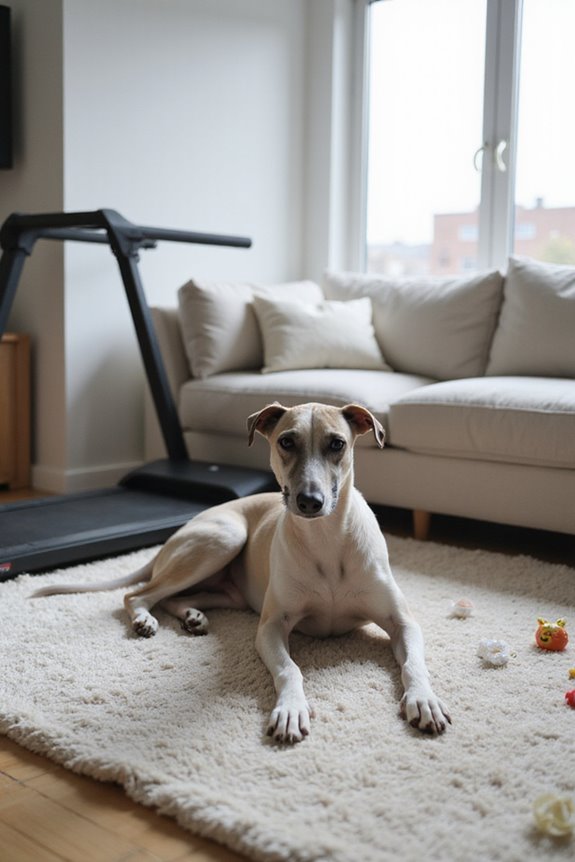
- Two 20-30 minute walks per day to meet their daily needs.
- Occasional short runs or zoomies in secure areas to enhance physical activity.
- Indoor activities, like playtime with toys, which supplement exercise and provide mental stimulation.
We can also modify exercise frequency, aiming for daily or every other day sessions. Remember, varying routes during walks keeps our greyhounds engaged. Combining outdoor and indoor exercise guarantees they stay fit, healthy, and content while living indoors. Additionally, using a proper martingale lead design can help you maintain better control during walks, preventing escapes and ensuring comfort.
Temperament and Behavior in Home Environments

Greyhounds possess a unique temperament that makes them well-suited for indoor living. Their greyhound temperament includes calmness and affection, allowing them to thrive in peaceful environments. Key characteristics of their indoor behavior include:
- Couch Potatoes: Greyhounds can sleep up to 20 hours a day, making them low-maintenance companions.
- Quiet Nature: They rarely bark, contributing to a serene household atmosphere.
- Affectionate Bonds: While shy with strangers, they form strong connections with their owners.
- Training Considerations: Their intelligence means they respond well to consistent, positive reinforcement, although they may resist obedience. Additionally, ensuring their comfort with a suitable sighthound bolster bed can greatly enhance their relaxation and overall happiness in indoor settings.
Health Considerations for Indoor Greyhounds
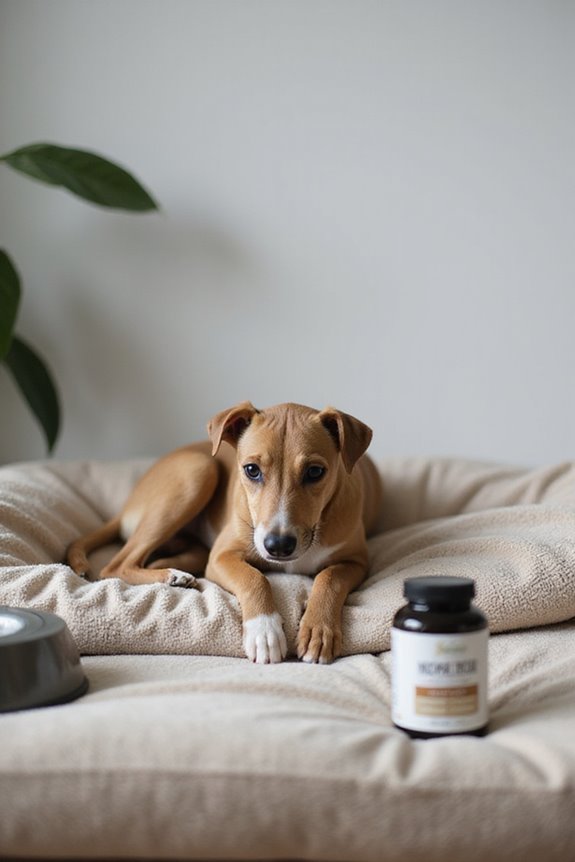
Maintaining ideal health for indoor greyhounds is essential, especially considering their unique physical characteristics and potential health issues. To guarantee their well-being, regular health monitoring is critical. This includes watching for signs of skin irritations, allergies, and any unusual behavior related to joint or dental health.
A consistent grooming routine can greatly benefit greyhounds. Their thin skin is prone to irritations, so soft bedding is necessary to prevent sores. Additionally, dental care is significant, as many may face tartar buildup or gum disease.
We must also be aware of their sensitivity to temperature changes. Providing a stable, comfortable environment is key to preventing health complications. Furthermore, incorporating high-quality protein sources in their diet is vital for maintaining their overall health. By staying diligent about these aspects, we can help our indoor greyhounds thrive.
Size and Space Adaptability of Greyhounds

When considering the size and space adaptability of Greyhounds, it’s important to recognize their unique physical traits and temperaments. Greyhounds typically stand 28 to 30 inches tall for males and 26 to 28 inches for females. Despite these height variations, their slim physique allows them to adapt well to indoor living.
Key points include:
- Size Variations: Greyhounds come in small, medium, and large categories, with larger dogs needing more space.
- Living Adaptations: They may require soft resting areas to accommodate their low body fat and prevent pressure sores. Additionally, providing them with orthopedic dog beds can enhance their rest and support their joints as they age.
Though they thrive in moderate spaces, it’s crucial to guarantee they get regular outdoor exercise, especially in smaller living environments like apartments. Adaptability is a defining feature of this breed.
Training Challenges and Techniques for Puppies
Training Greyhound puppies presents unique challenges stemming from their sensitive nature and inherent independence. Positive reinforcement is essential; harsh methods can lead to fear or aggression.
- Toilet Training: We should establish a consistent schedule for toilet breaks after meals and before bedtime. Watching for signals like barking helps us anticipate their needs. Clear verbal cues for elimination, paired with immediate rewards, enhance understanding.
- Command Adaptations: Traditional commands may not suit Greyhounds due to their unique anatomy. Instead, teaching commands like “lie down” can accommodate their structure. Short and engaging training sessions keep their attention, using varied activities to stimulate their instincts. Early training, ideally between 8 to 10 weeks, guarantees foundational habits develop effectively. Additionally, incorporating positive reinforcement techniques can significantly improve the training experience for Greyhound puppies.
Socialization Strategies for Greyhound Puppies
Socialization is a crucial aspect of raising greyhound puppies, especially given their sensitive nature and unique breed characteristics. We should focus on early exposure during the ideal window of 8 to 16 weeks. This timing helps build confidence and prevent fearfulness.
- Introduce various stimuli, including people, animals, and sounds, in a controlled environment.
- Use treats and praise to create positive experiences, avoiding fear-based techniques.
- Gradually expose puppies to social settings, starting with one-on-one interactions before larger groups.
- Monitor their body language, looking for signs of stress, and adjust our approach accordingly.
Creating a Comfortable Indoor Environment
Creating a comfortable indoor environment for greyhounds begins with understanding their unique physical and emotional needs. Here are key considerations for their well-being:
- Bedding Materials: Soft, cushioned beds, preferably orthopedic or memory foam, are vital to prevent pressure sores and joint discomfort. Make sure beds are placed in quiet, draft-free areas for warmth.
- Temperature Regulation: Greyhounds are sensitive to extreme temperatures. It’s important to maintain a stable indoor climate, using heating pads or warm blankets in colder months. Indoor areas must be climate-controlled, avoiding outdoor housing.
- Safe Space Setup: Designate a low-traffic area for rest, using baby gates to create a secure spot. Remove hazards within reach while providing easy access to food and water nearby for routine.
Dietary Considerations for Indoor Greyhounds
When it comes to keeping indoor greyhounds healthy, the right diet plays an essential role in meeting their nutritional needs. Here are some key dietary considerations:
- Greyhound puppies require nutrient-dense food, typically consuming 1,200 to 1,600 calories daily based on growth and activity.
- Feeding schedules should start with three to four meals daily, tapering to two as they mature.
- A balanced diet can include raw meats and vegetables, but we must avoid adding salt or seasoning.
- Portion control is crucial to prevent obesity and related joint strain.
- Monitor treats and consider healthy options like fruits in moderation.
Always consult a veterinarian for tailored dietary advice, considering any dietary restrictions specific to your greyhound’s health needs.
Building a Bond With Your Greyhound Puppy
Building a strong bond with your greyhound puppy is essential for fostering a healthy and positive relationship. We can achieve this through effective bonding techniques and consistent puppy routines. During the critical socialization period of 8 to 16 weeks, we should expose our puppies to various calm environments, from friends’ homes to parks, ensuring they feel confident and safe.
Frequently Asked Questions
Can Greyhounds Live Comfortably in Small Apartments?
Yes, greyhounds can live comfortably in small apartments if we meet their space requirements and exercise needs. Regular walks and mental stimulation are essential to guarantee our furry friends thrive in a cozy environment.
Do Greyhounds Require Special Grooming as Indoor Pets?
Greyhounds do have their unique grooming needs, but we find their coat maintenance quite manageable. With minimal brushing and occasional baths, they thrive happily indoors, bringing joy without overwhelming our schedules.
How Do I Manage a Greyhound’s Prey Drive Indoors?
To manage our Greyhound’s prey drive indoors, we focus on behavioral training and engaging indoor activities. We use structured routines, redirection, and safe games to redirect their energy while reinforcing calm behavior around moving objects.
Are Greyhounds Good With Children in Indoor Settings?
Like a gentle breeze on a warm day, greyhounds are generally great with children indoors. With proper greyhound training and understanding their behavior, we can guarantee harmonious interactions, promoting love and respect within our homes.
What Is the Average Lifespan of Indoor Greyhounds?
The average lifespan of indoor Greyhounds is around 12 years, but health considerations like sensitivity to anesthetics and joint issues can affect that. With proper care, they can live longer and healthier lives.