As an Amazon Associate, we earn from qualifying purchases. Some links on this site are affiliate links at no extra cost to you. Our recommendations are based on thorough research and editorial judgment.


Are Sighthounds Easy To Train?

Sighthounds can be challenging to train due to their unique behavioral traits. Their strong prey drive and reliance on sight often lead to impulsive actions, which can make communication difficult. Successful training involves:
- Utilizing marker techniques and high-value treats.
- Implementing games to engage their natural instincts.
Consistency and commitment from owners are essential. Gradually exposing them to various environments can enhance training effectiveness. There’s much more to explore about their behavior and training strategies.
Key Takeaways
- Sighthounds can be challenging to train due to their strong prey drive and impulsive behavior.
- Employing positive reinforcement techniques, like high-value treats, can enhance training success.
- Understanding their unique genetic traits is vital for adapting training methods effectively.
- Reactivity and anxiety management are essential for nervous sighthounds to foster a stable training environment.
- Owner commitment and consistency in training approach greatly influence a sighthound’s responsiveness.
Understanding Sighthound Behavior
Understanding the unique behavior of sighthounds can enhance our approach to training and caring for these remarkable dogs. With their sighthound instincts, these breeds are specifically designed for hunting by sight, utilizing keen eyesight to detect movement at a distance.
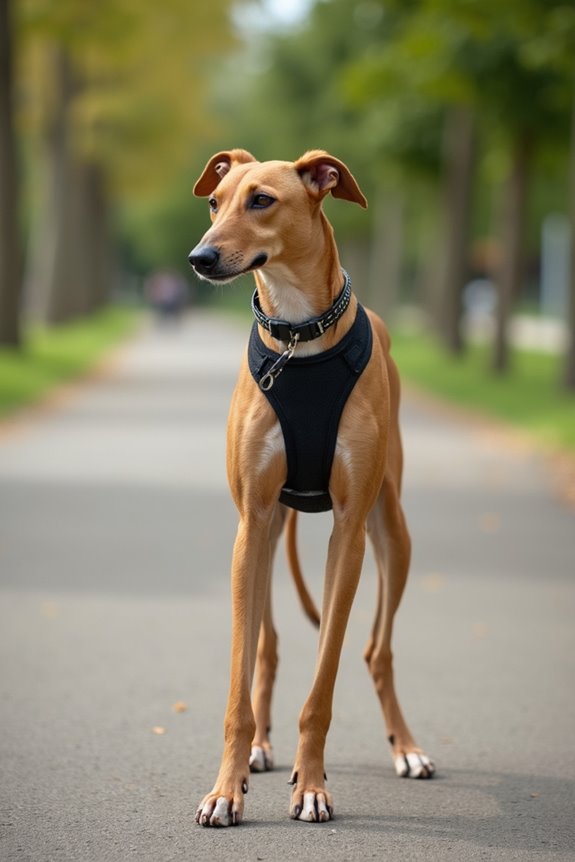
- Their wide-set, slightly protruding eyes offer extensive peripheral vision, while a dolichocephalic skull structure improves tracking capabilities.
- The strong prey drive results in an energizing need to chase moving objects, often found in their playful interactions.
However, this drive also means they can be impulsive, particularly with stimulating stimuli during walks. Recognizing these traits helps us create a nurturing environment while also addressing behavioral challenges, allowing us to enjoy fulfilling relationships with our sighthounds. Moreover, understanding their high-protein diet needs is essential for supporting their energetic lifestyle and overall health.
Training Techniques That Work

Recognizing the behavior of sighthounds allows us to employ effective training techniques that cater to their unique needs and inclinations.
- Marker Techniques: Consistently using clickers or verbal cues helps us clearly communicate correct behaviors, reinforcing them immediately with high-value treats. This builds muscle memory while avoiding harsh corrections that could inhibit learning.
- Game Motivation: Incorporating games like fetching or hide-and-seek engages their prey drive positively, making training more enjoyable and less of a chore.
- Two-Way Communication: Building a cooperative relationship with our sighthounds emphasizes understanding their body language.
- Recall Strategies: High-value rewards are critical for successful recall, especially given their independent nature. Practicing in controlled settings before increasing distractions can yield significant improvements. Additionally, maintaining a balanced diet rich in fiber and omega fatty acids can support their overall health and improve their training effectiveness.
Overcoming Training Challenges

Overcoming training challenges with sighthounds requires a nuanced approach that takes their distinctive behaviors into account. We often face reactivity when handling nervous sighthounds, which can stem from feeling unsafe. Proper reactivity management can quickly mitigate these feelings, leading to calmer interactions.
For excitable sighthounds, especially those with Saluki heritage, excitement control is vital. Their high prey drive can complicate leash training and impulse control.
Recognizing stress-induced behaviors is essential. We should create predictable environments to lessen anxiety and aggression.
Lastly, understanding their unique genetic traits affects training outcomes. Additionally, providing reflective safety vests during outdoor activities can enhance security and comfort for sighthounds. By considering these factors, we can develop specialized training plans that respect their individuality, ensuring more successful training experiences.
The Role of Owner Commitment

Effective training for sighthounds relies heavily on owner commitment, shaping not only the techniques we use but also the overall success of our training efforts. Our owner dedication to understanding their independent nature is essential. This includes adapting our methods to suit their unique communication styles and high prey drive.
- Consistency in our commands fosters better responsiveness and is critical for long-term obedience.
- Emotional investment plays a key role; patience helps us navigate training challenges while reinforcing sighthounds’ motivation.
- Engaging in positive reinforcement enhances trust, preventing stress during learning.
- Providing a diet rich in high-quality proteins can further support their physical health, making them more receptive to training.
Ultimately, our time and energy dedicated to daily training and socialization not only supports their wellbeing but also nurtures a deeper bond. Investing in these aspects guarantees a productive training journey together.
Environmental Considerations for Training

When training sighthounds, the environment plays an essential role in their learning process. We must consider how environmental noise and stimuli can impact their focus. To maximize success, we should:
- Begin training in quieter indoor settings that minimize distractions.
- Avoid urban environments at first; the traffic and crowds can overwhelm them.
- Select suburban areas that are serene yet provide some social stimulus, like calm dogs on leashes.
- Gradually expose them to more complex environments, ensuring a controlled distance of about 5 meters from other dogs to promote relaxation.
- Use securely enclosed spaces to prevent escapes due to their high prey drive. Additionally, incorporating a martingale lead design can help ensure better control and comfort during training sessions.
Socialization and Its Impact
Socialization plays a crucial role in the development of sighthounds, impacting their adaptability and behavior throughout their lives. Early socialization helps sighthounds encounter various environments, people, and noises, building their confidence. Structured activities should include:
- Introducing them to different dogs and busy places like parks.
- Gradually desensitizing them to potential stressors, which promotes a calm demeanor.
Inadequate socialization can lead to heightened stress responses and fear-driven behaviors, such as aggression. Well-socialized sighthounds adapt better to commands and exhibit improved obedience. Additionally, positive early experiences can prevent long-term anxiety, ensuring that our sighthounds remain responsive and cooperative during training. Ultimately, effective socialization establishes the foundation for successful behavioral adaptations that enrich their lives. Strong leash choices, especially those with heavy-duty materials, can further enhance training effectiveness by providing better control during socialization outings.
Physical Traits and Their Impact on Training
Understanding the physical traits of sighthounds is essential for effective training. Their vision advantages, like wide-set eyes and a specialized retinal structure, enhance their motion detection but can lead to strong prey drive that complicates impulse control.
- Agility factors, such as their slender bodies and flexible backs, facilitate high-speed pursuits but require safe training environments to prevent escape during distractions.
- Metabolism insights reveal their low-fat composition, demanding high-quality nutrition and careful conditioning to maintain energy.
- Breed differences, ranging from the Irish Wolfhound to the Italian Greyhound, necessitate tailored training approaches to suit specific physical needs and endurance levels.
Recognizing these traits helps us develop effective training strategies for our beloved sighthounds.
Frequently Asked Questions
Can Sighthounds Learn Tricks Quickly Compared to Other Breeds?
Sighthounds can learn tricks, but they often face training challenges due to their independent nature. While their intelligence allows for learning, we may need more patience and focus compared to other breeds.
How Do Sighthounds React to Training With Other Dogs Present?
Sighthounds often struggle with social distractions during training, affecting their pack mentality. We’ve noticed they require structured socialization to stay focused and minimize anxiety, helping them engage better in group settings with other dogs present.
What Age Is Best to Start Training a Sighthound?
We believe the best age to start training a sighthound is after their thorough puppy development, around 11 months, ensuring training readiness. Early socialization and positive reinforcement lay a strong foundation for success.
Are Sighthounds Suitable for First-Time Dog Owners?
Sighthounds aren’t ideal for first-time owners due to unique training challenges. Their subtle communication and independent nature can be tough to navigate without experience, making it essential to have patience, understanding, and proper guidance.
How Can I Assess a Sighthound’s Readiness for Training?
If we think of training like a grand dance, evaluating a sighthound’s readiness involves examining their behavior, motivation, and focus. We’ll look for calmness, responsiveness, and their excitement toward movement—critical for effective training.