As an Amazon Associate, we earn from qualifying purchases. Some links on this site are affiliate links at no extra cost to you. Our recommendations are based on thorough research and editorial judgment.

What Are Sighthound Breeds? For Puppies

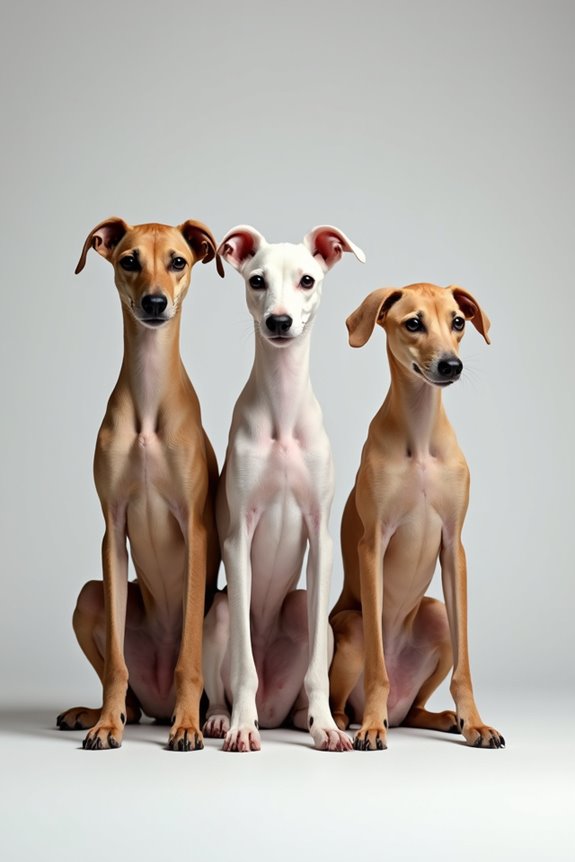
Sighthound breeds are distinctively known for their remarkable speed and keen vision. They were specifically developed for hunting, relying on sight to track fast-moving prey. Common breeds include the Greyhound, recognized as the fastest dog, and the Afghan Hound, noted for its elegant appearance. These dogs possess a slender physique, with powerful legs and large lungs for sprinting. Their unique traits make them fascinating companions, and further details on their care and training follow.
Key Takeaways
- Sighthound breeds are agile dogs designed for hunting, using their exceptional vision to chase prey rather than relying on scent.
- Common sighthound breeds include Greyhounds, Afghan Hounds, and Irish Wolfhounds, each with unique physical traits and temperaments.
- These breeds are characterized by their slender bodies, long legs, and flexible backs, which help them achieve high speeds.
- Sighthounds exhibit a calm demeanor with their families but may show aloofness towards strangers; they require gentle handling.
- Regular exercise is crucial for sighthounds, ensuring their physical health and managing their strong prey drive.
Definition and Purpose of Sighthound Breeds
Sighthound breeds, often referred to as gazehounds, represent a unique group of dogs distinguished by their exceptional vision and speed. These breeds are designed primarily for hunting, relying on sight rather than scent. Their impressive range of peripheral vision reaches up to 270 degrees, enabling them to spot movement from afar.
- Historically, sighthounds have been bred to chase fast-moving prey, such as hares and deer.
- They employ swift bursts of speed to capture targets, making them effective hunting partners.
- Their hunting instincts have evolved alongside humans, allowing them to work independently or cooperatively.
As we explore deeper into sighthound history, we’ll discover how these remarkable traits define their purpose in our lives. Additionally, it’s crucial to consider their nutritional requirements to ensure they maintain optimal health and energy levels.
Physical Characteristics of Sighthounds
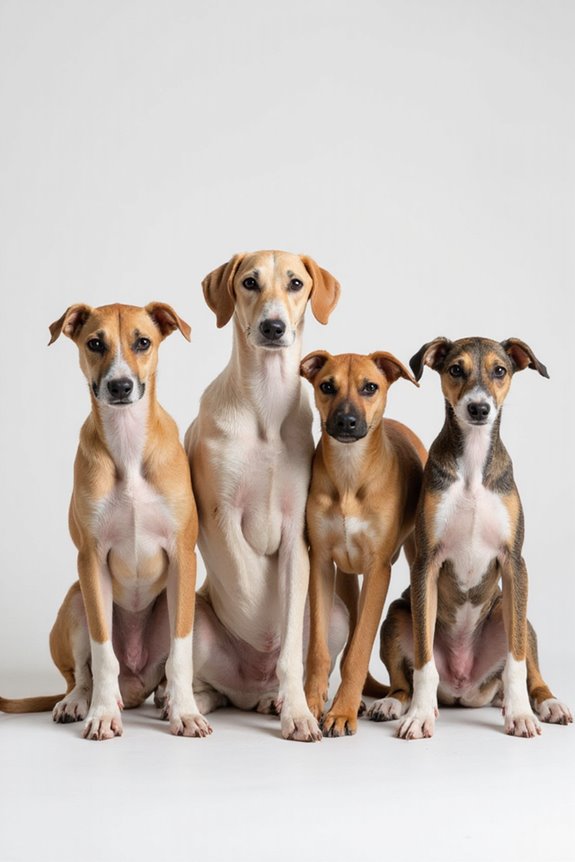
When we consider the physical characteristics of these remarkable breeds, several distinct traits emerge that facilitate their speed and agility.
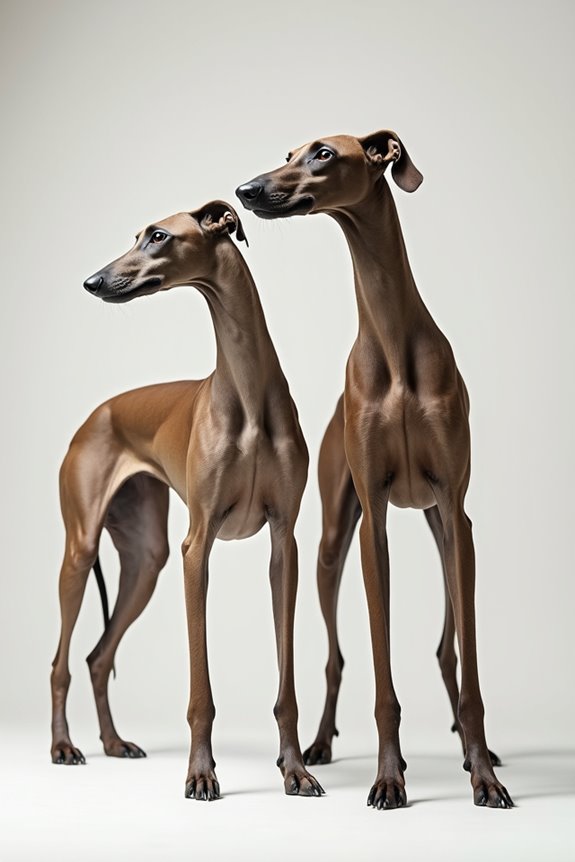
- Slender Anatomy: Their bodies are lean, with low body fat and fine bone structure, promoting speed. The notable “tuck-up” gives them an elegant hourglass figure.
- Aerodynamic Features: Long, narrow heads enhance aerodynamics, while wide-set eyes improve peripheral vision. This design allows them to track prey effectively.
- Limbs and Muscles: Equipped with long, muscular legs and powerful hindquarters, these breeds can accelerate rapidly. Their flexible backs contribute to a powerful stride.
- Respiratory Adaptations: Large lungs and efficient hearts are crucial for high-speed sprints, allowing sustained movement. Their physical structure resembles that of sighthound breeds, which are specially adapted for speed and hunting.
These traits collectively make sighthounds exceptional hunters of speed and grace.
Common Sighthound Breeds
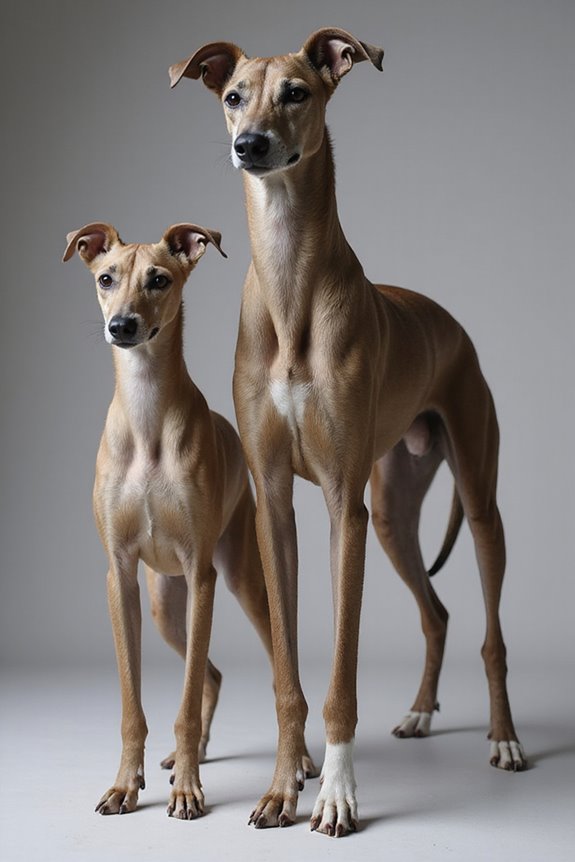
There are several notable breeds within the sighthound category, each exhibiting unique characteristics and histories that make them prized companions and hunters.
- Afghan Hound: Known for its long, silky coat, it has a rich sighthound history in hunting large game.
- Greyhound: Famous for being the fastest dog breed globally, recognized for its speed and stunning agility.
- Irish Wolfhound: Distinguished by its size, it has served as both a companion and a hunter of wolves.
- Saluki and Borzoi: Both are elegant and athletic, reflecting their long-standing roles in hunting cultures.
In terms of sighthound health, understanding breed-specific health issues is vital for responsible ownership and care. These breeds exemplify the diversity found within the sighthound group. Additionally, many sighthound breeds, like the gentle nature of greyhounds, are known for their calm demeanor, making them suitable companions for families.
Unique Breed Examples and Traits
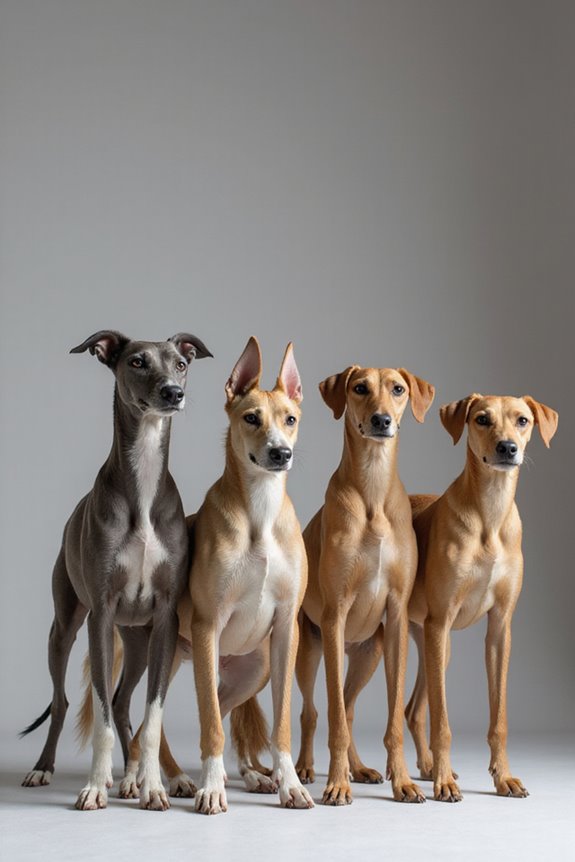
Unique adaptations set several sighthound breeds apart, showcasing their specialized physical traits and historical significance.
- Azawakh Traits: This breed is exceptionally lean, historically utilized for chasing gazelles and guarding livestock in the Sahara. Their deep chests support large hearts and efficient lungs, allowing for impressive bursts of speed.
- Ridgeback Characteristics: The Rhodesian Ridgeback is distinctively marked by a ridge of backward-growing hair. Originally bred to track lions, they exhibit strong loyalty and a significant prey drive, needing agility and speed.
- Speed and Agility: Sighthounds share a lightweight bone structure and visible musculature, ideal for high-speed pursuits. They’re built for agility rather than brute strength—a common theme across various breeds, ensuring effectiveness in sight-based hunting. Additionally, these dogs often benefit from tailored clothing designs to enhance their comfort and maintain their unique physique during colder months.
Personality and Behavioral Traits
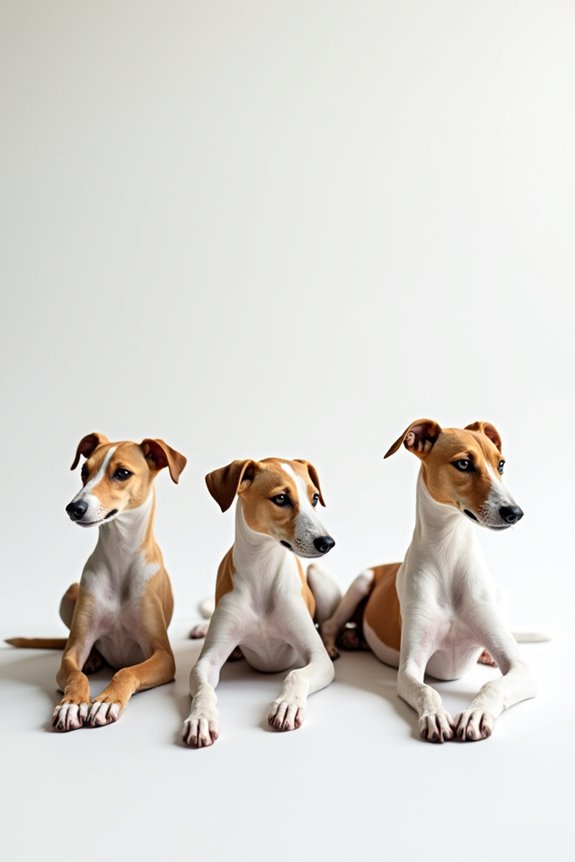
Sighthounds, known for their remarkable independence, showcase distinct personality and behavioral traits that set them apart from many other breeds.
- Their independent thinking allows them to make quick decisions when hunting, reflecting their intelligent and autonomous nature.
- Often aloof with strangers, these dogs develop deep affection for their families, demonstrating loyalty and emotional sensitivity.
- Sighthounds typically appreciate gentle handling, as their sensitive demeanor requires patience and positive reinforcement during training.
- Despite their calm, collected temperament, some may exhibit hyperactivity, linked to their strong prey drive that necessitates careful management. Additionally, regular exercise is crucial for maintaining their joint health, which supports their active lifestyle.
Considerations for Raising Sighthound Puppies
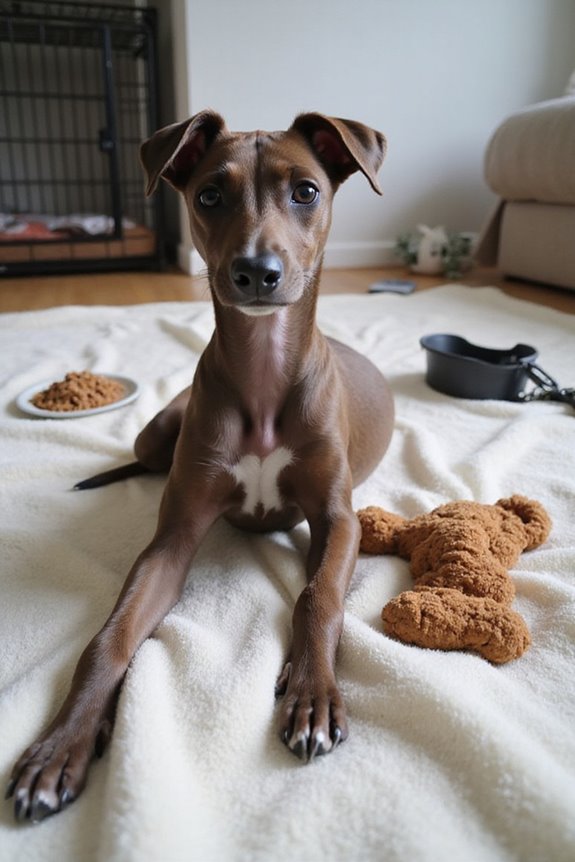
Raising sighthound puppies requires thoughtful consideration of their unique needs and characteristics. To create a safe environment, we should implement puppy proofing tips by removing dangerous items and securing our homes. Establish a consistent daily schedule, including feeding and playtime, which helps provide structure and security.
Crate training essentials are crucial for their adjustment. Using crates or playpens creates safe areas for them to rest and reduces anxiety. We must monitor their growth, especially as they reach new hazards, ensuring their safety. Additionally, providing a waterproof leash can enhance their training experience and maintain hygiene during outdoor activities.
Exercise and Mental Stimulation Needs
Moderate activities like retrieve games are ideal for harnessing their natural chase instinct in a constructive manner. Sighthound breeds typically require 30 to 45 minutes of exercise daily, balancing their lower to moderate energy needs compared to more demanding breeds.
- We should provide exercise routines that include both leashed walks and off-leash runs, as this promotes cardiovascular health while also strengthening muscles.
- Additionally, mental stimulation is vital; games like lure chasing engage their minds and prevent boredom-related behaviors.
- It’s important to facilitate free, fenced running to allow them to stretch and build muscle while exploring safely.
Socialization and Training Tips for Sighthound Puppies
When it comes to effectively socializing and training sighthound puppies, early exposure plays a critical role in their development. Here are key strategies we can use:
- Socialization techniques: Introduce puppies to various people and environments, ensuring they experience diverse sights, sounds, and textures. Pair these experiences with high-value treats to foster positive associations.
- Training methods: Use positive reinforcement to build trust and encourage good behavior. Maintain a calm demeanor, rewarding puppies for exploring new stimuli, and managing interactions with other animals through gentle redirection.
- Structured interaction: Supervised playdates with well-socialized pets help puppies learn appropriate social cues. Monitor interactions closely, intervening if tension arises.
Frequently Asked Questions
Are Sighthounds Good Family Pets?
Sighthounds can be great family pets! Their calm temperament and loyalty make them compatible with families, provided we socialize them early. With patience and care, they can thrive in our loving homes.
What Is the Lifespan of Sighthound Breeds?
Imagine we’re sipping tea with our pups! The Sighthound lifespan typically ranges from 9 to 17 years. As we cherish aging Sighthounds, let’s stay vigilant about their health and guarantee they’re comfy and well-loved.
How Do Sighthounds Adapt to Apartment Living?
Sighthounds adapt well to apartment living by needing daily outdoor exercise. Their slender bodies require less space indoors, so with ample indoor play and structured activities, we can keep them happy and healthy despite limited space.
Do Sighthounds Require Special Grooming?
Yes, sighthounds do require special grooming. We need to use proper grooming techniques for coat maintenance, adapting our approach based on coat type and sensitivity to guarantee our furry friends stay healthy and comfortable.
What Are Common Health Issues in Sighthounds?
Sighthounds often face health issues like genetic disorders and dietary needs, including hip dysplasia, eye diseases, and bloat. It’s essential we monitor their health closely to guarantee they stay happy and active.