As an Amazon Associate, we earn from qualifying purchases. Some links on this site are affiliate links at no extra cost to you. Our recommendations are based on thorough research and editorial judgment.

What Are Whippet Vs Greyhound Comparison Questions?

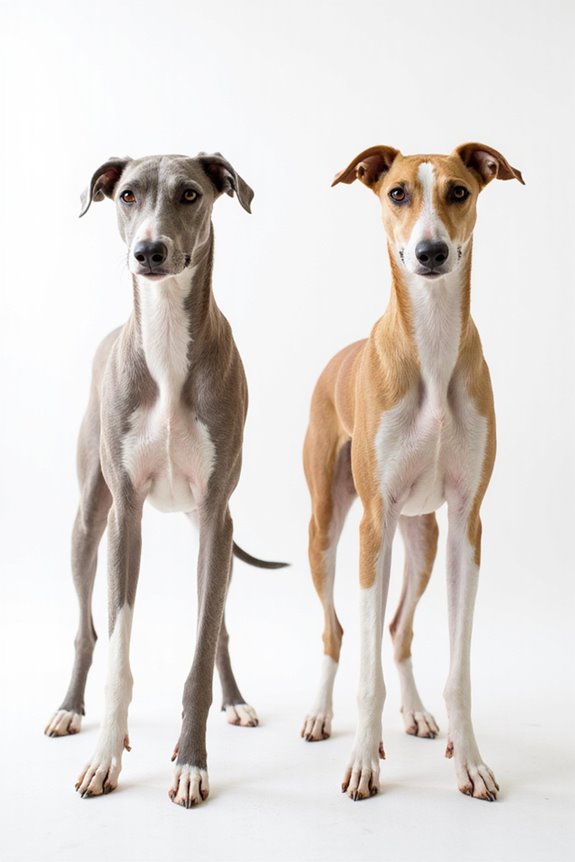
When we compare Whippets and Greyhounds, we notice several significant differences.
- Size: Whippets stand 18 to 22 inches tall and weigh 25 to 40 pounds, while Greyhounds reach 27 to 30 inches and weigh 60 to 70 pounds.
- Temperament: Whippets are gentle and independent, whereas Greyhounds are sweet and social.
- Exercise: Both breeds need ample exercise, with Whippets requiring 30-60 minutes and Greyhounds needing at least an hour.
By understanding these distinctions, we can better appreciate the unique qualities of each breed. More insights await.
Key Takeaways
- Whippets are smaller and lighter than Greyhounds, standing 18-22 inches and weighing 25-40 pounds, while Greyhounds reach 27-30 inches and weigh 60-70 pounds.
- Whippets are independent and laid-back, whereas Greyhounds are more socially inclined and form strong bonds with people.
- Exercise needs differ; Greyhounds require at least one hour daily, while Whippets need 30-60 minutes, ideally split into two sessions.
- Both breeds have distinct grooming needs, with Whippets requiring weekly brushing and Greyhounds needing special attention for shedding.
- Lifespan varies: Whippets average 12-15 years with fewer health issues, while Greyhounds typically live around 10-14 years but face more health challenges.
Size and Physical Dimensions Comparison
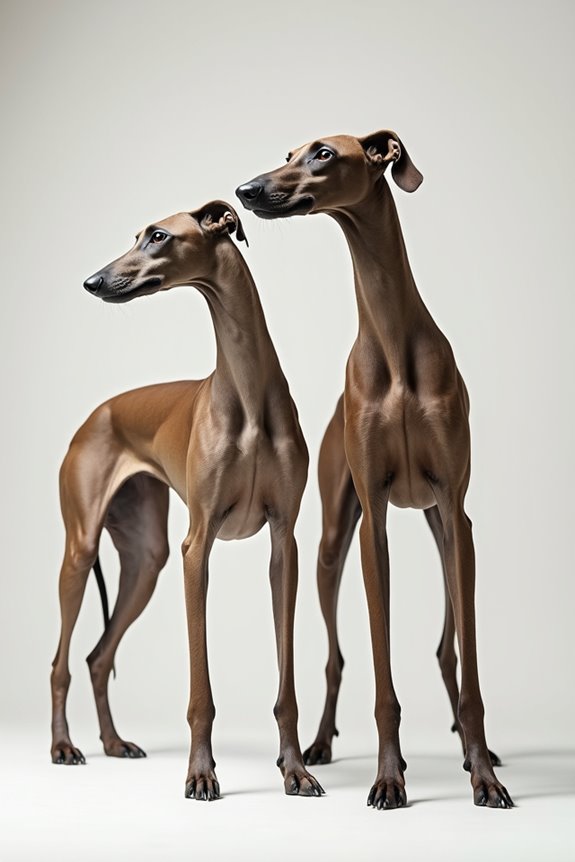
When we compare the sizes and physical dimensions of Whippets and Greyhounds, we notice significant differences that highlight their unique characteristics.
- Height Measurements:
- Whippets stand between 18 to 22 inches (44 to 56 cm) tall at the shoulder.
- In contrast, Greyhounds are taller, reaching around 27 to 30 inches (69 to 76 cm).
- Weight Categories:
- Whippets weigh approximately 25 to 40 pounds (11 to 18 kg).
- Greyhounds can weigh considerably more, ranging from 60 to 70 pounds (27 to 32 kg), sometimes even up to 100 pounds.
Thus, Whippets are medium-sized sighthounds, while Greyhounds hold a larger frame, showcasing their distinct builds. Additionally, their unique dietary needs often require tailored approaches to their feeding based on their size and age.
Temperament and Personality Traits Differences
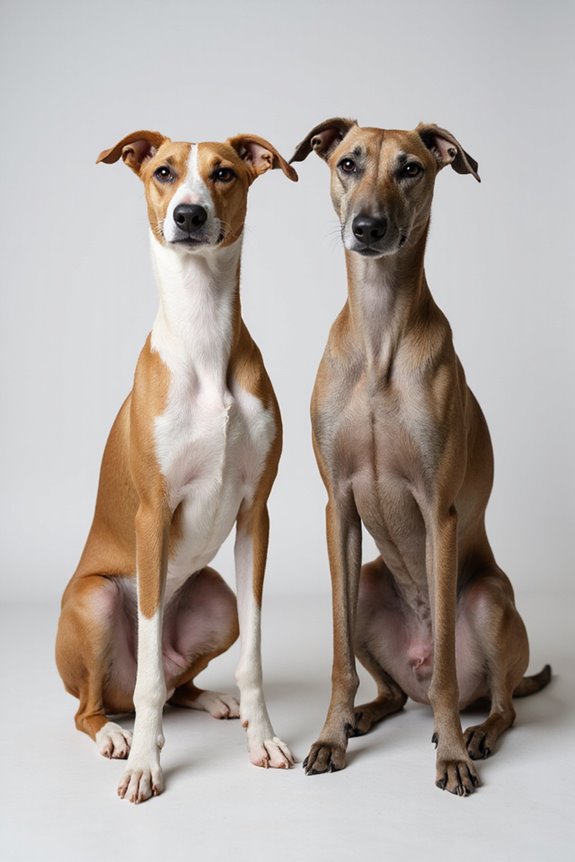
Understanding the differences in temperament and personality traits between Whippets and Greyhounds provides insight into their suitability as family companions.
- Whippets: These dogs exhibit quiet, gentle, and laid-back temperament traits. They thrive on companionship but are more independent, enjoying alone time without needing constant attention. However, they may develop separation anxiety if left alone for extended periods. Additionally, their affectionate nature makes them ideal for families with children and other pets.
- Greyhounds: Typically sweet and sensitive, they are more socially inclined and display affectionate tendencies toward family. They form strong bonds with humans but may struggle with jealousy in multi-pet environments.
Exercise and Activity Needs Distinctions
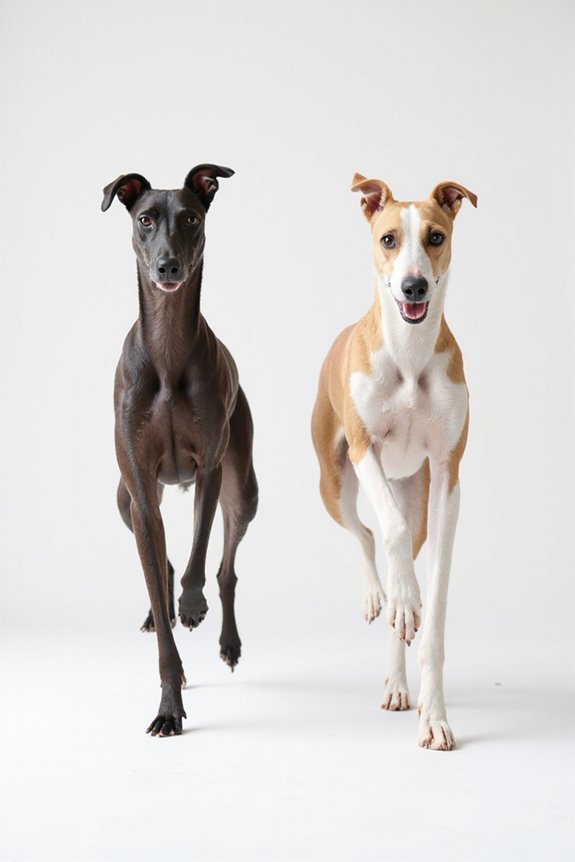
Both Whippets and Greyhounds have distinct exercise and activity needs that can inform potential owners about their compatibility with different lifestyles.
- Greyhounds require at least one hour of daily exercise to maintain their athletic condition, while Whippets need 30-60 minutes, ideally in two sessions.
- Both breeds thrive in secure, fenced areas where they can sprint, benefiting from their speed, with Greyhounds reaching up to 45 mph and Whippets 35-40 mph.
- They enjoy short, intense bursts of activity, followed by calm indoor rest.
- However, Whippets may experience anxiety and destructive behaviors without sufficient exercise, as they have moderate energy levels.
- Therefore, meeting their exercise routines and understanding their activity preferences is essential for their wellbeing and happiness. A balanced diet with high-quality protein sources is critical to support their energy needs during these activities.
Grooming and Skin Care Requirements
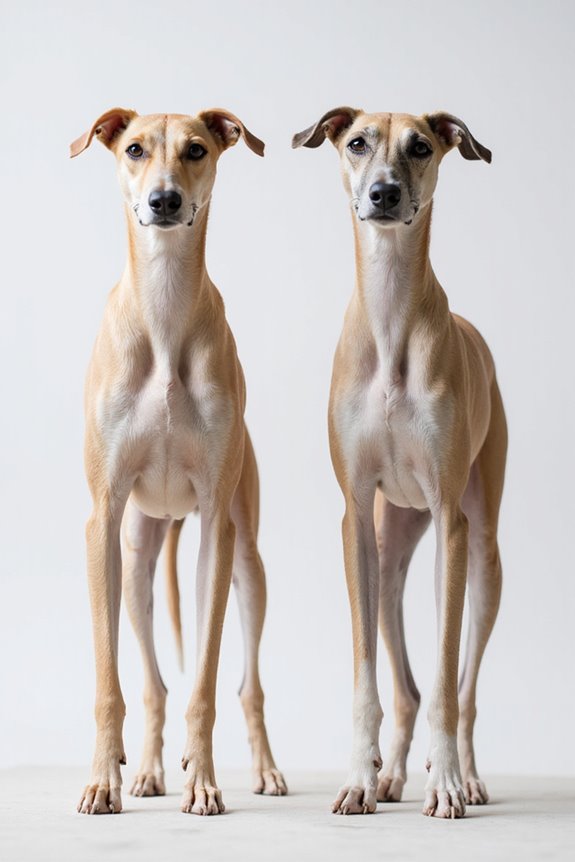
Grooming and skin care are essential components of maintaining the health and well-being of Whippets and Greyhounds, as their unique coat and skin characteristics require specific attention.
- Coat Grooming: We should brush our dogs once a week using soft bristle brushes or grooming mitts. Greyhounds may benefit from wire brushes for shedding management. Bathing is recommended every 2-3 months.
- Nail and Ear Care: Nail trimming is necessary every 2-3 weeks, and ear cleaning should happen weekly to prevent infections.
- Skin Sensitivity: Their thin coats make them sensitive to cold weather; protective clothing is recommended. We must use gentle grooming tools to avoid irritating their skin, monitoring closely for any signs of sensitivity or infection. Additionally, regular orthopedic dog beds can provide necessary support for their joints and overall comfort.
Lifespan and Health Considerations
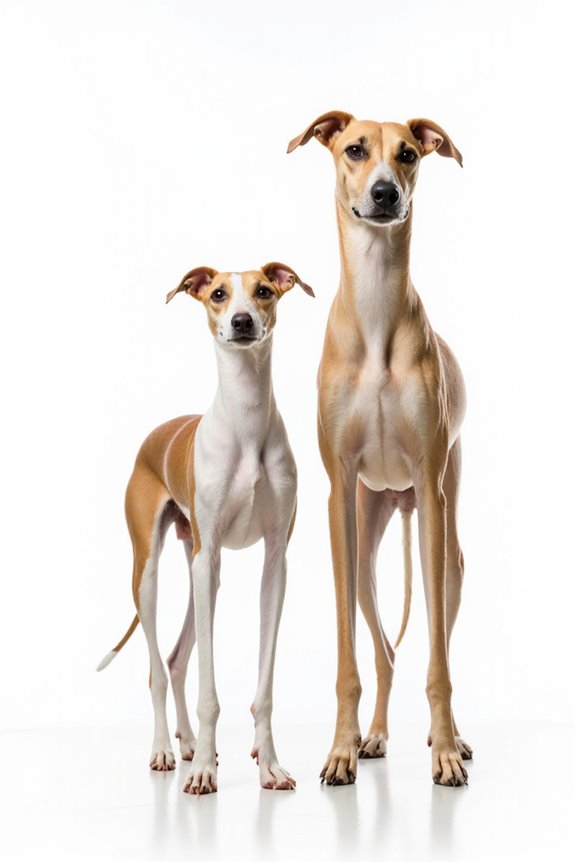
When considering the lifespan and health considerations for Whippets and Greyhounds, we find notable differences that may impact our choices as dog owners.
- Lifespan: Whippets enjoy a longer life expectancy, averaging 12-15 years, while Greyhounds typically live around 10-14 years.
- Whippet Longevity: Many Whippets can surpass 15 years in good health, largely attributed to their smaller size.
- Greyhound Health: This breed faces more health challenges, including bloat, bone cancer, and heart issues.
- Overall Health: Whippets show fewer chronic conditions and joint problems compared to Greyhounds.
- Additionally, the durability of collars for Whippets contributes to their overall comfort during walks, potentially influencing their health outcomes as they remain active and enjoy outdoor activities.
Breed Origin and Classification Variations
Understanding the breed origin and classification variations for Whippets and Greyhounds enhances our appreciation of these remarkable dogs.
- Greyhounds are one of the oldest sighthound breeds, with roots traced back to ancient Egypt, Greece, and Rome. They were introduced to the Americas by Christopher Columbus.
- Whippets, however, emerged in 19th-century England, resulting from a cross between English Greyhounds and Terriers, later infused with Italian Greyhounds.
- Both breeds fall under the Hound Group, recognized as sighthounds due to their reliance on sight and speed for hunting, showcasing breed similarities in physical attributes.
- The American Kennel Club recognized these breeds closely together, highlighting their historical significance and shared lineage. Additionally, both breeds benefit from weather-resistant coats that provide comfort and protection during outdoor activities in various conditions.
Ideal Living Conditions for Whippets Vs Greyhounds
Determining ideal living conditions for Whippets and Greyhounds is essential for ensuring their well-being and happiness.
- Apartment Suitability: Whippets adapt well to apartment living due to their smaller size and calm nature. Greyhounds, while capable of apartment life, require more space.
- Outdoor Access: Both breeds need daily outdoor time for exercise. Whippets enjoy short, intense sprints, while Greyhounds require longer walks and sprint sessions to satisfy their activity needs.
- Indoors: They both prefer lounging at home but shouldn’t be left alone for long periods. Providing secure outdoor spaces helps prevent restlessness.
Frequently Asked Questions
Do Greyhounds or Whippets Shed More Fur?
Both Greyhounds and Whippets shed minimally, so there aren’t significant shedding differences. If we’re focused on fur maintenance, either breed suits us well, making them great choices for those wanting low-shedding companions.
Can Greyhounds and Whippets Live in Apartments?
Imagine cuddling with a sprinter on the couch; both Greyhounds and Whippets fit apartment living perfectly. Their calm energy levels make them ideal companions, showcasing great apartment suitability while encouraging cozy moments in our shared spaces.
How Much Do Whippets and Greyhounds Eat Daily?
Whippets typically eat 1 to 1.5 cups daily, while Greyhounds require 2 to 4 cups. We should adjust feeding schedules based on their distinct dietary needs, ensuring each breed’s health and energy demands are met.
Are Greyhounds or Whippets More Prone to Anxiety?
We’ve found that Whippets are generally more prone to anxiety than Greyhounds. To manage this, we can implement coping strategies like regular exercise and creating a comforting environment to minimize anxiety triggers for our pets.
Do Whippets or Greyhounds Require More Socialization?
Both Whippets and Greyhounds have significant socialization needs, requiring ongoing training for confidence and well-mannered behavior. While they share similar requirements, we believe dedicating time to each dog’s unique personality is essential for success.