As an Amazon Associate, we earn from qualifying purchases. Some links on this site are affiliate links at no extra cost to you. Our recommendations are based on thorough research and editorial judgment.

How To Handle A Nervous Or Shy Greyhound? For Puppies

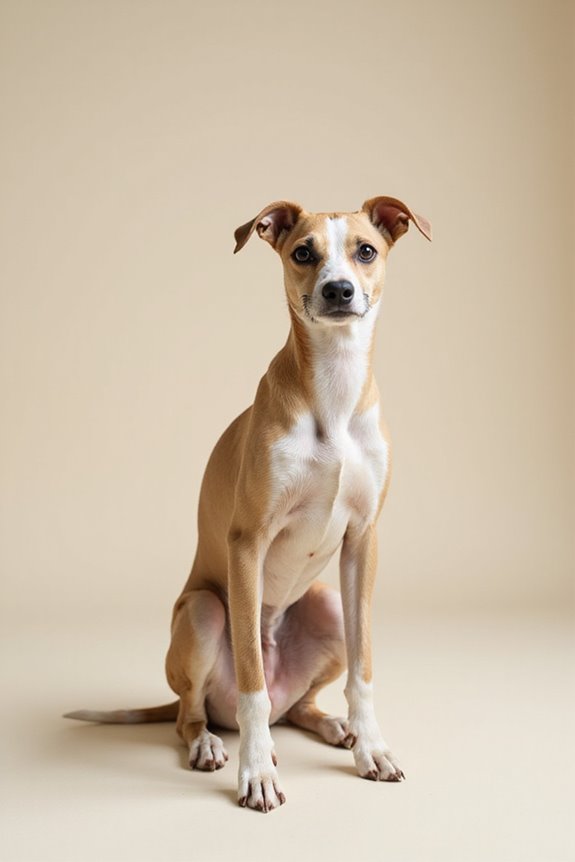
To handle a nervous or shy greyhound puppy, it’s essential to understand their anxiety roots and create a nurturing environment. Start socialization early, between 8 to 16 weeks, with calm introductions. Recognize signs of stress, such as excessive panting or hiding, and address triggers with gentle exposure. Positive reinforcement encourages calm behavior. Additionally, establishing a comfortable space and maintaining a consistent routine fosters security. For more effective strategies, we can explore deeper techniques tailored to your puppy’s needs.
Key Takeaways
- Create a safe and quiet space for your puppy with familiar scents to help reduce anxiety and provide comfort.
- Start socialization early by gradually exposing your puppy to new experiences in calm environments, rewarding them with treats for positive behavior.
- Use positive reinforcement to reward calm actions and redirect any fearful responses during stressful situations.
- Monitor your puppy’s body language closely to assess their comfort level and adjust exposure to triggers accordingly.
- Enroll in puppy socialization classes for structured guidance and supervised interactions with other dogs and people.
Understanding the Roots of Anxiety in Greyhound Puppies
When we consider the roots of anxiety in greyhound puppies, it’s essential to recognize that various factors, both genetic and environmental, play significant roles in shaping their behaviors.
- Hereditary Factors: Greyhounds are genetically predisposed to anxiety, meaning anxiety traits can often be inherited from their parents.
- Environmental Influences: Lack of socialization before 14 weeks can heighten sensitivity to stress, leading to long-term anxiety.
- Anxiety Triggers: Common triggers for these puppies include loud noises, unfamiliar environments, and significant life changes.
- Puppy Development: Positive early exposure helps mitigate anxiety, while traumatic experiences can cause chronic nervousness. Additionally, providing a limited ingredient diet can support overall well-being and possibly reduce anxiety-related behaviors.
Recognizing Signs of Anxiety and Stress
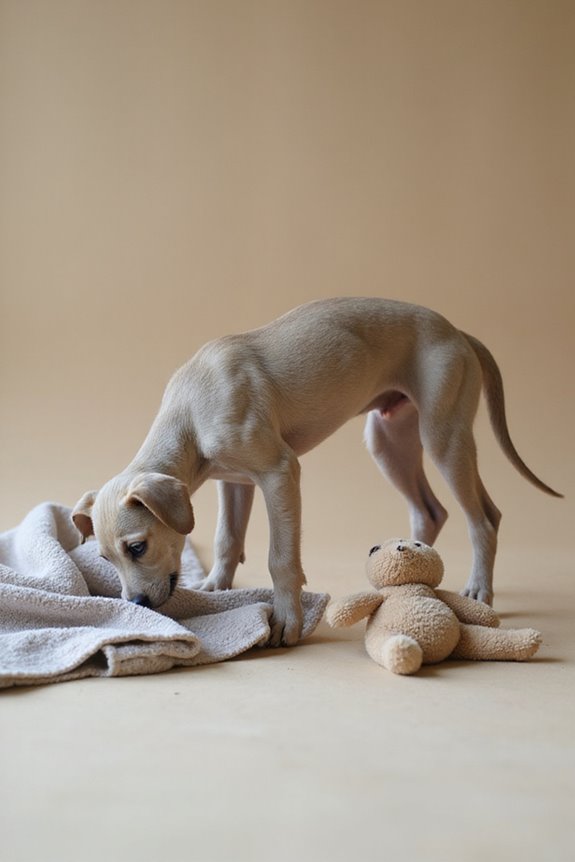
Recognizing signs of anxiety and stress in greyhound puppies is essential for anyone looking to support their well-being as they navigate their new environments. Here are key indicators to watch for:
- Physical Signs: Panting without exertion, excessive drooling, and dilated pupils are common. A tucked tail and pinned-back ears also indicate discomfort.
- Behavioral Manifestations: Pacing, shaking, or hiding often show fear. Restlessness and destructive behavior around entrances can reflect anxiety.
- Vocal Indicators: Excessive barking, whining, and increased yawning signal distress.
- Subtle Signs: Licking lips and hypervigilance indicate unease, while closely following you reflects insecurity.
Identifying triggers and using calming techniques can help alleviate their stress and improve their confidence, especially when engaging in effective shock absorption to manage their reactions during walks. Let’s guarantee our greyhound puppies feel safe and secure.
Creating a Safe and Comforting Environment
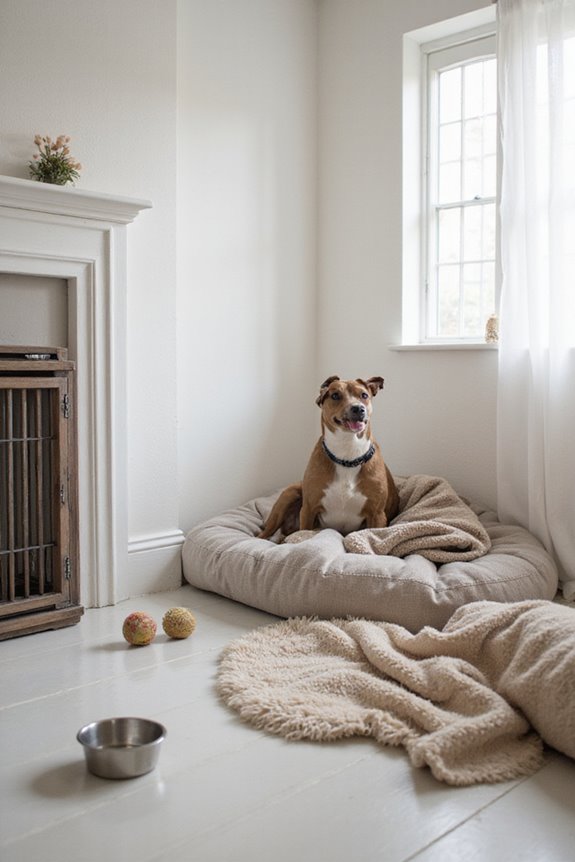
Creating a safe and comforting environment is essential for helping nervous or shy greyhound puppies adjust to their new surroundings. To achieve this, we should:
- Set up a safe space: Designate a quiet area with a cozy bed or crate to minimize stress.
- Limit access: Restrict the puppy to a few rooms initially to avoid overwhelming them.
- Ensure safety: Pet-proof the home by removing hazardous objects, securing electrical cords, and keeping toxic substances out of reach.
- Incorporate familiar scents: Use soft bedding, familiar blankets, or toys from their previous environment to provide comfort.
- Maintain a calm atmosphere: Keep the living space quiet and at a comfortable temperature, allowing for adequate ventilation and shade outside. Consider providing a cozy orthopedic dog bed to support their sleeping comfort.
This approach helps reduce anxiety and creates a nurturing space for our puppies.
Effective Socialization Strategies for Shy Puppies
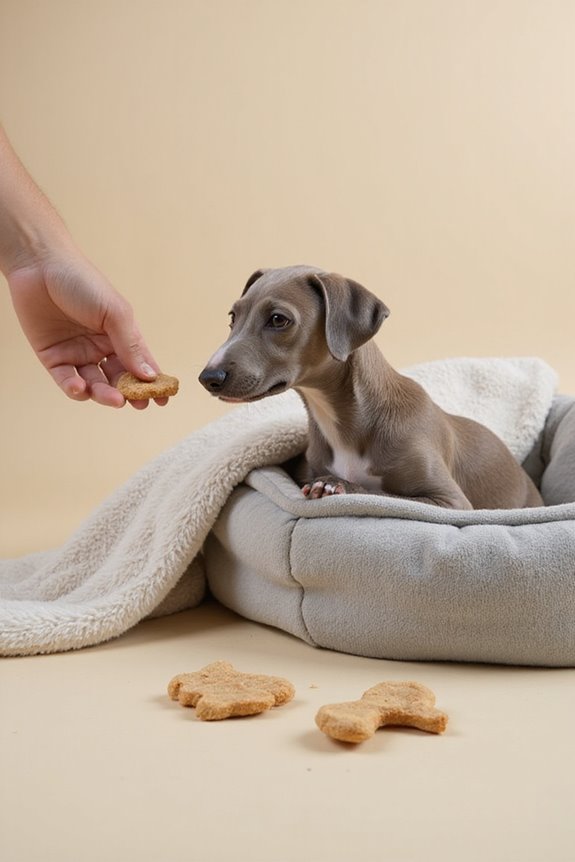
Effective socialization strategies are essential for helping shy greyhound puppies build confidence and adapt to new environments. We can start socialization during the critical 8 to 16 weeks, exposing our puppies to new experiences in a gradual manner.
- Begin with calm environments for initial puppy introductions.
- Slowly introduce new people and animals, ensuring a manageable pace.
- Use positive reinforcement, rewarding calm behavior with treats or praise.
- Monitor body language, like tucked tails or lip licking, to assess readiness.
- Controlled play with gentle dogs can enhance social behavior.
Enrolling in puppy socialization classes is also beneficial, providing structured settings to achieve important socialization milestones and enabling supervised exposure to diverse stimuli. Additionally, providing a tummy cover in dog coats can help keep your puppy warm and comfortable during outings, further supporting their confidence-building efforts.
Training Techniques for Managing Nervous Behavior
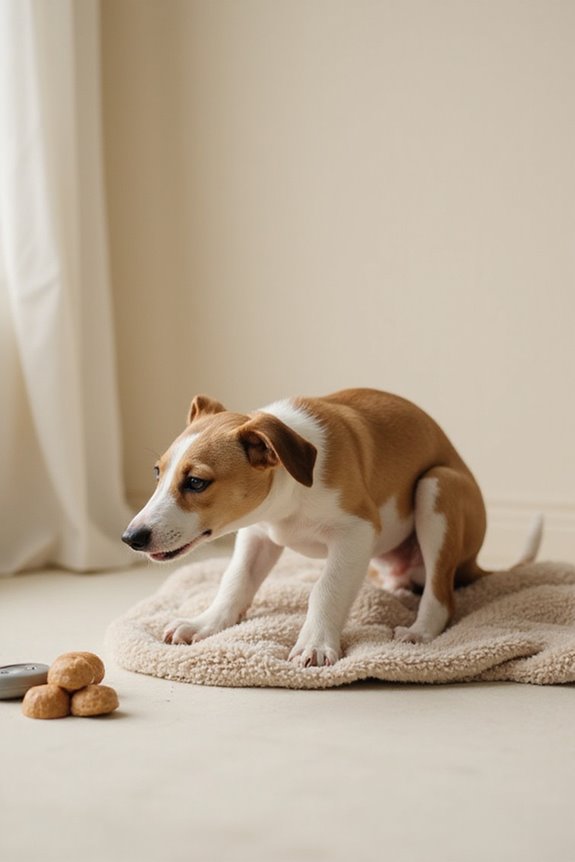
When managing nervous behavior in greyhounds, it is crucial to implement training techniques that foster confidence and promote calmness in various situations. Here are key approaches:
- Positive Reinforcement: Reward calm behavior with treats, praise, or play. This encourages puppies to repeat confident actions, while redirecting fearful responses helps prevent anxiety from worsening.
- Environmental Management: Minimize clutter and provide safe spaces in the home. Gradually introduce new environments at the puppy’s pace, recognizing early signs of stress with careful observation.
- Controlled Exposure: Pair exposure to fear triggers with positive experiences. Allow the puppy to approach social interactions on their terms.
- Consistency and Structure: Use consistent commands and routines to create predictability, helping the puppy feel secure in their environment. These techniques collectively build a strong foundation for nervous puppies. Incorporating engaging sounds and interactive play benefits can also help ease anxiety during training sessions.
Health and Wellness Support for Anxious Puppies
Understanding the health and wellness needs of anxious puppies is essential for fostering their overall well-being. To support our greyhounds, we should consider:
- Nutritional Support: A balanced diet rich in essential nutrients can help improve their mood and energy levels. Look for high-quality food with omega-3 fatty acids, antioxidants, and vitamins.
- Calming Supplements: Products containing ingredients like L-theanine, valerian root, or chamomile can provide relief from anxiety. Always consult with a veterinarian before introducing any supplements.
- Regular Veterinary Check-ups: Routine exams can identify underlying health issues that may exacerbate anxiety. Early treatment of conditions like dental disease or gastrointestinal issues can greatly reduce stress. Additionally, incorporating high-caloric foods into their diet may assist in ensuring they receive adequate energy during stressful situations.
Providing these supports creates a healthier, more secure environment for our anxious puppies.
Building Confidence Through Positive Experiences
Building confidence in shy or nervous greyhounds is an essential part of their development and emotional health. We can use positive reinforcement and confidence building games to help our greyhounds thrive. Here are some effective strategies:
- Teach simple behaviors: Using commands like “touch” can redirect fearful reactions into positive ones, rewarding them generously boosts confidence.
- Confidence building games: Encourage your dog to place two paws on low objects to improve posture and self-assurance.
- Controlled exposure: Pair fearful triggers with positive experiences, gradually introducing them to environments, noises, and surfaces.
- Engagement activities: Provide food puzzles and nose work, fostering decision-making confidence.
Frequently Asked Questions
Can Certain Dog Breeds Be More Prone to Anxiety?
Yes, certain dog breeds can be more prone to anxiety. Their specific breed behaviors often lead to anxiety triggers, such as loud noises or separation, revealing how sensitive and reactive they can be in stressful situations.
How Long Does It Take to Socialize a Nervous Puppy?
It takes several weeks to months for successful puppy socialization. Using gradual exposure techniques during this puppy socialization timeline helps build confidence, ensuring our nervous pup associates new experiences with positive outcomes and safety.
Are There Specific Toys That Help Relieve Anxiety in Puppies?
Yes, interactive puzzle toys and comforting plush heartbeat toys can help relieve anxiety in puppies. They engage their minds while providing warmth and a sense of security, ultimately promoting a calmer, happier environment for our furry friends.
What Signs Indicate That a Puppy May Need Professional Help?
We’d think it’s just puppy quirks, but if we spot persistent behavioral signs like destructive chewing or withdrawal, it’s time to recognize those stress triggers and possibly consult a professional for help.
Can Anxiety in Puppies Be Hereditary or Breed-Specific?
Yes, anxiety in puppies can indeed be hereditary or breed-specific. We’re aware of genetic predispositions that influence anxiety triggers, causing our furry friends to react differently based on their lineage and early experiences.