As an Amazon Associate, we earn from qualifying purchases. Some links on this site are affiliate links at no extra cost to you. Our recommendations are based on thorough research and editorial judgment.

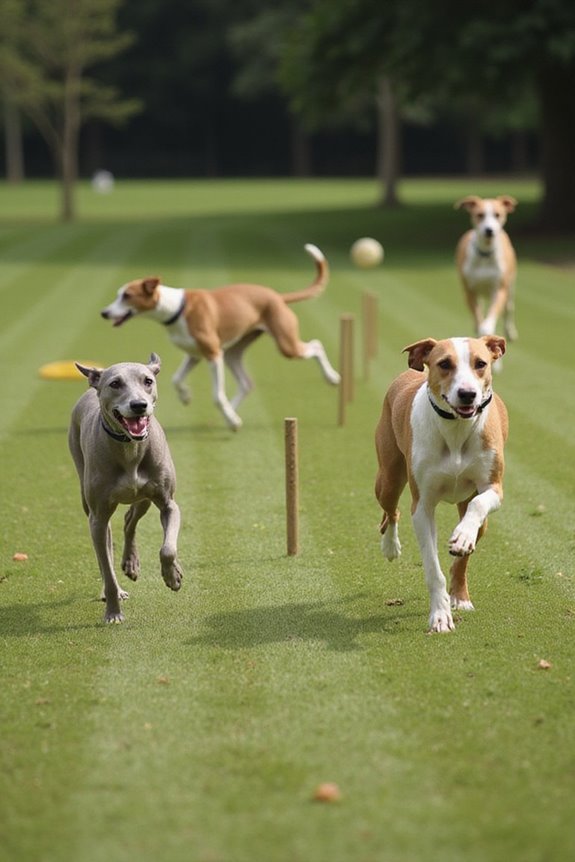
What Dog Sports Are Suitable For Sighthounds?

Sighthounds excel in various dog sports that utilize their unique athletic abilities. Key options include:
- Lure Coursing: simulates hunting, enhancing speed and agility.
- Agility Trials: features weave poles and jumps tailored to their physical traits.
- Rally Trials: focuses on precision and quick command execution, promoting engagement.
- Scent Work: fosters natural detection skills and mental stimulation.
These activities help them remain active while aligning with their instincts, offering enriching opportunities for development. Discover more about these engaging options and their benefits.
Key Takeaways
- Lure coursing provides sighthounds with a safe environment to engage in their natural chasing instincts and showcase speed and agility.
- Agility trials are tailored for sighthounds, featuring modified jump heights and obstacles that challenge their athleticism while minimizing injury risks.
- Rally trials require precise command execution, promoting mental engagement for sighthounds’ independent nature while enhancing their social interactions.
- Scent work activities utilize olfactory enrichment, allowing sighthounds to hone their natural scent detection skills and reduce anxiety.
- Regular exercise routines are essential for sighthounds, requiring about an hour daily, which supports their physical fitness and mental stimulation through various sports.
Natural Athletic Traits of Sighthounds
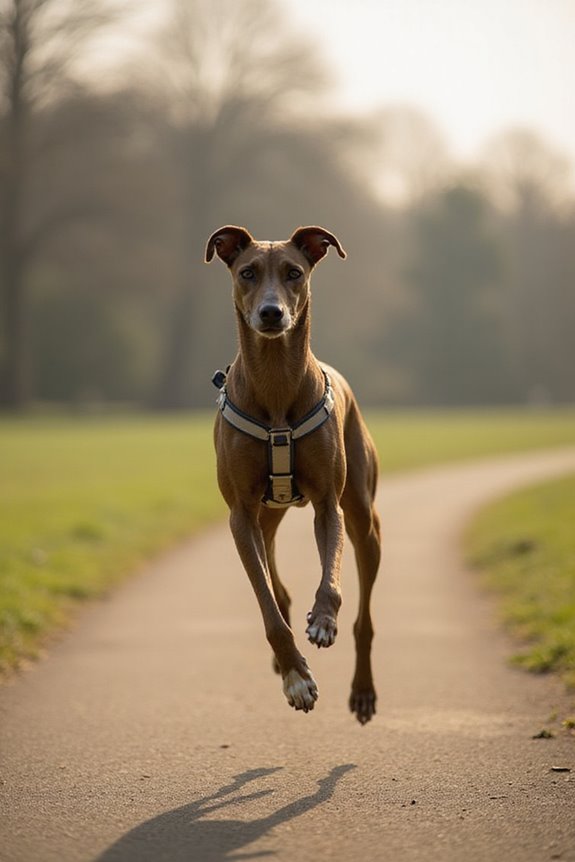
Sighthounds are renowned for their remarkable athletic abilities, which stem from their unique physical and behavioral traits. Their wide-set, slightly protruding eyes enhance visual acuity, granting them a vast peripheral field of vision essential for detecting movement across great distances. This allows for effective hunting as they pursue fast-moving targets with remarkable accuracy.
- Characterized by lean musculature and flexible backs, these dogs excel in speed.
- Their bodies are designed for energy management, needing about an hour of daily exercise to balance their bursts of speed and endurance.
- This energy profile supports swift chases while minimizing fatigue.
These natural attributes make sighthounds exceptional athletes, perfectly adapted for both hunting and various dog sports. Additionally, selecting the right insulated jacket can help maintain their warmth and comfort during outdoor activities in colder weather.
Lure Coursing: The Ideal Sport
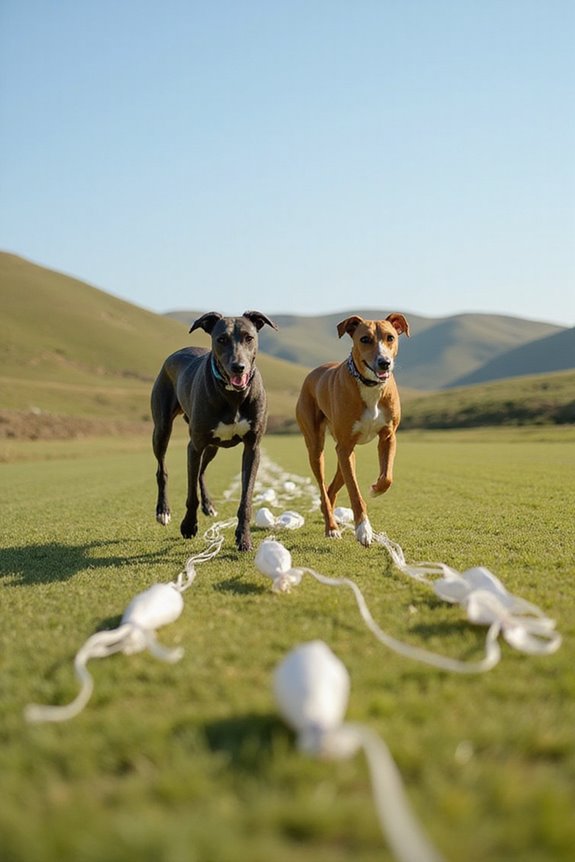
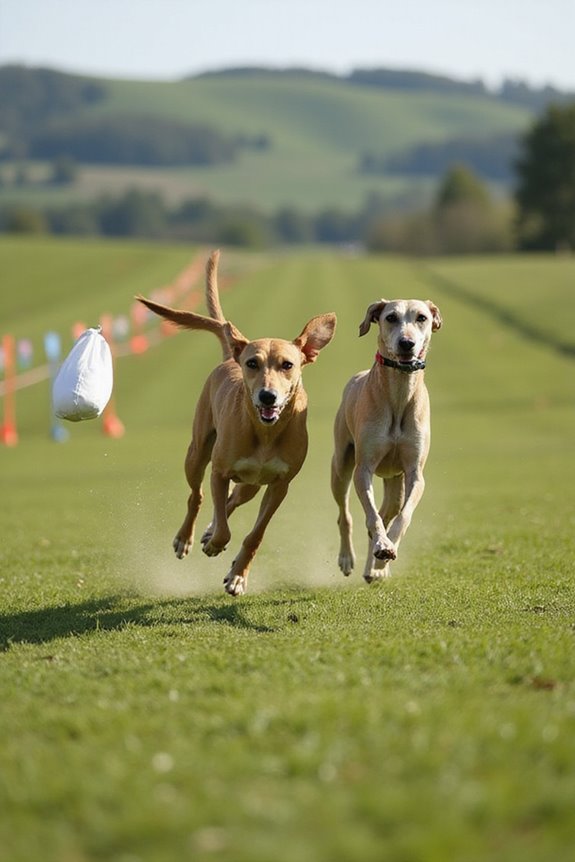
Lure coursing is a sport that truly showcases the athletic prowess of sighthounds, providing an exhilarating outlet for their natural instincts. This exciting activity simulates hunting, as dogs chase a mechanically-operated lure across an open field, allowing them to engage their innate chase drive.
- In competitive events, dogs are released in groups of about three and judged on speed, agility, and endurance.
- The lure dynamics, which often involve a white plastic bag trailing behind a pulley system, mimic prey movement.
- Lure coursing is officially recognized for 13 sighthound breeds, including Greyhounds and Whippets, while other breeds can participate in adapted programs.
This sport nurtures their physical fitness, mental stimulation, and natural abilities in a safe environment. Additionally, participating in lure coursing helps dogs build endurance and agility, which are essential traits for sighthounds.
Agility and Rally Trials: A Unique Challenge
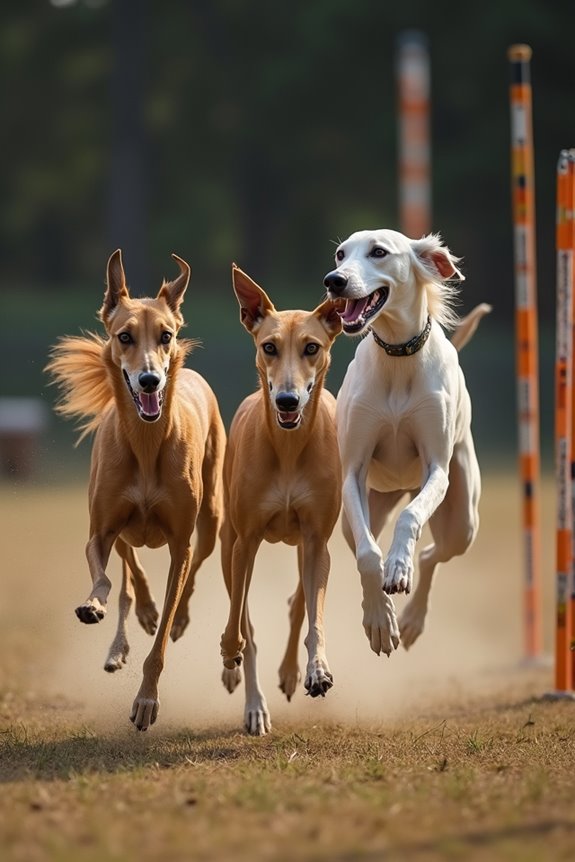
When considering dog sports that challenge both physical abilities and mental engagement, agility and rally trials stand out as exceptional opportunities for sighthounds.
- Agility Techniques: Agility courses tailored for sighthounds accommodate their long legs, featuring weave poles, tunnels, and tire jumps, while modified jump heights minimize injury risk. Positive reinforcement, particularly with high-value treats, enhances their focus.
- Rally Challenges: In rally trials, sighthounds can leverage their speed and agility. However, the requirement for precision and quick command execution can be demanding due to their independent instincts. Gentle training and consistent use of food markers help maintain their engagement.
Regular training sessions that balance exercise and mental stimulation are crucial for fostering their social nature and need for companionship.
Together, these sports provide a unique platform for harnessing sighthounds’ strengths while addressing their training needs.
Scent Work and Therapy: Expanding Horizons
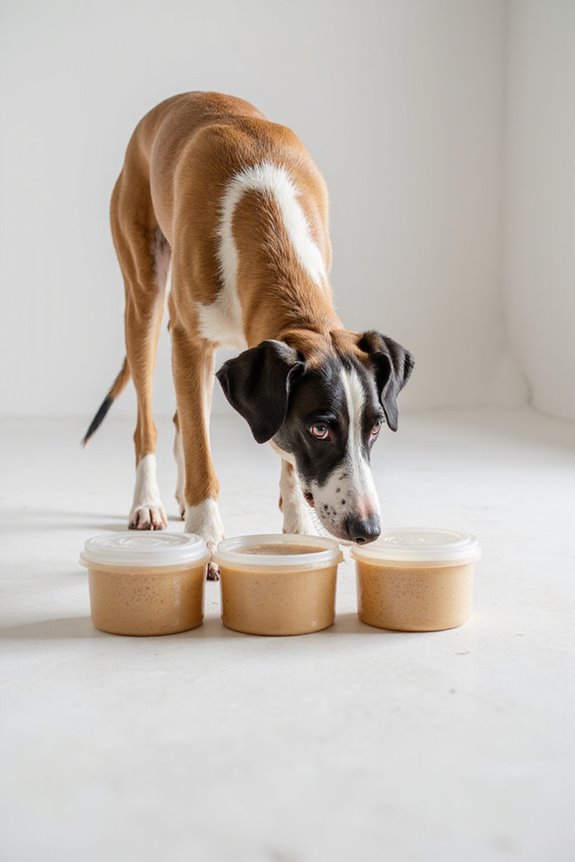
Engaging in scent work allows us to explore a unique avenue of development for our beloved sighthounds. This activity enhances scent detection skills and provides invaluable olfactory enrichment.
- Training Basics: We start with essential oils like birch applied to cotton swabs, introducing these scents alongside food rewards. This positive reinforcement encourages our dogs to associate scents with success.
- Training Techniques: Options include passive alerts, where dogs sit or freeze, and active alerts, which may involve barking.
- Cognitive Benefits: Scent work enhances mental stimulation, promoting problem-solving and independence, which benefits shelter or senior sighthounds.
- Therapeutic Value: The quiet environment of scent work reduces anxiety, fostering emotional well-being in our pets while engaging their natural instincts. Incorporating activities like high-protein options can further support your sighthound’s overall health and stamina during training sessions.
Considerations for Training and Health
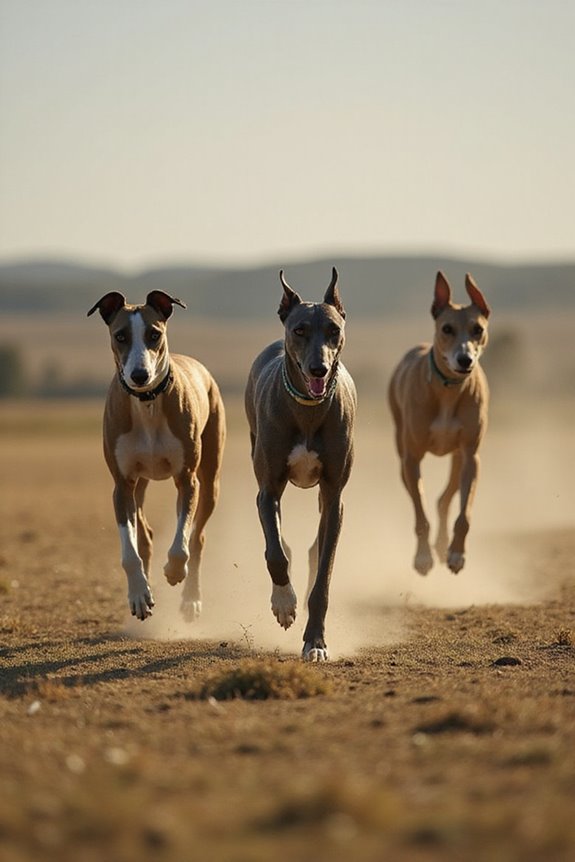
As we explore the training and health considerations for sighthounds, it’s important to recognize the unique physical attributes and behavioral traits of these remarkable breeds. Proper training requires suitable training equipment, like snug collars or harnesses, to guarantee safety during high-speed activities.
To prevent injuries, we should focus on gradual conditioning, emphasizing warm-up and cool-down routines. Regular monitoring of joints and muscles is essential due to their unique body structure, which is prone to strains.
Additionally, we should optimize training environments by minimizing distractions and introducing visual stimuli gradually. Consistent, patient methods will foster positive reinforcement, helping our sighthounds thrive in both training and competitive settings while safeguarding their health and well-being. Choosing the right Greyhound dog coats ensures they stay comfortable and warm during training sessions outdoors.
Breed-Specific Adaptations for Sports
Understanding the breed-specific adaptations of sighthounds is essential for optimizing their performance in various sports. These dogs, shaped by their sighthound history, readily engage in activities mimicking their hunting instincts. Key adaptations include:
- Physique: Thin, wiry bodies enhance speed and endurance for short, intense bursts.
- Acceleration: Flexible backs and long legs contribute to explosive speed.
- Aerodynamics: Low body fat and protruding hip bones minimize drag, complementing their high-speed pursuits.
- Vision: Specialized retinal adjustments improve their peripheral vision, aiding in target detection during rapid movements.
Activities like lure coursing and straight track racing align well with their natural abilities, allowing them to thrive in environments that reflect their ancestry as visual hunters. Such sports embrace their unique physical traits and behavioral characteristics. Additionally, using double-ended leashes can enhance control during training sessions, contributing to effective performance in these sports.
Frequently Asked Questions
How Do I Choose the Right Sport for My Sighthound?
To choose the right sport for our sighthound, we should consider their tendencies and guarantee sport compatibility. Activities that align with their natural instincts, like lure coursing, often provide the most fulfilling experiences for them.
What Age Is Best to Start Training Sighthounds for Sports?
Starting training around one year old for sighthounds optimizes their physical readiness. Notably, 90% of successful competitors begin with basic puppy training early on, so age considerations matter for sighthound sports like lure coursing.
Are There Specific Nutrition Recommendations for Active Sighthounds?
Absolutely, active sighthounds have specific dietary needs. We should focus on high-quality protein, moderate fats for energy balance, and monitor hydration to keep them performing at their best during activities without compromising their health.
How Can I Motivate a Disinterested Sighthound in Training?
To motivate a disinterested sighthound, we can utilize positive reinforcement with engaging toys that mimic prey. Keeping training sessions short and varied helps maintain their interest, ensuring training feels like fun instead of a chore.
What Gear Do Sighthounds Need for Participating in Sports?
We’ve found that sighthounds need specialized gear types like padded harnesses and durable collars, alongside sport accessories such as protective footwear and cooling vests, ensuring their safety and comfort during various athletic activities.