As an Amazon Associate, we earn from qualifying purchases. Some links on this site are affiliate links at no extra cost to you. Our recommendations are based on thorough research and editorial judgment.

What Is The Feeding Schedule For Whippet Puppies?

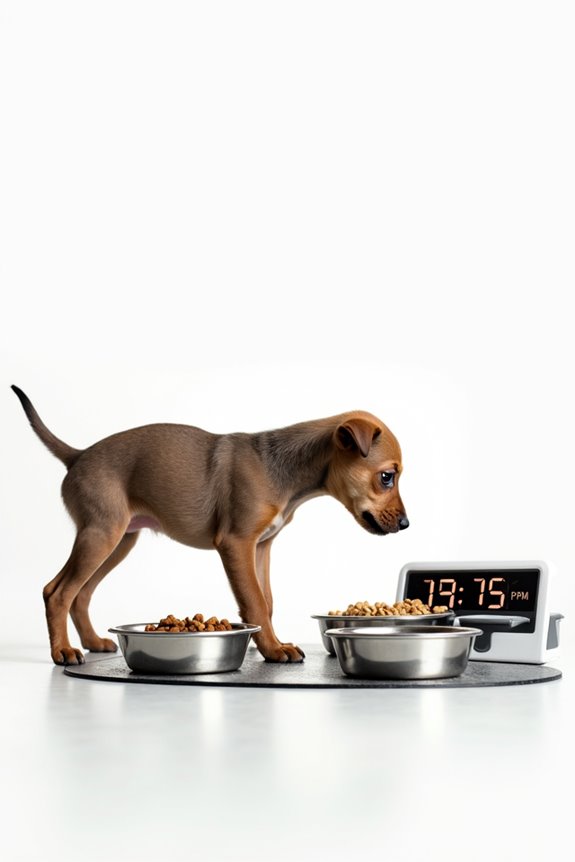
Whippet puppies require a structured feeding schedule to support their growth. Here are some key points:
- 8-12 weeks: Four meals daily, with 100 grams for puppies under 5 kg or 200 grams for those between 5-10 kg.
- 3-6 months: Reduce to three meals.
- 6-12 months: Shift to two meals daily.
These guidelines enhance digestion, nutrient absorption, and overall health. Stick around to discover more about portion sizes and nutritional needs essential for your puppy’s development.
Key Takeaways
- Whippet puppies aged 8–12 weeks should be fed 4 meals daily to support rapid growth, with portion sizes adjusted based on their weight.
- Puppies between 3 to 6 months should be fed 3 meals per day, with daily food amounts around 200 grams for those between 5 and 10 kg.
- At 6–12 months, reduce feeding to 2 meals a day as body size stabilizes, maintaining an appropriate portion size.
- By 1 year, establish a stable routine of 2 meals daily, transitioning to an adult feeding schedule.
- Ensure meals focus on high-quality protein, healthy fats, and essential fatty acids to support overall health and development.
Ideal Feeding Frequency for Whippet Puppies
When considering the ideal feeding frequency for Whippet puppies, it’s essential to recognize that their nutritional needs change as they grow.
- 8–12 weeks: They require 4 meals daily to support rapid growth and stable energy levels.
- 3–6 months: This frequency reduces to 3 meals, accommodating their improved digestive capacity.
- 6–12 months: We shift to 2 meals per day, consistent with their decreasing growth rate and energy needs.
- By 1 year: A stable routine of 2 meals daily becomes appropriate for mature Whippets.
This progression guarantees proper puppy feeding while helping maintain meal consistency. Regular feeding schedules not only provide predictable energy release, but they also aid in digestive health and nutrient absorption. Adapting meal frequency allows for peak growth and development. Additionally, it’s important to offer high-quality protein sources that support their growing bodies throughout their feeding stages.
Recommended Products

All-natural cow hide is coated in Redbarn's secret bully gravy and then slow roasted to lock in all that irresistible flavor. Unique treat to Redbarn Pet Products.
MEDIUM BREED DOG FOOD: Royal Canin Medium Adult Dry Dog Food for medium dogs 1 year to 7 years weighing 23 to 55 lbs

Grain-Free, Nutrient-Dense & Protein Packed - Healthy dry dog food made with real meat, crafted without grains, and featuring wholesome ingredients for optimal nutrition.
Portion Sizes and Daily Quantities
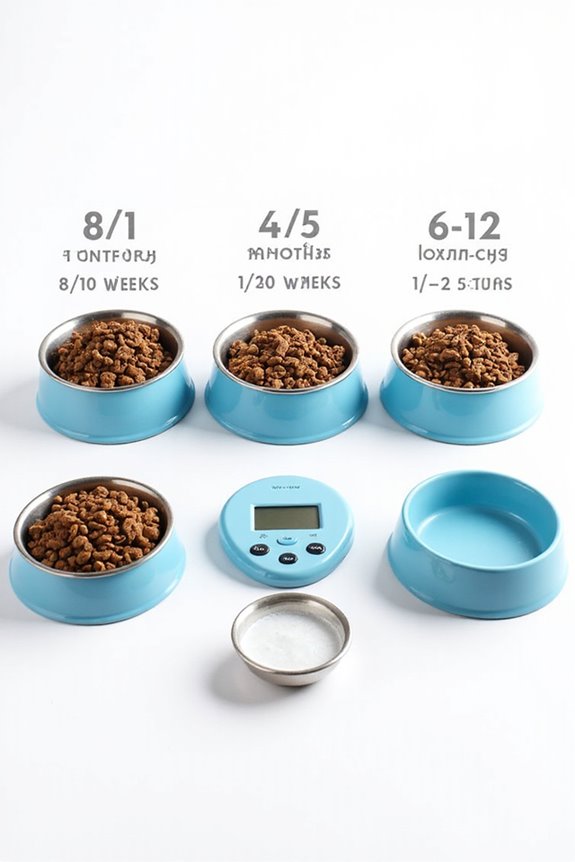
Determining the right portion sizes and daily quantities for Whippet puppies is essential for their growth and health. Here’s a guideline to help us with portion control:
- For puppies under 5 kg, up to 100 grams of puppy food daily is recommended, divided into four meals.
- For those between 5 and 10 kg, around 200 grams daily is suggested, split into three meals to meet higher energy demands.
- Portion sizes should be adjusted as our puppies grow and their activity levels change, ideally to avoid excessive weight gain.
- Initially, each meal can be about 1 cup of dry puppy food, but we’ll shift from four meals to two as they mature, ensuring proper meal timing throughout the process. Additionally, it’s important to monitor their health regularly and adjust portions based on nutritional needs to support optimal growth and development.
Recommended Products

Hill's Prescription Diet Gastrointestinal Biome Digestive/Fiber Care with Chicken Dry Dog food is specially formulated by Hill’s nutritionists and veterinarians to support your dog’s digestive health.

LIMITED INGREDIENT ADULT DOG FOOD: All natural, limited ingredient recipe crafted with a single source of protein from turkey, and expertly balanced with easily digestible carbohydrates from potatoes, without any extra fillers.

Merrick Backcountry Grain Free Puppy Food Recipe. Gluten Free Dry Puppy Dog Food Kibble with Freeze Dried Raw Pieces
Nutritional Requirements for Optimal Growth
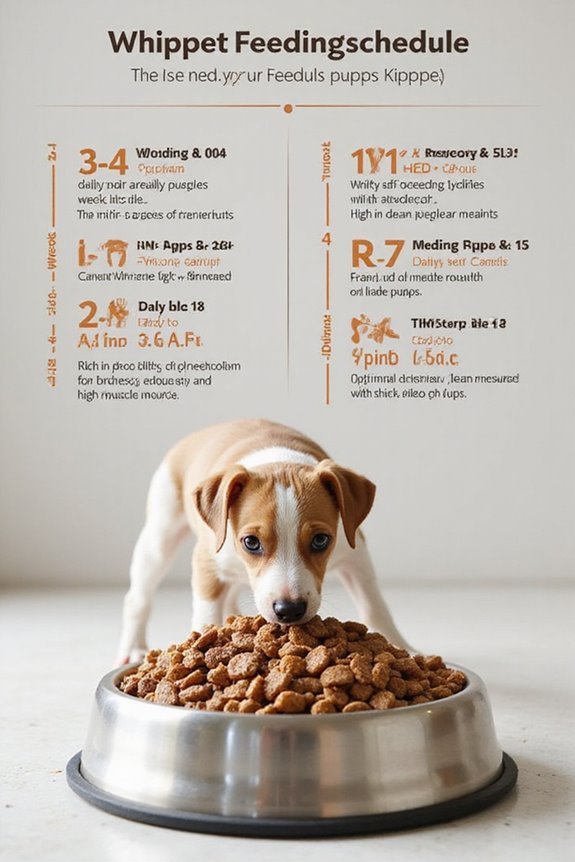
Nutritional requirements for Whippet puppies must align with their rapid growth and active lifestyles. To support this, their diet should contain:
- Protein Sources: Whippet puppies need 20-25% protein, prioritizing high-quality, digestible animal-based sources. This is crucial for muscle development and tissue repair.
- Fat Content: A fat content of 10-14% is essential. It provides energy, promotes healthy skin, and sustains a glossy coat. Incorporating omega-3 and omega-6 fatty acids is beneficial for cognitive development.
With a daily caloric requirement of about 990 calories, we must spread meals throughout the day. This helps maintain energy and metabolic balance, ensuring that our puppies receive the caloric intake necessary for their growth while preventing unhealthy weight changes. Additionally, it is important to ensure their diet contains high-quality protein to support muscle mass maintenance during their growth stages.
Recommended Products

NATIVE PERFORMANCE PUPPY FOOD: Native Performance Puppy Food for Canine Athletes contains the exclusive Nutrivantage, and no filler or bi-product.

REAL CHICKEN FIRST: This Blue Buffalo puppy food is made with real, high-quality chicken as the #1 ingredient

Puppy food kibble with DHA from omega-rich fish oil nourishes brain and vision development
Transitioning From Milk to Solid Food

Transitioning from a milk-based diet to solid food is an important milestone in a Whippet puppy’s development. This feeding shift typically starts at 3 to 4 weeks of age. We introduce softened puppy food mixed with milk replacer to create a gruel-like consistency. This helps puppies adapt gradually. Over time, we reduce the liquid component while increasing solid food intake.
- Feeding frequency also rises as puppies nibble on solids.
- We wean naturally, as the mother reduces nursing sessions.
- We monitor their weight and digestion for any issues.
During this stage, it’s essential to guarantee that the food is nutritious and balanced, supporting their calorie intake as they adjust to solid food. Additionally, the use of high-quality, human-grade ingredients is crucial to promote their overall health. Hydration remains paramount too.
Recommended Products

Single-piece, military-strength crate

Includes One (1) 5 ft Medium Open wire gazebo made from galvanized steel for your pet with a newly designed umbrella roof frame with no tools needed

Does not absorb moisture; resistance to wear or damage due to extreme durability
Age-Based Feeding Schedule Adjustments

As Whippet puppies grow, adapting their feeding schedule becomes increasingly important to support their development and health. Here’s how we can adjust feeding routines based on age:
- 6–12 weeks: Offer four meals daily, providing around 100 grams of puppy food for those under 5 kg and about 200 grams for those between 5–10 kg.
- 3–6 months: Reduce to three meals daily as whippet growth stabilizes.
- 6–12 months: Change to two meals a day; growth continues, but body size stabilizes.
- After 1 year: Shift to an adult feeding schedule, typically with two meals. Additionally, ensure that their diet includes joint health ingredients such as glucosamine and chondroitin to promote ongoing mobility and comfort.
Recommended Products

NATURE'S JOINT SUPPORT, BACKED BY SCIENCE: Built on our proprietary Canine Complete whole food foundation, trusted since 1998, with vitamins, minerals, fatty acids, digestive enzymes, prebiotics, and probiotics to support healthy joints.

DAILY JOINT SUPPORT FOR DOGS - PupGrade Joint Support Soft Chews are designed to support normal joint function, mobility, and everyday movement for dogs at any age or activity level. In a customer survey, 9 out of 10 pet parents reported positive experiences with consistent daily use.*

DOG HIP & JOINT SUPPLEMENT: This hip and joint supplement for dogs supports long-term joint health, flexibility, and comfort; Ideal for senior dogs or dogs with arthritis pain relief needs; A must-have in your dog supplies for healthy mobility
Best Practices for Feeding Whippet Puppies
When it comes to feeding Whippet puppies, prioritizing best practices can considerably enhance their growth and overall well-being. We should feed our puppies three to four times daily, dividing their daily ration of about one cup of high-quality puppy food evenly.
Key Practices:
- Meal Structuring: Schedule meals after exercise to boost appetite, promoting good habits.
- Portion Control: Consistently remove uneaten food to prevent overeating.
- Nutritional Quality: Focus on diets with 20-25% protein and 10-14% fat to support health, while ensuring ingredients are low in artificial additives for optimal nutrition.
- Behavioral Feeding: Establish regular feeding times to reduce fussiness and picky eating.
Frequently Asked Questions
How Can I Tell if My Puppy Is Getting Enough Food?
We can tell if our puppy’s getting enough food by watching their weight, energy, and happy playtime antics. Consistent feeding frequency helps guarantee they thrive like little racing machines, ready to conquer the world!
Can I Mix Different Brands of Puppy Food?
Yes, we can mix different puppy food brands, but we should carefully consider brand comparisons. It’s best to introduce new foods gradually, monitoring our puppy’s reaction to prevent digestive issues. Consulting our vet’s advice is essential.
What Are the Signs of Food Allergies in Whippet Puppies?
Did you know around 10% of puppies may develop food allergies? Common food allergy symptoms in Whippet puppies include itching, skin infections, and gastrointestinal issues. Adjusting our Whippet puppy’s diet can help alleviate these problems.
Should I Feed My Puppy Treats Alongside Regular Meals?
We shouldn’t feed our puppy treats alongside regular meals. Instead, we can use low-calorie treat types as training rewards between meals. This helps maintain energy levels and supports effective training without disrupting their main feeding schedule.
How Can I Encourage My Picky Eater to Eat?
Did you know approximately 30% of puppies can be picky eaters? To help, let’s implement feeding strategies like consistent schedules and meal toppers. This can stimulate interest and encourage our furry friend to eat!