As an Amazon Associate, we earn from qualifying purchases. Some links on this site are affiliate links at no extra cost to you. Our recommendations are based on thorough research and editorial judgment.

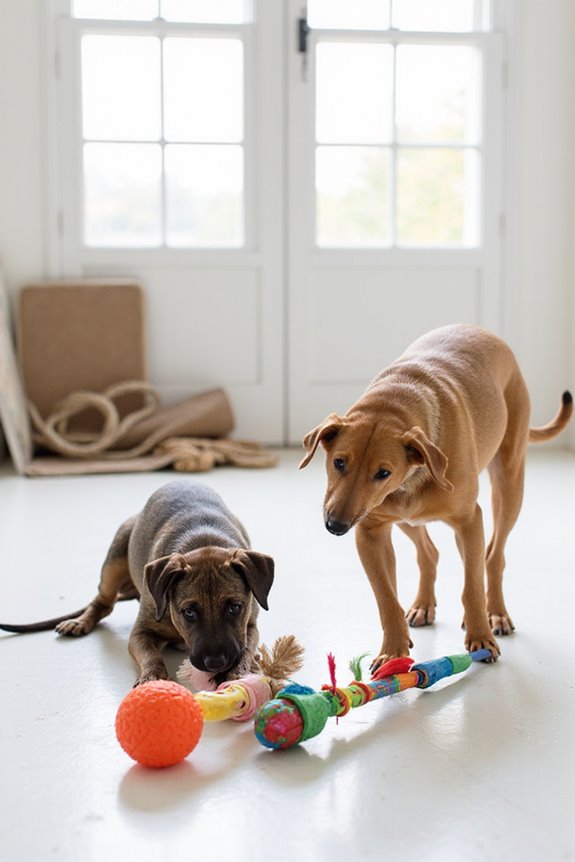
What Are Good Playtime Activities For Young Sighthounds?

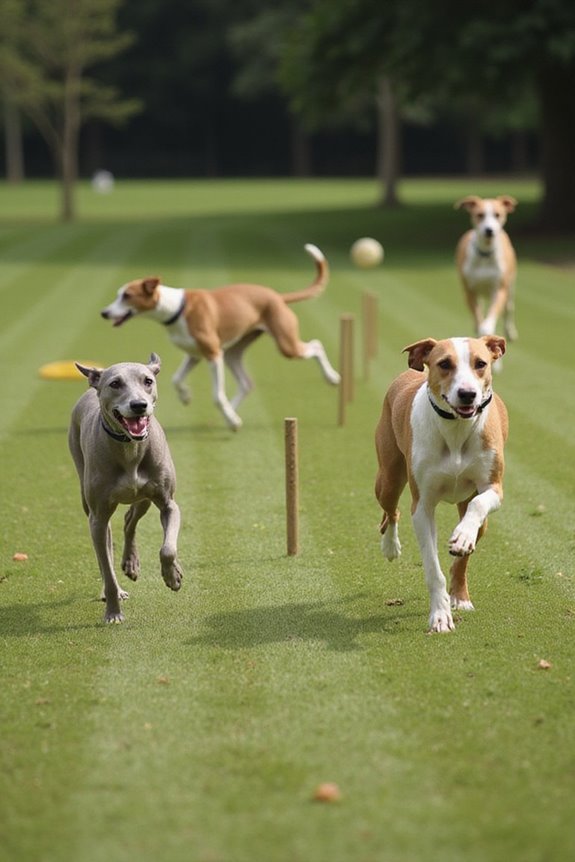
For young sighthounds, we recommend engaging them in activities that cater to their energy and instincts. Consider these options for effective playtime:
- Sprint Training enhances their speed.
- Fetch Games stimulate both mind and body.
- Agility Courses improve coordination and focus.
- Interactive Tug-of-War fosters bonding.
- Puzzle Toys provide mental challenges.
Regular health monitoring is essential to guarantee their well-being, and understanding their needs can lead to fulfilling play experiences. Learn more about how these activities can benefit your sighthound.
Key Takeaways
- Engage young sighthounds with sprint training, using short sessions to enhance explosive acceleration and avoid fatigue.
- Incorporate fetch games with varied toys to stimulate both physical exercise and mental engagement through recall training.
- Set up indoor obstacle courses using everyday items to promote agility, problem-solving skills, and physical fitness.
- Utilize interactive tug-of-war sessions to strengthen the bond with your sighthound while providing a constructive outlet for their prey drive.
- Ensure mental challenges through puzzle feeders and hide-and-seek exercises to keep your sighthound mentally stimulated during indoor play.
Sprint Training for Energy Release
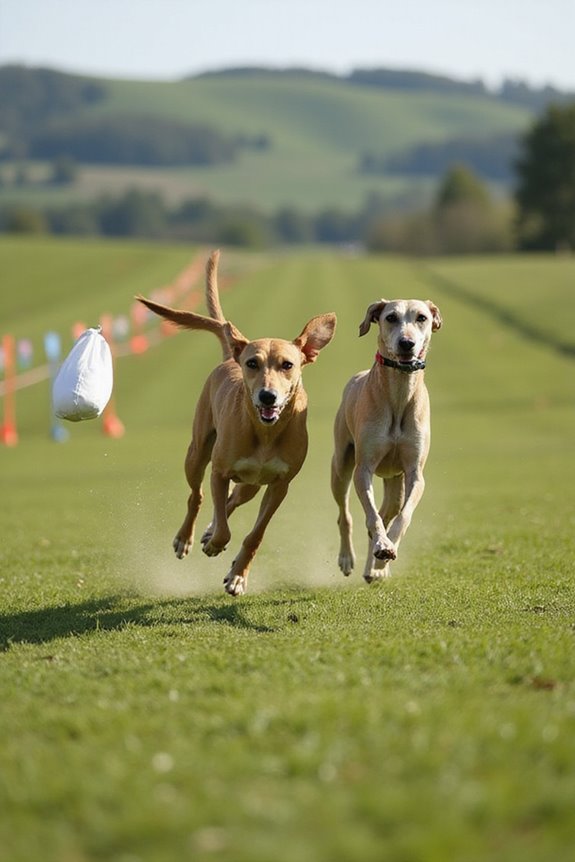
Sprint training offers a dynamic outlet for the energetic nature of young sighthounds. To effectively harness their physical attributes, we must focus on proper sprint mechanics while managing their energy.
- Short training sessions of 5-10 minutes fit their attention span and energy cycles, avoiding fatigue.
- Working in secure areas guarantees safety during released sprints, allowing them to sprint freely.
- Including chase games stimulates their prey drive, promoting powerful propulsion from their muscular hindquarters.
- Controlled sprint starts improve their explosive acceleration, essential for maximized speed. Additionally, using Martingale collars during training can enhance control and minimize escape risks.
Engaging in Fetch Games
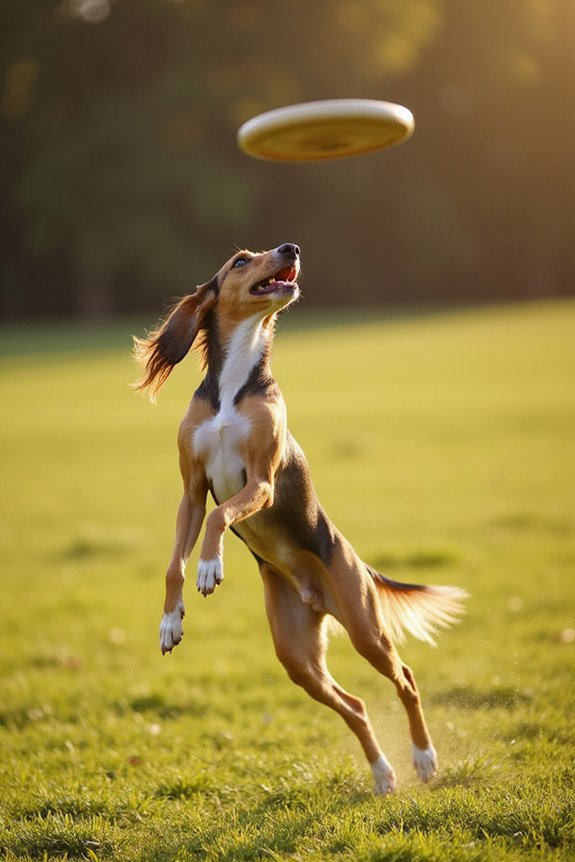
Engaging in fetch games provides an excellent opportunity for young sighthounds to exercise both their bodies and minds. To begin, we should focus on fetch toy selection, using various toys like balls and plush items to keep our dogs engaged. It’s crucial to teach them the basic fetch concept through recall training techniques, starting indoors before gradually introducing distractions.
- Use positive reinforcement, rewarding successful retrieves consistently.
- Keep sessions short, about 3 to 5 repetitions, to maintain focus and enjoyment.
- Observe body language for signs of fatigue.
- Incorporate the “push drop stick” method for gradual progression. Additionally, ensuring your sighthound has a balanced ratio of Omega-3 and Omega-6 fatty acids helps support their overall health and energy levels during playtime activities.
Recommended Products

NERF-TOUGH: Nerf-quality materials make our air strike thrower perfect for fetch and for teaching your dog new tricks


Hound2O’s Squeaky Boomerang - Take your game of fetch to the next level with this lightweight, squeaky Boomerang! Its textured surface makes it easy to grip, and it floats, making it perfect for water-loving dogs. Available in bright orange, green, and yellow, this dog toy set is perfect for high-energy hounds of all sizes who love to chase and bring the boomerang back!
Exploring Agility Courses

Agility courses present a thrilling way for young sighthounds to hone their natural instincts and physical abilities. These courses offer several agility advantages, including improved speed, coordination, and dexterity. Key obstacle variations like jump sets and tunnels enhance their reflexes and confidence.
- Jump sets teach them to assess and navigate barriers effectively.
- Tunnels promote swift movement through enclosed spaces, showcasing their natural speed.
- Weave poles encourage nimble maneuvering, sharpening focus and control.
- Pause tables develop steadiness and emotional management during high-energy tasks.
Training sessions of 20-30 minutes, 1-2 times per week, provide balanced physical and mental stimulation. By gradually introducing these challenges, we can guarantee our sighthounds remain engaged and healthy while nurturing their unique abilities. Incorporating shock absorption technology into their training gear can further enhance their comfort and safety during agility activities.
Recommended Products

UNLEASH YOUR DOG'S POTENTIAL: Transform your backyard into a canine adventure wonderland with our Better Sporting Dogs Practice A-Frame. We've redefined backyard agility with a 42" long and 25" wide. When placed at a 45 degree angle, the height is 29 inches high

UNLEASH YOUR DOG'S POTENTIAL: Transform your backyard into a canine adventure wonderland with our Better Sporting Dogs agility equipment. We've redefined backyard agility with our 16' long PVC tunnel with 2 sandbags one set of sandbags for each end of the tunnel. *Sand not included

UNLEASH YOUR DOG'S POTENTIAL: Transform your backyard into a canine adventure wonderland with our Better Sporting Dogs agility equipment. We've redefined backyard agility with our 10' long tunnel, 24" in diameter adjustable tire dog jump, (2) 26" wide adjustable bar jumps, 6 fixed base weave poles, a chute tunnel, a pause box, and carrying cases for each gear
Interactive Tug-of-War Sessions
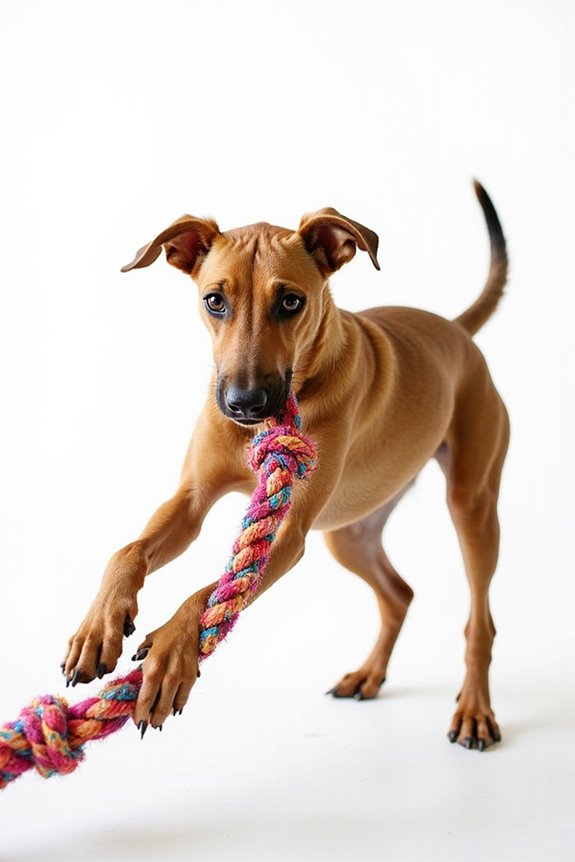
Benefits include:
- Strengthening the bond between us and our dogs.
- Providing a constructive outlet for their natural prey drive.
- Reinforcing commands like “drop it” during play.
To guarantee safety, we should supervise sessions, keep them brief, and use a safe playing surface. By incorporating these practices, we can foster positive interactions while building muscle and confidence in our dogs. Additionally, engaging in interactive toys can help further stimulate their mental and physical health.
Recommended Products

【Natural Quality Cotton】Quality rope starts with quality materials. Our cotton ropes are made of pure natural cotton, a more versatile white rope look.We have two length combinations to meet your rope needs
The information below is per-pack only

200 FT MEGA ROLL FOR BULK PROJECTS — This massive 200 ft continuous spool is the ultimate solution for large-scale applications. It allows for seamless, knot-free wrapping of extensive deck railings, long dock pilings, or full-perimeter garden fencing. No need to splice multiple shorter ropes together.
Hide-and-Seek for Mental Stimulation
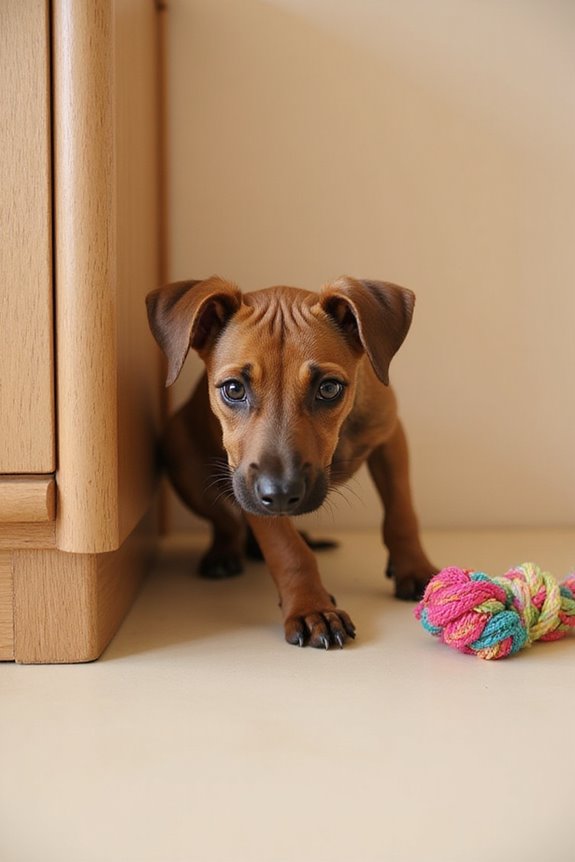
Hide-and-seek is a wonderful way to mentally stimulate young sighthounds, providing both fun and challenge. This game enhances their search strategies and scent awareness, as it encourages them to use their noses and brains to locate us. Here’s how to set it up effectively:
- Make sure your sighthound knows basic “stay” and “come” commands for safety.
- Start with simple hiding spots that are visible but out of reach, building confidence.
- Engage them in a controlled environment to minimize distractions.
- Use consistent cue words like “find” to establish cognitive connections.
- Gradually increase the complexity of hiding spots to sustain interest and challenge. Additionally, incorporating high-quality protein sources in their diet supports their overall mental and physical energy, enhancing their playtime experience.
Recommended Products

Engaging Dog Activities – Complete scent dog training kit includes tools for backyard play and training such as dog lure course machine, bite sleeve dog training, and dog agility training equipment. Use with scented dog toys to keep dogs active and focused.
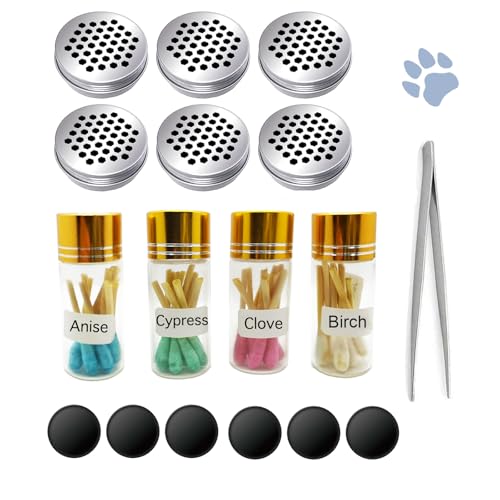
Package Including: Pup scent work starter kit Includes 6 pcs of dog scent training kit tins, comes with 6 pcs of magnetic dots, 4 jars of pup scent work start kit basic, And 1 tweezers, you can put different scent work start kit in the dog scent work tin for them to find and give rewards when your dog investigates; The scent work training kit tins for dogs are also very easy to keep clean.
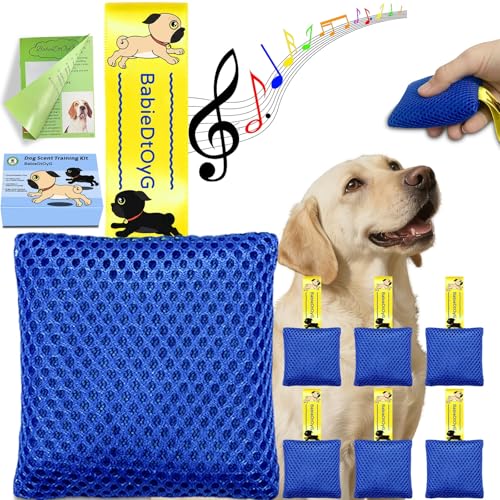
🐦 Boost Engagement with Realistic Bird Sounds: Shake to activate lifelike chirping in our scent training kit for dogs! This unique feature enhances hide-and-seek games, triggering dogs' natural prey drive for irresistible nose work excitement.
Short Runs in Secure Areas
After engaging in mentally stimulating activities like hide-and-seek, incorporating short runs in secure areas can greatly benefit our young sighthounds. Here are some essential considerations:
- Duration: Aim for short runs of 20-30 minutes, ideal for building muscle and endurance without overexertion.
- Frequency: Schedule these runs 2-3 times per week, balanced with rest days.
- Secure Areas: Always choose fully enclosed spaces free from hazards. Fenced yards or specific dog parks are ideal.
- Supervision: Monitor their activity closely to intervene if signs of stress arise.
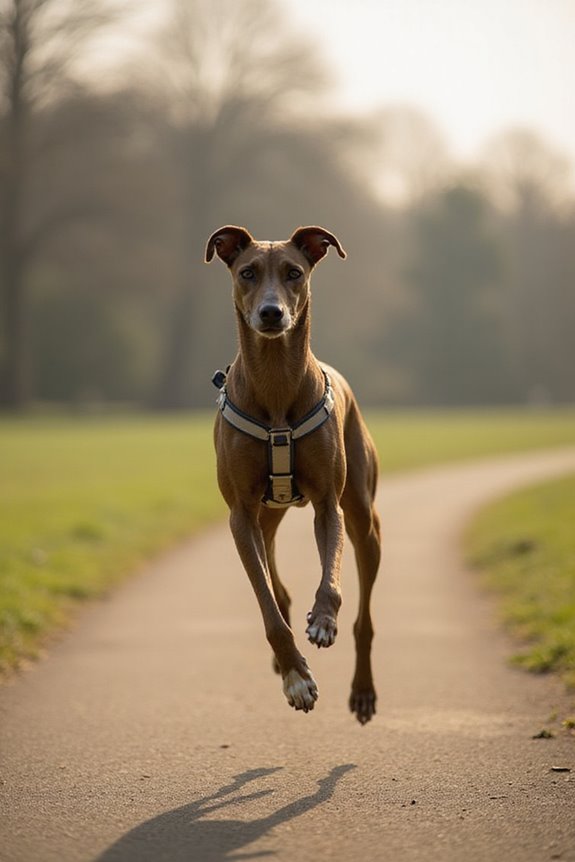
- Benefits: These runs fulfill their chase instincts, reduce boredom, and improve overall health. Additionally, they enhance joint flexibility and promote better sleep patterns. Furthermore, ensuring a proper fit for harnesses can significantly improve safety during these energetic activities.
Utilizing Puzzle Toys
Using puzzle toys can be a game-changer for our young sighthounds, providing them with essential mental and physical enrichment. These toys engage problem-solving skills, enhancing cognitive function while offering sensory stimulation. They promote gentle exercise through pawing and nudging, aligning with our sighthounds’ natural foraging instincts.
DIY Puzzle Ideas:
- Cardboard boxes filled with treats encourage exploration.
- Rolled towels can hide goodies, fostering scent work.
Puzzle Safety Considerations:
- Confirm puzzles are made from BPA-free, durable materials.
- Supervise play to prevent the ingestion of small parts.
Recommended Products

ONE PUZZLE, NEW CHALLENGES - Rearrange the sliders, pegs, and compartments to create fresh setups that keep smart dogs engaged after they master the first game.

HOW THE REWARD HUNT WORKS Fill the center. Your dog presses the clear top, moves kibble through the middle track with nose or paws, then flips the outer lids. Three connected actions make every reward feel earned.

EXTRA-LARGE DOG PUZZLE CUBE - Built with a 14.69 in oversized cube body, this dog puzzle toy gives small, medium, and large dogs more room to sniff, paw, slide, pull, and solve.
Socialization Through Playtime
Socialization through playtime is essential for our young sighthounds, as it helps shape their behavior and adaptability in various environments. We can achieve this by ensuring consistent social exposure through organized play and interactions.
- Introduce puppies to diverse people and calm, vaccinated dogs early on, allowing them to build positive associations.
- Engage in interactive chase play by dropping toys or treats during walks, stimulating their natural instincts while fostering social skills.
- Organize group play sessions to promote cooperative behavior and impulse control, gradually increasing engagement with varied canine companions.
- Use leash-controlled parallel walks to familiarize sighthounds with new dogs in a low-pressure setting.
These practices not only enhance social and environmental adaptability but also strengthen our bond with our beloved sighthounds.
Safe Indoor Activities
When we consider the needs of young sighthounds, safe indoor activities play an essential role in keeping them physically and mentally stimulated. Here are some options for indoor enrichment:
- Puzzle feeders and treat-dispensing toys engage their hunting instincts by providing mental challenges.
- Hide and seek exercises can strengthen obedience and stimulate problem-solving skills.
- The Shell Game fosters scent detection by hiding treats under cups, enhancing focus.
- Tug-of-war and fetch in hallways offer controlled physical activity without needing large spaces.
- Indoor obstacle courses created from everyday items can provide exciting challenges while promoting agility.
Importance of Regular Health Monitoring
Regular health monitoring is a significant aspect of responsible pet ownership, particularly for young sighthounds. By staying vigilant, we can address various health risks unique to these breeds. Here are key points concerning monitoring importance:
- Hip evaluations help detect dysplasia early in breeds like Greyhounds.
- Cardiac examinations are crucial for sighthounds like Whippets, who may have heart issues.
- Ophthalmologist visits allow for early detection of eye diseases, preserving vision.
- Regular thyroid function tests are necessary, as hypothyroidism is common.
- Dental checks prevent systemic health issues linked to poor oral hygiene.
Frequently Asked Questions
What Age Should I Start Training My Sighthound?
We should start puppy training and early socialization as soon as our sighthound is ready, ideally in the puppy stage, ensuring a strong foundation for future learning and healthy behavioral development.
How Can I Tell if My Sighthound Is Bored?
We can tell our sighthound is bored by observing certain behaviors. Common boredom signs include chewing furniture, excessive digging, or restlessness. If they’re overly clingy or show disinterest in play, it’s time for more engagement.
What Toys Are Safe for Young Sighthounds?
Did you know that 70% of pets prefer interactive toys? For our young sighthounds, safe choices include durable soft plushies and engaging puzzle toys, which stimulate their minds and satisfy their natural instincts for play.
How Can I Build My Sighthound’s Confidence During Play?
To build our sighthound’s confidence during play, we can use positive reinforcement, encouraging successes with treats or praise. Incorporating varied activities and rewarding calm behavior helps reinforce their progress and strengthens our bond too.
Can Sighthounds Enjoy Playtime With Smaller Dogs?
Absolutely, sighthounds can enjoy playtime with smaller dogs! With proper introductions and supervision, sighthound playdates foster delightful small dog interactions. Let’s guarantee safe, fun engagement while respecting each dog’s unique play style and temperament.