As an Amazon Associate, we earn from qualifying purchases. Some links on this site are affiliate links at no extra cost to you. Our recommendations are based on thorough research and editorial judgment.


What Are Memory Issues In Senior Greyhounds?

Memory issues in senior greyhounds often result from Cognitive Dysfunction Syndrome, which resembles human Alzheimer’s. Key symptoms include:
- Disorientation in familiar environments
- Changes in behavior, such as irritability or decreased interest
- Memory loss affecting command retention
These cognitive declines can also manifest as aimless wandering or changes in sleep patterns. It’s essential to monitor your greyhound’s cognitive health. By understanding these challenges, we can offer better support and care for our beloved companions. There’s more insight on managing these concerns effectively.
Key Takeaways
- Senior greyhounds can experience cognitive dysfunction syndrome, similar to Alzheimer’s, impacting their memory and behavior.
- Symptoms of memory issues include disorientation, irritability, and forgetfulness of commands or locations.
- Neuropathological changes, like neuron loss and beta-amyloid plaque accumulation, contribute to cognitive decline in older greyhounds.
- Regular veterinary check-ups are essential for early detection of cognitive issues and overall health maintenance.
- Cognitive enrichment, familiar surroundings, and proper nutrition can help alleviate memory problems and enhance the quality of life for senior greyhounds.
Understanding Cognitive Dysfunction Syndrome in Senior Greyhounds
Cognitive Dysfunction Syndrome (CDS) represents a significant challenge for senior greyhounds, highlighting the complexities of aging and brain health. This age-related neurodegenerative disease mirrors Alzheimer’s in humans, underscoring cognitive decline in our canine companions.
Key factors contributing to CDS include:
- Aging Effects: As dogs age, their brain cells face oxidative stress and reduced blood flow, impairing function.
- Genetic Predisposition: Some breeds show higher susceptibility, though all can be affected.
- Environmental Factors: A lack of mental stimulation or exercise enhances cognitive decline.
- Chronic Diseases: Conditions like gastrointestinal disorders may exacerbate signs, complicating diagnoses.
Recognizing these elements can help us support our senior greyhounds in maintaining cognitive health and well-being. Additionally, ensuring a diet rich in high-quality protein sources can also contribute to their overall brain health and vitality.
Key Symptoms Indicating Memory Problems

As our senior greyhounds age, we may begin to notice certain key symptoms indicating memory problems. These signs can manifest as:
- Disorientation and Confusion: Our greyhounds might appear lost in familiar settings, getting stuck in corners or forgetting where their food and water bowls are.
- Behavioral Changes: We may see increased irritability or unusual clinginess, along with decreased interest in activities they once enjoyed.
- Memory Loss and Learning Difficulties: Forgetting commands and having difficulty adapting to changes can highlight cognitive decline.
- Sleep-wake Cycle Disturbances: Changes in sleeping patterns, such as increased restlessness at night, are also common.
Recognizing these symptoms early is essential for providing our pets with the support and care they need during this challenging phase. Additionally, ensuring proper comfort and fit in their gear, like reflective collars, can become fundamental in maintaining their safety and well-being during walks.
Neuropathological Changes in the Aging Brain
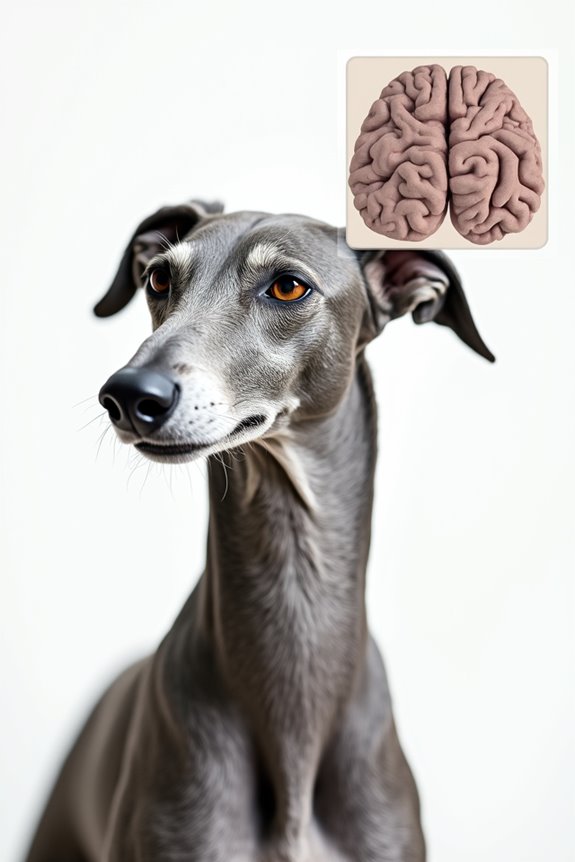
Understanding the neuropathological changes in the aging brain of our senior greyhounds is essential for recognizing and addressing memory issues. As dogs age, they experience selective neuron loss, particularly in regions like the prefrontal cortex and hippocampus. Key points include:
- Accumulation of beta-amyloid plaques disrupts neuronal function, paralleling changes seen in human Alzheimer’s disease.
- Decreased neurogenesis impairs the brain’s ability to replace lost neurons, contributing to cognitive decline.
- Oxidative stress and inflammation further damage neurons, exacerbating memory issues.
- Cortical atrophy and changes in brain structure may indicate higher risks for neurological diseases.
- Additionally, high-quality proteins are essential for overall brain health and can play a role in mitigating cognitive decline.
These neuropathological changes in the aging brain can greatly impact our greyhounds’ cognitive abilities, affecting their quality of life and memory function.
Behavioral Changes Associated With Memory Decline
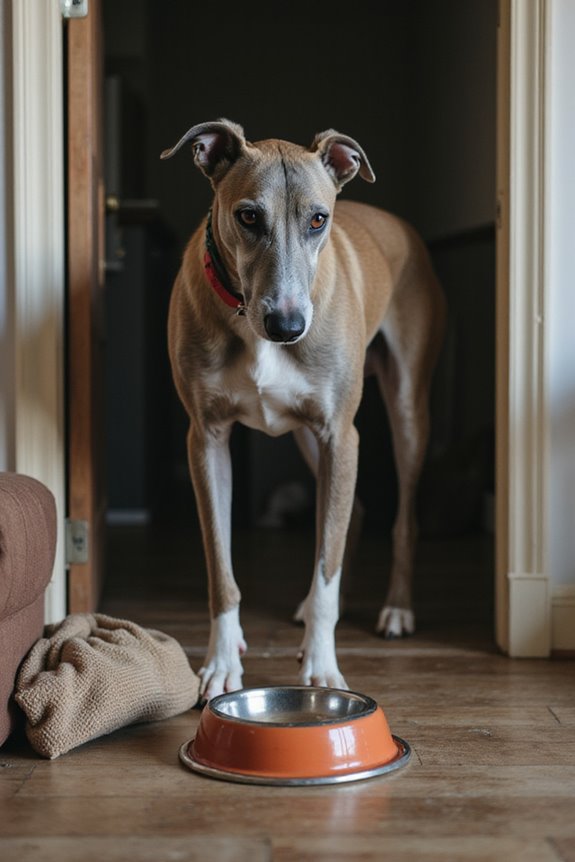
Behavioral changes can often signal memory decline in our senior greyhounds, making it crucial for us to observe and recognize these alterations.
- Disorientation and confusion in familiar surroundings can lead to aimless wandering or getting stuck in corners.
- Our greyhounds may also stare blankly at walls, which reflects cognitive issues.
- Increased anxiety often emerges, marked by new fears and vocalizations, such as barking at nothing.
- Additionally, many dogs exhibit a notable change in activity levels, showing either restlessness or lethargy.
- Emotional responses may shift, with some dogs becoming clingy or irritable.
These behavioral shifts are critical signals that warrant our attention and care for our beloved companions during this stage of their lives. It’s essential to consider how art pieces that capture the elegance and grace of sighthounds can enhance the emotional comfort of both dogs and owners during this challenging time.
Diagnostic Techniques for Identifying Memory Issues

Identifying memory issues in senior greyhounds involves a combination of diagnostic techniques that can help us evaluate their cognitive health effectively. We can utilize several methods, including:
- Cognitive Testing: The three-component delayed non-matched to position task (3-DNMP) serves as a gold standard to assess memory and learning. Other tests measure object recognition and spatial memory.
- Veterinary Clinical Evaluation: A thorough medical history review, physical examination, and blood work help rule out other conditions.
- Behavioral Assessment: Observational methods include monitoring routine adaptations and noting disorientation episodes, which signal memory impairment. Additionally, understanding the impact of cognitive decline on overall well-being is crucial for creating a supportive environment for our dogs.
Combining these techniques allows us to detect cognitive decline early, providing our beloved dogs with the best chance for continued quality of life.
Monitoring Cognitive Health in Senior Greyhounds
Monitoring cognitive health in senior greyhounds involves a structured approach that can help us recognize and address potential memory issues before they escalate. To effectively assess cognitive function, we should consider:
- Cognitive Assessments: Utilizing rating scales and questionnaires, like the Canine Dementia Scale (CADES), enables us to track changes in spatial orientation, social interaction, and other cognitive domains.
- Nutritional Interventions: Diets enriched with brain-protective nutrients, particularly medium-chain triglycerides (MCTs), can enhance memory and cognitive performance within weeks.
- Behavioral Observations: We need to monitor subtle changes in behavior, like disorientation and altered sleep patterns, as they can indicate cognitive decline. Additionally, incorporating high quality protein sources into their diet may support overall brain health and function.
Management Strategies for Cognitive Dysfunction
Effectively managing cognitive dysfunction in senior greyhounds requires a multifaceted approach that addresses both dietary and environmental factors. Here’s how we can do it:
- Dietary Supplements: Incorporating antioxidants like vitamins E, C, and B12, along with omega-3 fatty acids, can improve cognitive function. Therapeutic diets, rich in ingredients like flaxseed and spinach, can show effects within three weeks.
- Exercise Routines: Regular physical activity, such as gentle walks or supervised games, not only enhances physical health but also stimulates mental engagement. Consistent routines for feeding and exercise help alleviate anxiety and disorientation.
- Environmental Modifications: Simple adjustments, like using baby gates, can provide safety, while maintaining routines fosters a sense of stability. Together, these strategies greatly contribute to the cognitive well-being of our senior greyhounds.
Importance of Regular Veterinary Check-ups
As our beloved greyhounds age, it becomes increasingly essential for us to prioritize their health through regular veterinary check-ups. These visits should occur at least every six months for senior greyhounds, especially since they age more rapidly than smaller breeds.
- Regular check-ups help detect subtle signs of cognitive decline, allowing for earlier intervention.
- Thorough evaluations assess overall health, including dental, sensory, and joint health.
- Blood work and other diagnostic tests can identify internal organ issues before symptoms arise.
Enhancing Quality of Life Through Care and Support
Enhancing the quality of life for senior greyhounds necessitates a multifaceted approach that addresses their unique needs. We can improve their well-being by focusing on cognitive enrichment and emotional support.
- Diets rich in antioxidants and omega-3 fatty acids help slow cognitive decline, supporting brain health and function.
- Regular hydration guarantees they avoid exacerbating cognitive dysfunction and anxiety symptoms.
- Establishing consistent routines minimizes confusion, reinforcing memory retention.
- Gentle play and social interaction can reduce feelings of isolation, enhancing their emotional state.
- Utilizing familiar surroundings and gentle prompts aids their disorientation, fostering a sense of safety.
These strategies create an environment where senior greyhounds can thrive, promoting not only mental stimulation but also emotional stability.
Frequently Asked Questions
How Can I Tell if My Greyhound Is Aging Normally?
To tell if our Greyhound’s aging normally, we should look for typical signs like decreased energy, increased sleep, and reduced interest in play. These changes reflect normal behavior as they gracefully age, not necessitating concern.
Are Memory Issues in Greyhounds Hereditary or Genetic?
While the roots of memory issues might seem hereditary, there’s little evidence connecting genetic predispositions in greyhounds to cognitive decline. Instead, age and environmental factors play a larger role in these dogs’ cognitive health.
What Dietary Changes Can Help Support Brain Health?
To support brain health, we should incorporate brain boosting foods like fish and leafy greens, along with dietary supplements such as Omega-3s and MCTs. These can greatly enhance cognitive function in our senior dogs.
Can Memory Issues Affect Greyhounds’ Physical Health Too?
Yes, memory issues can notably affect our greyhounds’ physical health. Impaired cognitive function often leads to decreased physical activity, increasing the risk of weight loss, muscle atrophy, and overall deterioration in their wellbeing.
Is There a Specific Age When Cognitive Decline Typically Begins?
About 22.5% of dogs over 9 years show cognitive decline. We should watch for senior signs around this age, as early detection can help manage their well-being and quality of life moving forward.