As an Amazon Associate, we earn from qualifying purchases. Some links on this site are affiliate links at no extra cost to you. Our recommendations are based on thorough research and editorial judgment.

Are There Breed Specific Health Tests For Greyhounds?

Yes, there are breed-specific health tests for Greyhounds that address their unique genetic and physiological characteristics. These tests help identify potential health risks, including:
- Genetic conditions linked to the NDRG1 gene, such as Polyneuropathy.
- Common disorders like Ehlers-Danlos syndrome and progressive retinal atrophy.
Veterinarians tailor health assessments based on Greyhound-specific parameters to guarantee accurate diagnoses. By exploring this topic further, you can uncover essential details about maintaining Greyhound health and managing hereditary risks effectively.
Key Takeaways
- Greyhounds require tailored blood tests based on breed-specific reference ranges for accurate health assessments.
- Genetic testing options like Orivet and Embark can identify hereditary conditions in Greyhounds.
- Unique physiological traits of Greyhounds necessitate specific parameters for kidney and thyroid function tests.
- Regular health monitoring should include screenings for conditions like hip dysplasia, particularly relevant to the breed.
- Veterinarians play a crucial role in conducting breed-specific health assessments and coordinating genetic testing for Greyhounds.
Overview of Greyhound Health Conditions
When we consider the health of Greyhounds, it is vital to recognize that they are predisposed to various health conditions. Approximately 77.5% of Greyhounds report at least one common condition, requiring thorough health evaluations.
Key health concerns include:
- Dental Disease: About 39% of Greyhounds suffer from periodontal issues, impacting their appetite and overall well-being.
- Musculoskeletal Disorders: Osteosarcoma affects roughly 10%, and arthritis impacts 4.6%, causing mobility issues.
- Gastrointestinal Problems: These are frequent and can lead to complications if untreated. The significance of promoting optimal digestion through proper dietary choices cannot be overlooked, as it plays a crucial role in the overall health of Greyhounds.
Understanding these prevalent conditions is important for Greyhound owners. Regular veterinary check-ups and proactive care can help mitigate these health risks, ensuring a longer, healthier life for our beloved companions.
Breed-Specific Genetic Testing for Greyhounds

Understanding the importance of breed-specific genetic testing for Greyhounds is essential for responsible ownership and breeding practices. Genetic testing allows us to identify potential risks and hereditary conditions, ultimately enhancing the health of our dogs.
Key offerings include:
- Orivet: A full breed profile covering over 250 genetic diseases and traits.
- Veterinary Genetics Laboratory (VGL): Targets specific conditions like Familial Enamel Hypoplasia and Progressive Retinal Atrophy.
- Embark: Provides screenings for over 270 health risks relevant to Greyhounds.
- AKC DNA Health Kit: Recommends tests for degenerative myelopathy and other important traits.
These tests aid in breed profiling and informed breeding decisions, ensuring healthier Greyhound populations and minimizing hereditary diseases. Additionally, implementing proper nutrition, such as high-quality protein content, can contribute to the overall health and well-being of Greyhounds.
Common Genetic Disorders in Greyhounds
Common genetic disorders in Greyhounds can considerably impact their health and quality of life, making awareness essential for owners and breeders alike. Here are some key inherited conditions we should be mindful of:
- Polyneuropathy: Caused by a defect in the NDRG1 gene, leading to muscle weakness and exercise intolerance.
- Periodontitis: Greyhounds have a genetic predisposition to dental disease; up to 40% suffer from it without preventive care.
- Osteosarcoma: This aggressive bone cancer has a slightly higher prevalence among Greyhounds, often starting with a limp.
- Other Disorders: Issues like Ehlers-Danlos syndrome, deafness, and progressive retinal atrophy also pose risks due to breed-specific genetics.
Understanding these conditions can help us provide better care for our beloved Greyhounds. Additionally, ensuring dogs are fed high-quality protein can support their overall health and potentially minimize some genetic concerns.
Diagnostic Parameters Unique to Greyhounds
Diagnosing health issues in Greyhounds requires an understanding of their unique physiological traits, which impact various diagnostic parameters.
- Hematology: Greyhounds have higher hematocrit, red blood cell counts, and hemoglobin levels, while exhibiting lower platelet counts compared to other breeds. This necessitates breed-specific interpretation to avoid misdiagnosis.
- Kidney Function: Blood chemistry panels show unique reference ranges for creatinine and SDMA due to a higher prevalence of kidney disease, making routine monitoring essential.
- Endocrine Assessment: Thyroid hormone levels require Greyhound-specific reference intervals for accurate assessment.
- Neuromuscular Disorders: Recognizing unique neuromuscular diseases and their characteristic symptoms is vital for effective intervention. Proper nutrition, focusing on specific nutritional needs, can also play a crucial role in supporting their overall health.
Understanding these diagnostic variations enhances our ability to provide the best care for Greyhounds.
Importance of Phenotypic Testing
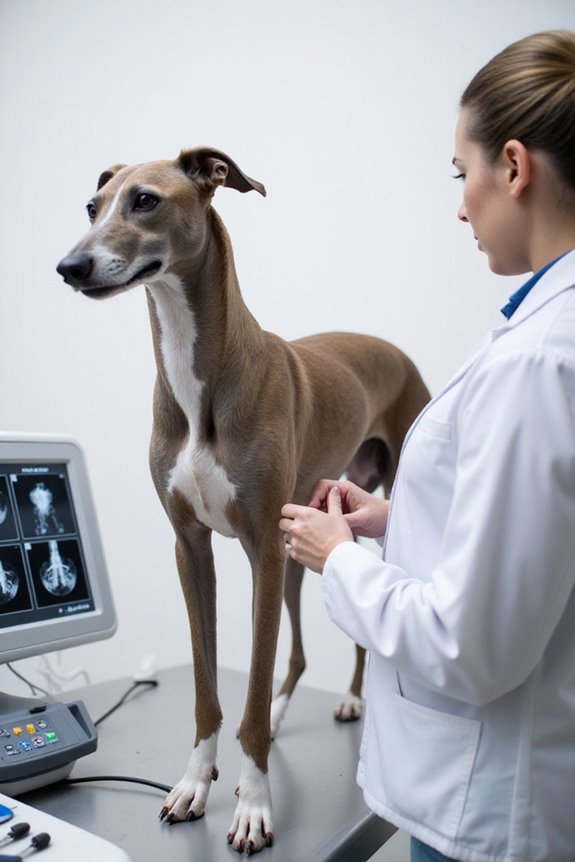
While phenotypic testing is often overshadowed by genetic assessments, it’s essential for the health management of Greyhounds. This testing involves physical exams and diagnostic imaging, which help us assess observable traits and conditions that genetic tests may miss. Here are key aspects of phenotypic testing:
- Early Detection: It allows for the early identification of conditions like osteosarcoma and dental issues, which are significant to breed health.
- Breed-Specific Assessments: Utilizing unique blood characteristics improves accuracy in diagnosing organ dysfunction.
- Tailored Care: These health assessments help us develop preventive care strategies aimed at the breed’s specific needs.
Identifying and Managing Genetic Risks
To effectively support the health of Greyhounds, it’s essential that we identify and manage genetic risks. Here’s how we can achieve that:
- Genetic Screening: While there aren’t breed-specific DNA tests widely available, we can utilize extensive canine genetic health panels that screen for over 270 genetic risks, including those relevant to Greyhounds. This broader approach promotes health optimization.
- Identifying Heritable Risks: Conditions like Intervertebral Disc Disease and Dermatomyositis are critical to test for. Early detection can greatly improve management strategies.
- Breeding Strategies: By identifying carriers through genetic testing, we can make informed breeding decisions that help mitigate genetic disorders, ensuring healthier future generations in this beloved breed. Incorporating high-quality ingredients in their diet can further support their overall health and well-being.
Role of Veterinarians in Health Assessments
Veterinarians play an essential role in health assessments for Greyhounds, ensuring that both genetic and phenotypic factors are taken into account for ideal care. Their expertise includes:
- Conducting tailored blood tests, like Complete Blood Counts and Chemistry Panels, specific to Greyhound values, including hematocrit and kidney function markers.
- Performing physical exams and diagnostic imaging to detect conditions such as hip dysplasia.
- Coordinating genetic testing and advising on hereditary conditions, ensuring a collaborative approach to health.
- Communicating effectively with owners and breeders through regular health updates, facilitating better decision-making.
Additionally, they emphasize the importance of age-specific formulations to support Greyhounds’ dietary health needs throughout their life stages.
Through dedicated veterinary collaboration and proactive health communication, we can profoundly improve the overall health outcomes for Greyhounds, making informed breeding and care choices.
Best Practices for Responsible Breeding
Best practices for responsible breeding of Greyhounds are crucial to confirm the health and well-being of both the breeding dogs and their offspring. We should prioritize selecting suitable mates, focusing on proven lineage to minimize hereditary health risks. Genetic screening and health tests help guarantee we avoid passing on conditions like cardiomyopathy.
Caring for the bitch is essential; balanced nutrition and moderate exercise support her during pregnancy. Early socialization for puppies fosters healthy development and prepares them for future ownership.
Record keeping enhances transparency, reinforcing breeding ethics and responsible ownership. By maintaining detailed health records and offering lifelong support to new owners, we contribute positively to the breed’s future. Following these practices ensures we aim to improve the Greyhound breed overall.
Monitoring Greyhound Health Over Time
Monitoring the health of Greyhounds over time is vital to guarantee their well-being, particularly after implementing best breeding practices. Regular health monitoring allows us to identify potential issues early, ensuring our Greyhounds lead healthy lives.
- Preventive Care: Routine preventive care should include a complete urinalysis, particularly if SDMA levels rise, to monitor kidney function.
- Blood Tests: Since Greyhounds have unique blood profiles, interpreting CBC results requires caution due to lower typical counts.
- Genetic Considerations: While there are no specific DNA tests, awareness of breed-related risks, like hip dysplasia and thyroid disorders, is essential for effective monitoring.
- Ongoing Screening: Regular evaluations of heart health and eye conditions can further safeguard Greyhound wellness, reinforcing the importance of vigilant health monitoring.
Frequently Asked Questions
What Age Should I Start Health Testing My Greyhound?
We should start health testing our greyhound as early as possible, ideally by 6-12 months for genetic predispositions. Early testing helps us catch potential issues before they become significant health concerns later on.
Are There Specific Dietary Recommendations for Healthy Greyhound Maintenance?
Yes, for our Greyhounds’ health, we should focus on their nutritional needs by following tailored feeding guidelines. High-quality protein, complex carbohydrates, and essential fats are crucial for maintaining energy and muscle health in our dogs.
How Often Should Regular Vet Check-Ups Be Scheduled for Greyhounds?
We should schedule regular check-ups for our Greyhounds annually, or more frequently based on veterinary advice, especially for seniors or those with health concerns. This helps guarantee their unique needs are constantly met.
Can Greyhounds Develop Health Issues as They Age?
Yes, aging Greyhounds can develop common health issues like osteoarthritis, dental disease, and kidney function decline. It’s essential we monitor their health regularly to guarantee they maintain a good quality of life as they age.
What Signs of Illness Should I Watch for in My Greyhound?
We should watch for changes in appetite, lethargy, or unusual greyhound behavior. Signs like coughing, swelling, or changes in urination can indicate common illnesses, reminding us to seek veterinary care when needed.