As an Amazon Associate, we earn from qualifying purchases. Some links on this site are affiliate links at no extra cost to you. Our recommendations are based on thorough research and editorial judgment.

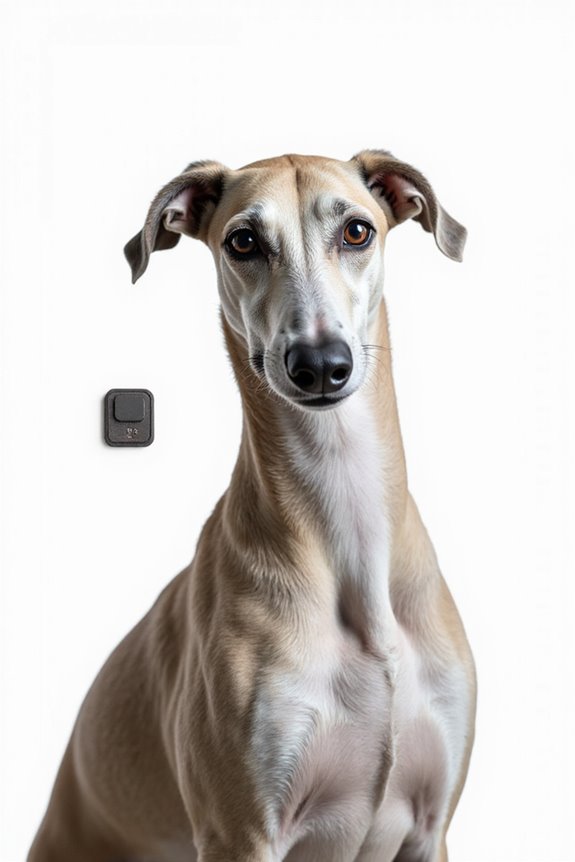
Should I Microchip My Greyhound?

Microchipping our greyhounds is crucial for their safety. It offers a permanent identification method, greatly increasing the likelihood of their return if lost, with a 52.2% success rate. The quick and minimally invasive procedure can be done during regular vet visits. Additionally, keeping registration details updated guarantees swift owner recovery. As responsible pet owners, it’s important to stay informed about microchipping and its benefits. There’s much more to take into account regarding microchips and greyhound ownership.
Key Takeaways
- Microchipping provides a permanent form of identification, improving the chances of reuniting with your greyhound if lost.
- It’s a quick and minimally invasive procedure, typically performed during routine vet visits.
- Microchipped greyhounds have a higher return-to-owner rate of approximately 52.2%.
- Registration with national databases is essential for ensuring accurate and timely communication if your dog goes missing.
- Legal requirements mandate microchipping in several regions, emphasizing its importance for responsible pet ownership.
Understanding Microchips and Their Purpose
When we consider the safety and well-being of our greyhounds, an essential question arises: how can we guarantee they’ll find their way home if they ever become lost? One effective solution is microchip technology.
- Microchips are small devices, about the size of a grain of rice, implanted under the skin, usually between the shoulder blades.
- They consist of a unique identification number that links to the owner’s information in external databases, enabling shelters and vets to reunite lost pets with their owners.
- Importantly, microchips don’t provide GPS tracking or store personal data.
- The implantation process is quick and minimally invasive, similar to routine vaccinations, making it a safe option for identification systems.
- Additionally, it’s advisable to choose collars made of high-quality materials that enhance visibility and comfort for your greyhound.
Adopting microchipping provides peace of mind that our greyhounds can be identified if ever lost.
The Benefits of Microchipping Your Greyhound
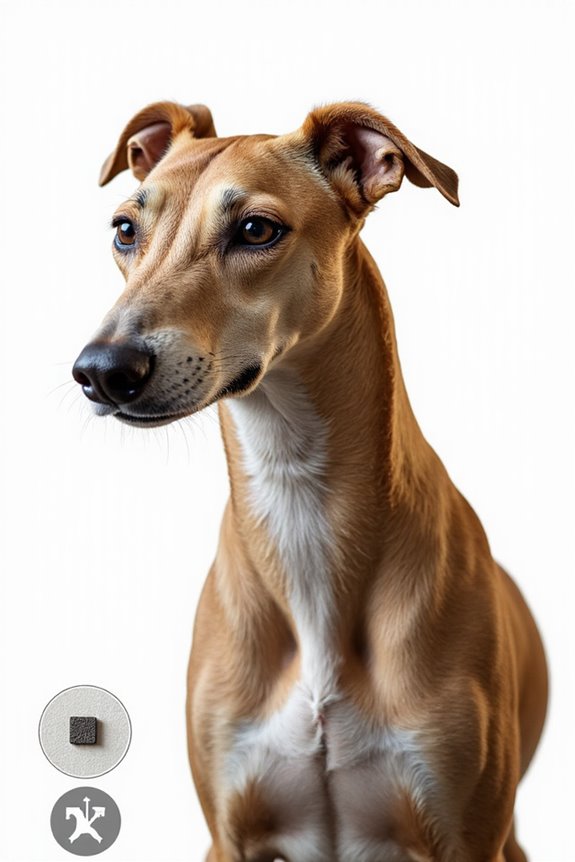
There are numerous benefits to microchipping our greyhounds that can greatly enhance their safety and our peace of mind.
- Microchipped greyhounds have a return-to-owner rate of about 52.2%, remarkably higher than the 21.9% for non-microchipped dogs. This increase dramatically boosts the likelihood of greyhound reunions if they go missing.
- Microchips provide a permanent, tamper-proof form of identification. They can’t be lost like collars or tags, ensuring that our pets can always be identified.
- This low-cost procedure is quick, typically performed in seconds during routine vet visits, causing minimal discomfort.
- Ultimately, microchipping encourages responsible pet ownership, reassuring us that our greyhounds can be identified and safely returned. Moreover, the use of reliable identification methods like microchipping can complement other safety measures such as using durable leashes during walks to prevent them from getting lost.
The Microchipping Procedure Explained
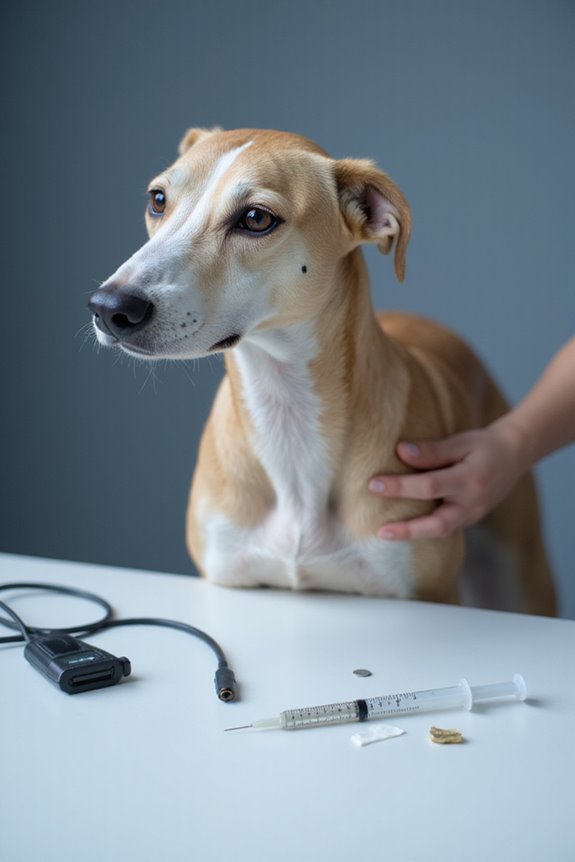
Microchipping our greyhounds is a straightforward process that helps assure their safety and our peace of mind. The procedure begins with the veterinarian examining our dog to verify they’re fit for microchip technology. After cleaning the area between the shoulder blades, they prepare the skin for insertion.
The microchip, about the size of a grain of rice and preloaded in a specialized syringe, is implanted using a 15g needle. The veterinarian inserts the needle at a 45-degree angle, and with a quick motion, releases the chip under the skin.
Afterward, they’ll scan the microchip to confirm it works properly. This entire process generally takes only a few seconds, with minimal discomfort for our furry friends. Ensuring the microchip is registered can enhance the likelihood of reunification with lost pets in case they wander off.
Importance of Registration and Keeping Information Updated
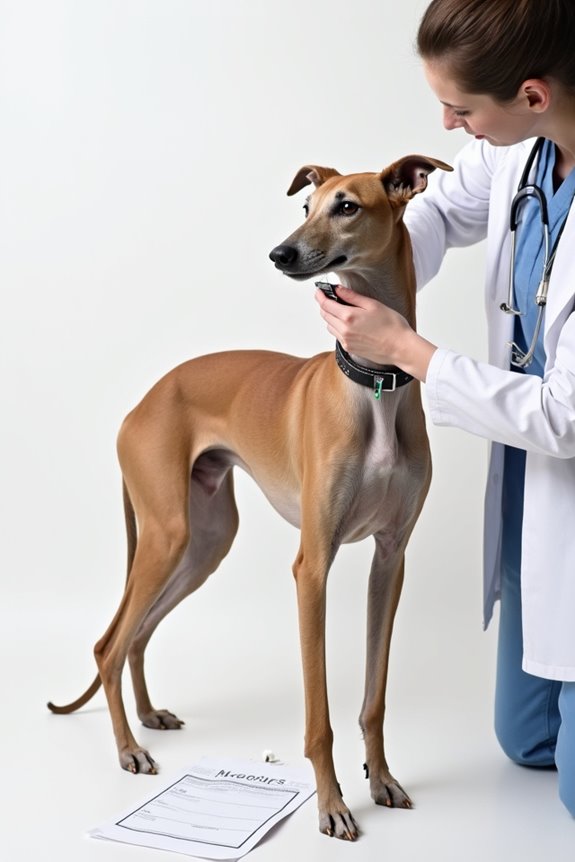
Ensuring our greyhounds are registered and that their information remains up to date is essential for their safety and our peace of mind. Registration provides a swift way for authorities, such as councils and shelters, to contact us if our greyhound is lost.
- Registration with the Greyhound Microchip Registry is important, as it operates 24/7 across Australia and New Zealand, facilitating reunification.
- It’s necessary to keep our contact details current; if we move or change phone numbers, these updates need to be made immediately.
- Regularly verifying our information helps reduce errors that could hinder reunification efforts. Additionally, high-quality dog food can support our greyhound’s overall health, making them easier to find and return if they get lost.
Legal Requirements Surrounding Microchipping
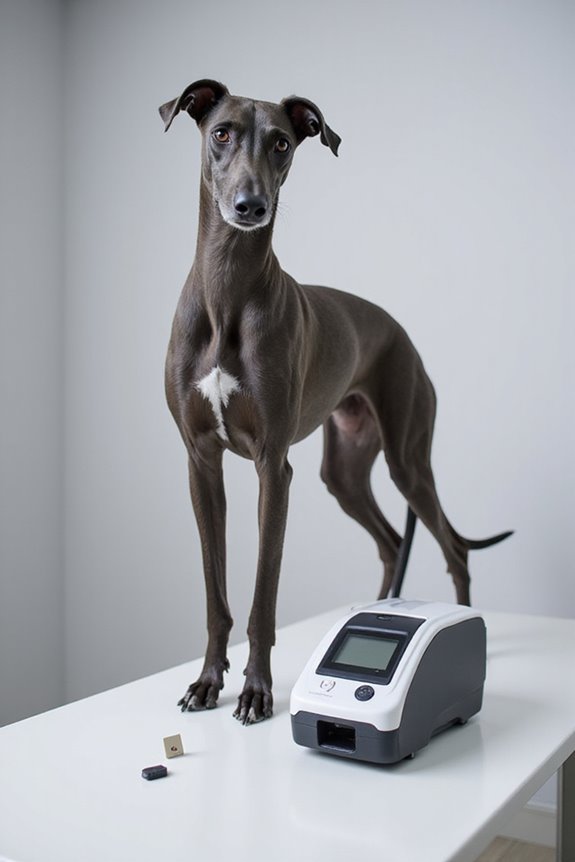
While it might feel overwhelming to navigate the legal landscape around microchipping our greyhounds, understanding these requirements is vital for compliance and their safety. Different legal jurisdictions have specific regulations we must follow:
- In the Republic of Ireland, all pups born after June 1, 2015, must be microchipped and registered with one of four authorized databases.
- England, Scotland, and Wales require mandatory microchipping for dogs over 8 weeks old since April 6, 2016.
- In Victoria, Australia, greyhounds are microchipped at birth and registered on the Greyhound Microchip Registry.
We must guarantee microchipping is performed by certified professionals and that ownership changes are promptly reported to maintain compliance requirements. Keeping this information up to date is vital for our pets’ safety, particularly since monitoring weight regularly can help prevent health issues.
Microchips Versus Other Forms of Identification
When considering identification options for our greyhounds, it’s crucial to understand the differences between microchips and other forms of identification.
- Microchip Technology provides a unique, permanent identification number implanted under the skin, improving traceability throughout the dog’s racing career.
- Unlike collars and tags, microchips reduce errors and fraud, as they can’t be lost or removed without a scanner.
- Collars and Tags offer immediate visibility, but they are prone to loss, detachment, or damage, risking misidentification.
- Tattoos, although historically significant for identification, can fade or be misread, lacking the central registry required by current identification standards.
Ultimately, microchips represent the most reliable method for long-term identification, ensuring our greyhounds are consistently and accurately tracked. Additionally, many sighthound owners find that a comfortable bolster bed contributes to their pets’ overall well-being, further enhancing their quality of life.
Special Considerations for Greyhounds
Microchipping is vital for greyhound owners, as it addresses specific needs associated with this unique breed. Greyhound behaviour often involves high prey drive and speed, making them prone to running off. To guarantee these dogs’ safety, adoption agencies typically insert microchips prior to adoption, providing formal paperwork for owners.
It’s important that we register the microchip with the issuing company to assure effective identification and prompt recovery if our greyhound goes missing. In addition, maintaining current contact information with authorized databases allows us to comply with legal requirements and supports swift reunification in emergencies. Remember, microchips serve as a reliable safeguard against the risks inherent in a greyhound’s adventurous nature, enhancing our peace of mind as devoted owners.
Addressing Concerns About Microchip Safety
Addressing concerns about microchip safety is vital to guarantee our greyhounds lead healthy lives. While microchipping is viewed as a safe procedure, we need to take into account potential microchip risks. Recent cancer studies indicate that 1% to 10% of lab animals developed aggressive tumors from microchips, suggesting that if applied to dogs, up to 20,000 could be affected in England alone.
Moreover, microchips may migrate post-implantation, causing tissue damage or complicating identification. Although the implantation process is quick and carries low risk, ongoing surveillance of microchip-related health issues is called for. Consequently, it’s imperative for us to weigh these safety concerns while making decisions about microchipping our greyhounds.
The Role of Veterinarians in Microchipping
Understanding the critical role veterinarians play in microchipping can greatly enhance our confidence in the procedure. They provide essential veterinary guidance and microchip education, helping us understand the safety and benefits of microchipping. Key points include:
- Education: Vets explain the microchipping process clearly, often comparing it to a quick vaccination.
- Safety: Proper implantation under professional supervision minimizes risks, guaranteeing correct placement.
- Registration: They assist in registering our pet’s microchip with national databases, advising us to keep contact information current.
- Monitoring: Vets offer ongoing support, encouraging annual checks to verify the chip functions correctly.
Frequently Asked Questions
Can I Microchip My Greyhound at Home?
We can’t recommend a home microchip procedure for our greyhounds. DIY microchipping risks improper placement and potential harm to their health. It’s best to leave this essential task to trained veterinary professionals for safety.
How Long Does a Microchip Last?
Microchip longevity exceeds 25 years, so we don’t need to worry about replacements or microchip maintenance. However, keeping our contact information updated in the registry is essential for effective identification.
What Should I Do if My Greyhound Loses Weight After Microchipping?
If our greyhound’s weight drifts like autumn leaves, a veterinary consultation is essential. Weight loss causes can stem from stress or infection. Together, we’ll make certain our furry friend gets the care they need.
Can Microchips Interfere With My Greyhound’s Health?
Microchip reactions are rare and generally mild, while the health benefits of having a microchip for identification far outweigh potential risks. We’ll monitor our greyhounds closely to guarantee their overall health and safety.
Are Microchips Safe for Puppies?
Microchips are safe for puppies, supporting their welfare while enhancing their safety. With minimal risks and substantial benefits, we guarantee our loved ones can be reclaimed if lost, ultimately prioritizing their well-being and our peace of mind.